In this biography
Quick facts
- Born
- 24 August 1956
- Birthplace
- Singapore
- Country
- Singapore
- Nationality
- Singaporean
- Known for
- Combining Asian musical references with pop and theatre in works including The Mad Chinaman and Forbidden City
- Debut album
- Life Story, 1974
- Breakthrough album
- The Mad Chinaman, 1989
- Major musical
- Forbidden City: Portrait of an Empress
- National honour
- Cultural Medallion
Why this life matters
Lee’s music made hybridity itself a subject, turning language, local identity and Asian pop circulation into material for a Singaporean cultural practice.
Timeline
Key moments
Released his debut album
Life Story began a recording career while Singapore pop remained a small industry.
Released Life in the Lion City
Used local references and humour to examine Singapore identity.
Beauty World opened
TheatreWorks staged the Singapore musical with Lee’s music.
Released The Mad Chinaman
The album expanded his audience and articulated an Asian pop sensibility.
Home became a National Day song
His song was selected as the theme of the year’s parade and performed by Kit Chan.
Forbidden City premiered
His musical about Empress Dowager Cixi opened in Singapore.
Received the Cultural Medallion
Singapore recognised his contributions to music and theatre.
From television talent show to Life Story
Dick Lee grew up in Singapore in a family that played jazz, Indonesian keroncong and Western and Chinese pop records. The National Library Board’s account traces his early television break to a 1972 audition for Rediffusion’s Ready Steady Folk. He performed his own song Life Story and was invited back as a guest artist rather than entering as an ordinary contestant. His first album, also titled Life Story, appeared in 1974. Its modest sales are part of the story: an early release did not instantly turn him into a regional star.
In the following decade, Lee worked across music, fashion and stage production while looking for a pop vocabulary that reflected Singapore rather than merely imitating overseas charts. His 1984 album Life in the Lion City used local references and a reworked Chinese folk melody. The National Library Board describes the record as an early attempt to bring local language and familiar cultural symbols into contemporary pop. That approach would become much more visible after his later breakthrough, but it had a longer history than one hit album.
Sources for this section: [1]
The Mad Chinaman and Asian pop markets
The 1989 album The Mad Chinaman brought Lee a wider audience. It mixed English-language pop, Asian melodies, theatrical play and satire about identity. The National Library Board records that the album achieved platinum status within four months and drew attention in Singapore, Hong Kong and Japan. Those are documented responses to a particular record, not proof that every later experiment was equally successful. The point of its title and songs was also more complex than novelty: Lee was testing how an English-educated Singaporean could describe an Asian identity in pop music.
The music circulated beyond Singapore, especially in Japan. Lee’s regional career showed that the country’s artists could work in overlapping Asian markets rather than follow a single route into Western pop. His work also invited criticism: a satirical version of Rasa Sayang was initially barred from Singapore radio because of its Singlish rap, according to the National Library Board. That dispute is useful context for the album’s reception. Its local vocabulary could be both a commercial distinction abroad and a contested sound at home.
Sources for this section: [1]
Musicals beyond the recording studio
Lee’s stage work ran alongside his recording career. TheatreWorks first staged Beauty World in 1988; the show drew on a Singapore setting and later returned in several productions. The National Library Board identifies it as a homegrown musical rather than a recording project by Lee alone. This distinction matters because theatre depends on writers, directors, performers and producers working together. Lee supplied music and a creative direction within a larger collaboration.
Forbidden City: Portrait of an Empress opened at Esplanade’s 2002 Opening Festival. Singapore Repertory Theatre credits Dick Lee with the music, Stephen Clark with the lyrics and Steven Dexter as director; Lee and Clark share the book credit. The production returned in 2003, 2006 and 2017. It explored a Chinese historical figure through a Singapore-made musical, broadening Lee’s themes beyond autobiographical or national identity without ending his interest in cross-cultural stage work.
Home, recognition and lasting public life
Lee composed Home for the Sing Singapore festival; it was selected as the 1998 National Day Parade theme and first performed at the parade by Kit Chan. The song became closely associated with Singapore’s public celebrations, and a remixed version returned in 2004. In the 2015 National Library account, Home sits beside Lee’s theatre and albums rather than replacing them. It is the most familiar part of a much wider catalogue.
The National Arts Council’s official recipient list records Dick Lee’s Cultural Medallion in music in 2005. That honour followed decades of releases and stage work; it was not an award specifically for Home or a claim that he alone created Singapore pop. His career is a useful way to read changes in Singapore’s cultural institutions: from Rediffusion talent programmes and early record labels, through regionally circulating albums, to locally produced musicals and nationally heard songs. The evidence supports those dated steps, while assessments of artistic influence remain interpretive.
Quick answers
Frequently asked questions about Dick Lee
- Did Dick Lee write Home?
- Yes. Dick Lee wrote Home, which Kit Chan performed at Singapore’s 1998 National Day Parade. The songwriter and original singer have different roles in its history.
- When was The Mad Chinaman released?
- The Mad Chinaman was released in 1989. It followed Lee’s debut album Life Story (1974) and Life in the Lion City (1984).
- Who wrote Forbidden City: Portrait of an Empress?
- Dick Lee composed the music, Stephen Clark wrote the lyrics, and Lee and Clark share the book credit. Steven Dexter directed the musical, which first opened at Esplanade in 2002.
- When did Dick Lee receive the Cultural Medallion?
- Singapore’s National Arts Council lists him as a 2005 Cultural Medallion recipient in music. The honour recognised his wider work, not only Home.
Keep exploring
Lives connected to this story
- Jeremy Monteiro
Explore Jeremy Monteiro’s separate career in jazz performance, recording and building a Singapore jazz institution.
- Ivan Heng
Explore a different Singapore performing-arts career combining acting, directing and building a theatre company.
- Eric Moo
Compare another songwriter whose repertoire travelled into musical theatre, through the 2014 production Innamorati.
- JJ Lin
Compare a later Singapore musician whose Mandarin-pop career reached international audiences.
- Lea Salonga
Explore another Southeast Asian performer whose work crossed stage and regional borders.
- Stefanie Sun
Read about the performer of We Will Get There, the 2002 song for which Lee wrote the music and lyrics.
- Kit Chan
Read the separate career of Home’s original singer and a leading performer in Forbidden City.
- Zubir Said
Compare the relationship between a composer’s broader career and music associated with civic life.
Sources and further reading
Explore the evidence
These references support the biography and offer further reading. Official records, first-person accounts and independent reporting provide different perspectives; image records document attribution and licensing.
- 1. BiblioAsia · National Library Board SingaporeDick Lee: The Mad Chinaman
The National Library feature provides the early albums, stage chronology and contemporary context; its qualitative judgments about influence are treated as interpretation.
- 2. MusicSG · National Library Board SingaporeDick Lee
- 3. National Arts Council SingaporeAbout the Cultural Medallion
- 4. Esplanade OffstageSix Singapore Musicals Every Gen-Z Should Know
Esplanade confirms the musical’s opening-festival history. The originating producer’s detailed credits distinguish Dick Lee’s music, Stephen Clark’s lyrics and Steven Dexter’s direction.
- 5. National Arts Council SingaporeCultural Medallion recipients
The National Arts Council list verifies the 2005 Cultural Medallion in music.
- 6. National Heritage Board SingaporeA March in August: National Day songs
- 7. Wikimedia CommonsDick Lee, 2023 — image and licence record
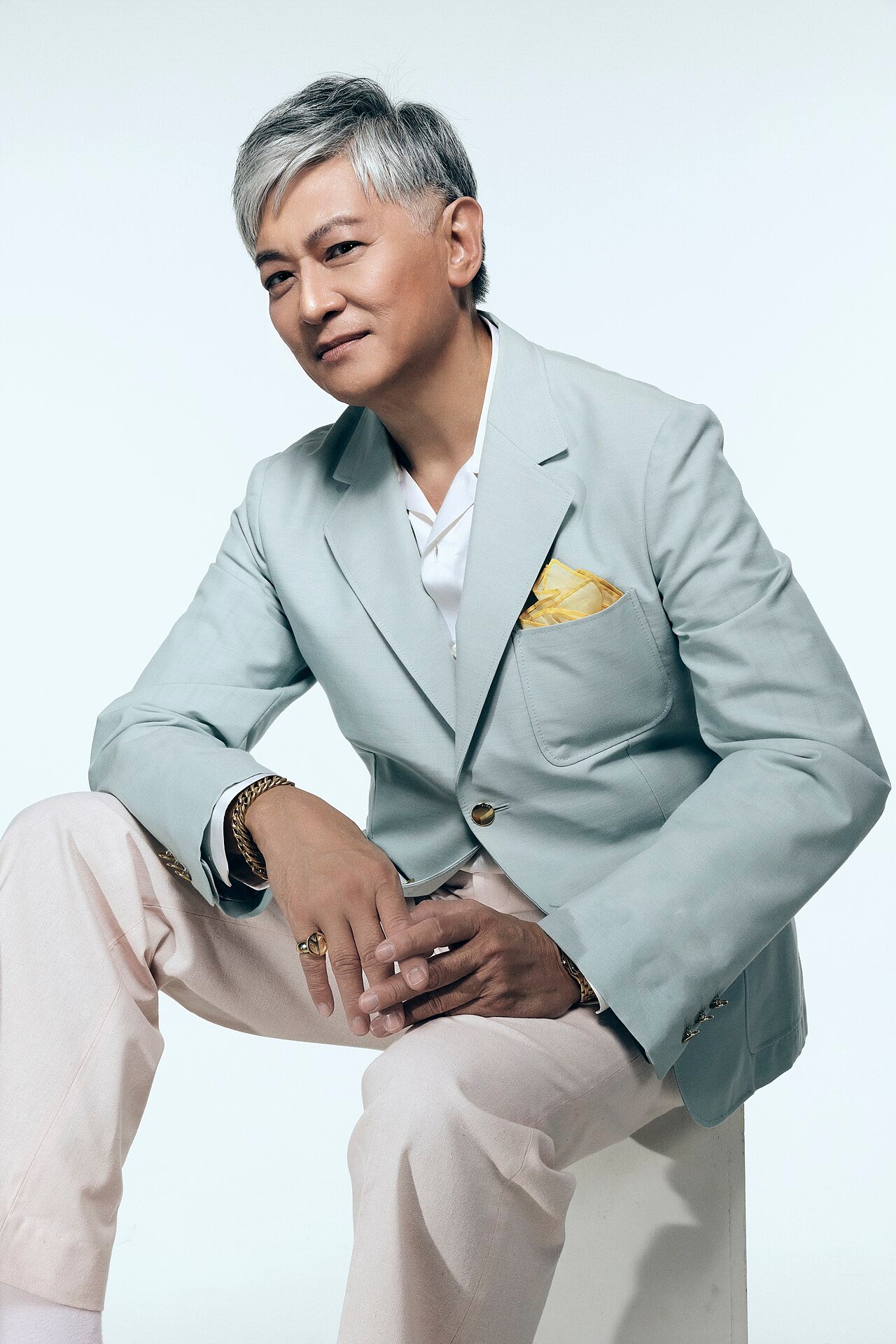
The displayed image is a studio portrait, not a performance photograph. Its uploader identifies the work and supplies CC BY-SA 4.0; the local copy retains the complete frame.
- 8. Singapore Repertory TheatreForbidden City: detailed original production credits and 2017 restaging
The originating producer distinguishes Lee’s music, Clark’s lyrics, their shared book credit and Dexter’s direction. Collaboration is not represented as shared authorship of the music.
- 9. National Library Board SingaporeWe Will Get There: music, lyrics and performer credits