In this biography
Quick facts
- Born
- 20 June 1958
- Birthplace
- Uparbeda, Mayurbhanj district, Odisha, India (then Orissa)
- Country
- India
- Nationality
- Indian
- Known for
- Becoming India’s first tribal president and second woman president in 2022
- Born
- 20 June 1958, Uparbeda
- Odisha Assembly
- Rairangpur, 2000–2009
- Governor of Jharkhand
- 2015–2021
- Presidential oath
- 25 July 2022
Why this life matters
Murmu’s election placed a Santhal woman at the head of the republic for the first time. Her career also provides a way to examine land rights, representation, education and the limited but consequential responsibilities of constitutional office.
Timeline
Key moments
Born in Uparbeda
Born into a Santhal family in Mayurbhanj district.
Graduated and entered public employment
Completed a BA at Ramadevi Women’s College and worked in Odisha’s Irrigation and Power Department.
Taught in Rairangpur
Worked as an honorary teacher before entering municipal politics.
Local and state public office
Became a councillor, then an MLA and Odisha minister.
Governor of Jharkhand
Began a governorship lasting until 2021.
Returned tenancy amendment bills
Asked the state government to reconsider changes after widespread representations about tribal land.
Elected president
Won the electoral-college contest against Yashwant Sinha and took the oath on 25 July.
Dated office verification
The President’s Secretariat profile, updated 23 October, identifies her as president.
Education took her from Uparbeda to Bhubaneswar
Droupadi Murmu was born on 20 June 1958 into a Santhal family in Uparbeda, Mayurbhanj district, in what was then called Orissa. Her schooling began locally before she moved to Bhubaneswar for further study. The President’s Secretariat records her 1979 graduation from Ramadevi Women’s College with study in political science and economics.
Her educational route is significant in a region where access to schooling and public employment was uneven. It should be described through the opportunities and barriers involved, rather than as proof that individual determination alone can overcome structural exclusion. Her later public emphasis on girls’ education drew on this experience of moving beyond the resources available in her village.
Employment and teaching preceded elected office
From 1979 to 1983 Murmu worked as a junior assistant in Odisha’s Irrigation and Power Department. She later served as an honorary teacher at the Sri Aurobindo Integral Education and Research Centre in Rairangpur from 1994 to 1997. These were distinct stages before her rise through elected politics, not offices acquired after national recognition.
She married Shyam Charan Murmu in 1980. Her family life included profound bereavements, including her husband’s death in 2014. Public profiles often foreground those losses; they are part of her experience, but should not replace an account of political decisions, institutional work and the circumstances of the communities she represented.
Municipal politics led to the Odisha legislature
Murmu was elected a Rairangpur councillor in 1997 and became vice-chairperson of the local council. She then represented Rairangpur in the Odisha Assembly from 2000 to 2009. During the BJP–Biju Janata Dal coalition period she held ministerial responsibilities for commerce and transport, followed by fisheries and animal resources development.
The progression connected municipal administration, constituency representation and state departments. It also placed her within the BJP’s organisation, including its Scheduled Tribe wing. Her later presidency did not erase that party background, although accepting a constitutional office imposed responsibilities that could not be reduced to representing one party or one social community.
The Jharkhand governorship involved a substantive land dispute
Appointed governor of Jharkhand in May 2015, she served until 2021. A major test came when the state government sought to amend the Chhotanagpur Tenancy and Santhal Pargana Tenancy laws. Tribal organisations feared that easier changes in land use would weaken protections and accelerate dispossession; many groups made representations to the governor.
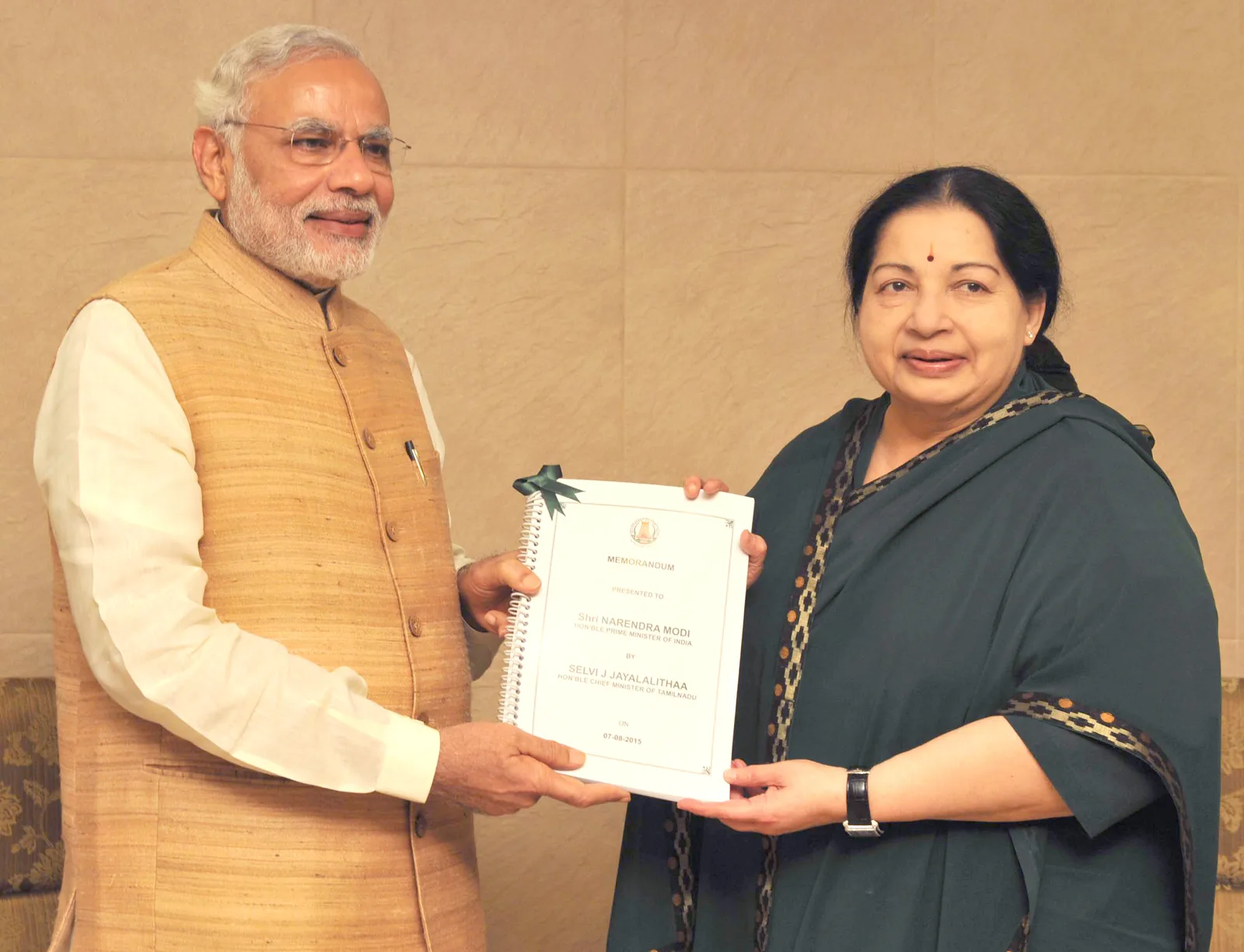
In 2017 she returned the bills for reconsideration. In a contemporary interview she said she had consulted experts and studied the proposals, and sent back 192 memorandums received from opponents. The episode matters because it identifies an actual use of constitutional office, including a decision affecting a government led by her own former party. It should not be inflated into proof that all tribal land disputes were resolved.
The 2022 election created two distinct milestones
The NDA nominated Murmu for president in 2022 against opposition candidate Yashwant Sinha. The Election Commission records weighted vote totals of 676,803 for Murmu and 380,177 for Sinha. Those figures are electoral-college vote values, not numbers of citizens casting ballots in a national popular election.
She took the oath on 25 July as the fifteenth president. She was the first person from a Scheduled Tribe to hold the office and the second woman, after Pratibha Patil. The distinction avoids erasing Patil’s 2007 milestone while recognising the new significance of a Santhal woman’s election. Representation at the apex remained different from measurable improvements in every tribal community’s circumstances.
The presidency combines public visibility with constitutional limits
The president acts within a parliamentary system, generally on ministerial advice under Article 74. Public addresses, state visits and attention to educational or cultural issues can shape national visibility, but do not make the president the independent manager of government policy. Murmu’s land-law decision as governor and her later presidential responsibilities must therefore be assessed within their different legal settings.
The official profile updated on 23 October 2026 identifies her as president and records continuing educational and cultural initiatives. Its positive assessment is the institution’s own account. A durable evaluation requires asking what a particular intervention did, who held executive responsibility and whose experience is missing, while recognising the historical change represented by her path to the presidency.
Quick answers
Frequently asked questions about Droupadi Murmu
- Was Murmu India’s first woman president?
- No. Pratibha Patil was the first. Murmu became the second woman and the first person from a Scheduled Tribe to serve as president in 2022.
- Which community does she belong to?
- She was born into a Santhal family in Uparbeda, Odisha. Santhal identity and the constitutional Scheduled Tribe category are related but not interchangeable descriptions of every tribal community.
- What did she do about Jharkhand land bills?
- As governor in 2017 she returned proposed tenancy-law amendments for reconsideration after consultations and extensive representations. This was a specific intervention, not a settlement of all land-rights questions.
- Did 676,803 citizens vote for her?
- No. That is the weighted vote value recorded in the presidential electoral college. The president is not directly elected by a national popular ballot.
Keep exploring
Lives connected to this story
- Pratibha Patil
Compare the first woman president and the institutional route to the office.
- Narendra Modi
Distinguish the prime minister’s executive responsibilities from those of the president.
- B. R. Ambedkar
Explore the constitutional setting for representation, rights and parliamentary institutions.
Sources and further reading
Explore the evidence
These references support the biography and offer further reading. Official records, first-person accounts and independent reporting provide different perspectives; image records document attribution and licensing.
- 1. President’s Secretariat, IndiaDroupadi Murmu: profile updated 23 October 2026
Official page updated 23 October 2026; used for dated office verification and biographical chronology, not as independent proof of every claimed policy outcome.
- 2. The Indian ExpressDroupadi Murmu: Sunday Profile, 17 July 2022
- 3. Deepanwita Niyogi / Down To EarthInterview with Governor Murmu on returning tenancy amendment bills, 16 August 2017
Contemporary interview records Murmu’s own explanation alongside the reporter’s account of the contested bills.
- 4. Election Commission of IndiaLeap of Faith: 2022 presidential election and Murmu’s swearing-in
- 5. Constitution of India / Centre for Law and Policy ResearchArticle 54: presidential electoral college
- 6. Constitution of India / Centre for Law and Policy ResearchArticle 74: ministerial advice to the president
- 7. President’s Secretariat, IndiaPratibha Devisingh Patil: former president and term of office
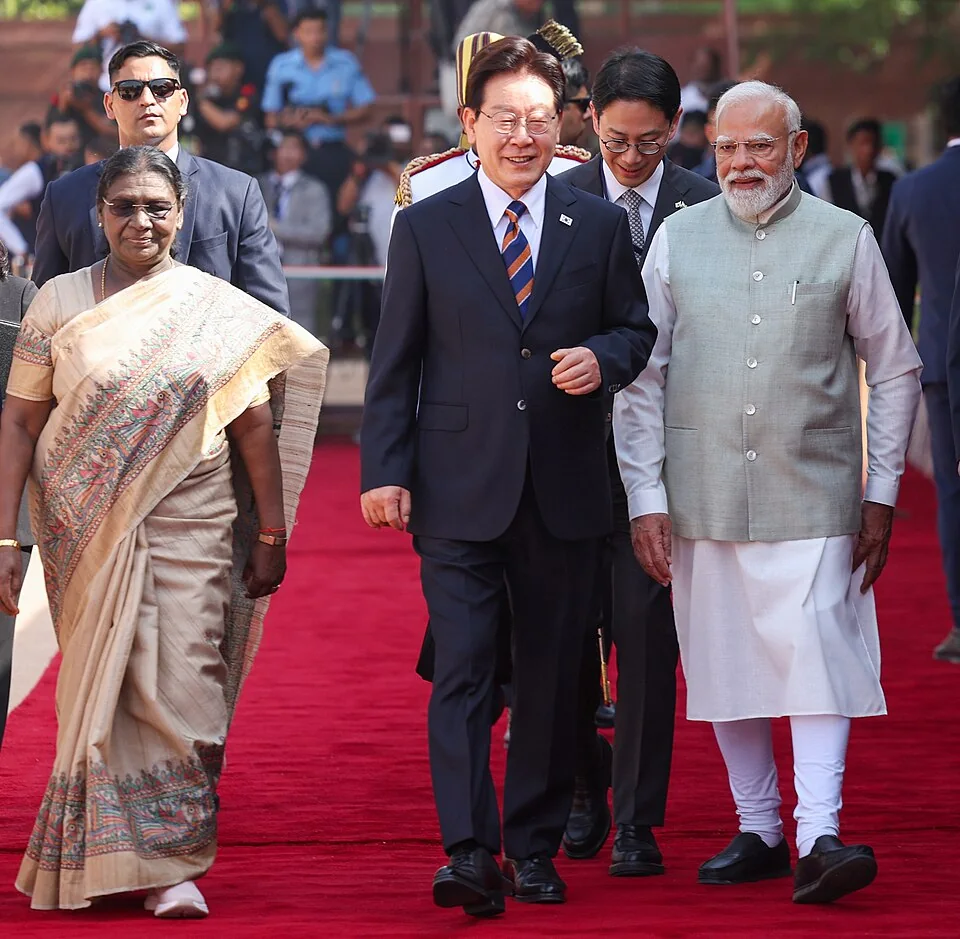
- 8. Prime Minister’s Office / Wikimedia CommonsMurmu, Lee Jae-myung and Modi at Rashtrapati Bhavan, 20 April 2026
The April 2026 event illustration is not a photograph of her 2022 election or oath.
- 9. Government of IndiaGovernment Open Data Licence: Gazette, February 2017
- 10. Prime Minister’s Office, IndiaWebsite policies: accurate reproduction and attribution
- 11. Press Information Bureau, IndiaCopyright policy: free reproduction and third-party exclusion