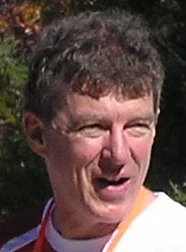
In this biography
Quick facts
- Born
- 7 September 1959
- Birthplace
- Lexington, Massachusetts, United States
- Country
- United States
- Nationality
- Not independently established
- Known for
- Discoveries with Katalin Karikó on nucleoside-modified RNA and innate immune recognition
Why this life matters
The collaboration helped explain how chemical modifications could change RNA’s interaction with innate immune sensors and support later therapeutic development.
Timeline
Key moments
Born in Massachusetts
Weissman was born in Lexington on7 September.
Modified RNA study
Co-authored the paper investigating RNA recognition by Toll-like receptors.
Medicine Nobel
Shared the prize with Katalin Karikó.
Medical and immunological training
Drew Weissman was born in Lexington, Massachusetts, in 1959. He received bachelor’s and master’s degrees from Brandeis University in 1981 and completed combined medical and doctoral training at Boston University in 1987. His subsequent career brought together clinical medicine, immunology and experimental research. At the University of Pennsylvania, his laboratory investigated RNA and innate immune biology alongside potential applications in vaccination and gene therapy. The work required distinguishing a molecule’s intended message from the immune responses it could provoke when delivered to cells.
A collaboration with a complementary specialist
At Penn, Weissman began working with Katalin Karikó, whose research focused on RNA. Their partnership connected her biochemical experience with his interest in dendritic cells and immune recognition. The Nobel account describes a specific puzzle: experimentally transcribed RNA could activate inflammatory responses, whereas RNA from mammalian cells behaved differently. Rather than treating all RNA as equivalent, the researchers investigated whether chemical modifications found in naturally occurring RNA contributed to the difference. This question provided a concrete experimental direction for the collaboration.
Testing how cells recognise modified RNA
The 2005 paper by Karikó, Michael Buckstein, Houping Ni and Weissman examined RNA recognition through Toll-like receptors. Its findings connected modified nucleosides with reduced activation in the tested systems, including lower cytokine and activation-marker responses in dendritic cells. The study supplied mechanistic evidence about innate sensing. It was not itself a clinical test of a later vaccine. Separating those endpoints helps explain the achievement without compressing laboratory findings and subsequent development into one undifferentiated discovery.
Sources for this section: [3]
Recognition for an enabling research programme
Weissman and Karikó received the 2023 Nobel Prize in Physiology or Medicine for discoveries concerning nucleoside modifications that enabled effective mRNA vaccines against COVID-19. The award recognised the significance of a programme whose early experiments asked narrower questions than the eventual application. Weissman’s contribution is therefore best understood through both scales: specific immune-recognition experiments and their place in a longer development history. His career illustrates how foundational immunology can make an emerging technology more experimentally tractable before the final clinical product exists.
Quick answers
Frequently asked questions about Drew Weissman
- What did Weissman contribute to the collaboration?
- His immunological research, including work on dendritic cells, complemented Karikó’s RNA expertise and helped frame experiments on innate recognition.
- Was the 2005 paper a COVID-19 vaccine trial?
- No. It investigated RNA sensing and cellular responses years before the pandemic and before the later clinical vaccine studies.
Keep exploring
Lives connected to this story
- Peter Doherty
Compare different levels of immune-system research: antigen-specific recognition and the innate sensing of RNA.
- Katalin Karikó
Meet Weissman’s RNA collaborator and follow the later question of translation and RNA persistence.
Sources and further reading
Explore the evidence
These references support the biography and offer further reading. Official records, first-person accounts and independent reporting provide different perspectives; image records document attribution and licensing.
- 1. University of Pennsylvania Perelman School of MedicineDrew Weissman: education and research expertise
- 2. National Inventors Hall of FameDrew Weissman: inventor biography
- 3. Karikó, Buckstein, Ni and Weissman / ImmunitySuppression of RNA recognition by Toll-like receptors: the impact of nucleoside modification and the evolutionary origin of RNA
The 2005 innate-sensing endpoint is not described as a vaccine-efficacy trial or merged with later protein-production experiments.
- 4. Nobel Assembly at Karolinska InstitutetThe 2023 Nobel Prize in Physiology or Medicine: press release
- 5. Nobel Prize OutreachDrew Weissman — Facts