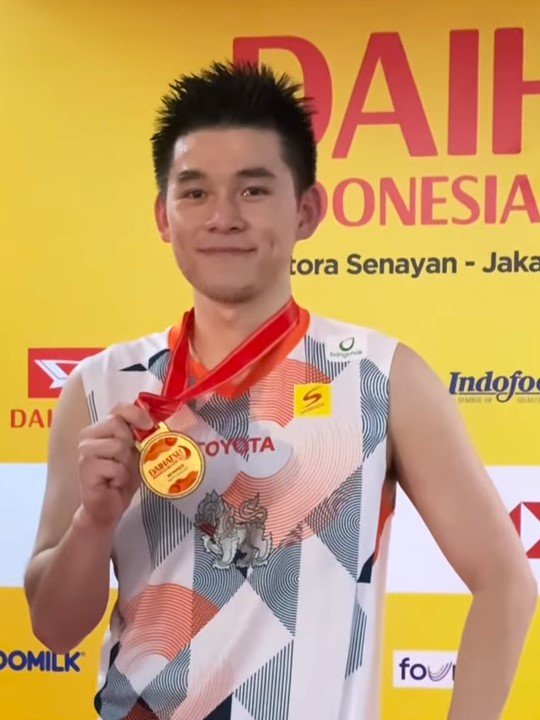
In this biography
Quick facts
- Born
- 8 May 1982
- Birthplace
- Surin, Thailand
- Country
- Thailand
- Nationality
- Thai
- Known for
- Winning K-1 World MAX in 2004 and 2006
- Birth name
- Sombat Banchamek
- Major titles
- K-1 World MAX 2004 and 2006
- Started training
- Age eight
- Fighting base
- Banchamek Gym
Why this life matters
Buakaw became an international ambassador for Muay Thai by combining elite competition with a highly visible global career.
Timeline
Key moments
Born in Surin
Born Sombat Banchamek in northeastern Thailand.
Began Muay Thai
Started training and fighting as a child.
Won K-1 World MAX
Broke through internationally in Japan.
Became an international Muay Thai ambassador
Began a long formal role promoting the sport through IFMA.
Won a second K-1 title
Became the tournament’s first two-time champion.
Documentary project launched
A film project presented his sporting life and Muay Thai’s cultural reach.
A Thai fighter who reached an international audience
Buakaw Banchamek was born in Surin on 8 May 1982. Known earlier in his fighting career as Buakaw Por. Pramuk, he emerged from Thailand’s professional Muay Thai environment before reaching a much wider audience through Japanese kickboxing. His public identity connects a Thai camp tradition with international tournament competition.
K-1’s official profile lists Banchamek Gym as his affiliation and places his best-known world-tournament victories in the seventy-kilogram division. A fighter’s camp name, birth name and competitive division answer different questions about his career. They should not be used interchangeably with a championship title or assumed to describe every bout he later contested.
Sources for this section: [1]
The 2004 and 2006 K-1 World MAX championships
Buakaw won K-1 World MAX in 2004, defeating Masato in the decisive final. The promoter’s retrospective then records a 2005 final defeat to Andy Souwer before Buakaw returned to win in 2006. That sequence matters: his two titles were separated by a runner-up year, rather than forming an uninterrupted three-year championship reign.
In 2006 he beat Yoshihiro Sato in the semifinal and Souwer in the final. Reversing the earlier final result reinforced his standing beyond a single breakthrough. These were K-1 World MAX tournament honours, not Olympic medals or the result of one universal championship shared by every organisation using striking-based rules.
Sources for this section: [1]
Muay Thai, kickboxing and other competition formats
His career also extended beyond K-1. IFMA’s 2018 account recalls his earlier federation competition and identifies his subsequent World Muaythai Council championships. It reported his scheduled appearance in Prague alongside Superbon during the European championship programme, placing professional bouts beside the federation’s amateur-development activities.
The K-1 record also lists his 2010 S-cup victory in shoot boxing. Different formats govern what fighters may do in clinches, throws or striking exchanges, so success across them requires more than changing an event label. The relevant organiser, division and rules need to accompany a result. This profile does not combine conventional bouts, exhibitions and other formats into an apparently definitive current win–loss total.
A gym identity and a public teaching role
The Banchamek name became associated with his own training base and a wider public platform. The World Muaythai Council describes masterclasses organised with IFMA, national federations and Thai government participation. These appearances extended his role from competing for a purse or belt to demonstrating technique and presenting the sport’s cultural practices to new audiences.
The council also recalls his involvement with the IFMA Muaythai Village during the Paris Olympics. Participation in an Olympic-period cultural programme is different from entering the Olympic medal competition. The distinction protects a real contribution from becoming an invented Olympic result, while showing how sport promotion can take place around a major international event.
The documentary announcement and how his legacy is presented
On 17 July 2026, IFMA reported a press conference for The Icon of Muaythai: Buakaw – Small Steps… A Great Life at Rattana Bundit University. It described a six-part documentary series and announced the first episode for 19 July on Channel 9 MCOT HD. The report also identifies the university as the institution where he completed a business-administration degree.
The same account dates his IFMA World Muaythai Ambassador role to 2005. Its language is celebratory, reflecting an organisation promoting its athlete and sport. The championship sequence is checked separately against K-1’s record, and the broadcast details are presented as the announced schedule rather than proof that every episode aired. Together, the records explain his competitive achievement and the later construction of an international teaching and cultural role.
Sources for this section: [4]
Quick answers
Frequently asked questions about Buakaw Banchamek
- Which K-1 World MAX titles did Buakaw win?
- The 2004 and 2006 seventy-kilogram world tournaments. He was runner-up to Andy Souwer in 2005, then defeated Souwer in the 2006 final.
- Are his Muay Thai and K-1 titles the same championship?
- No. Organisers and rule sets differ. His WMC, K-1 and shoot-boxing achievements should be identified separately.
- Did the Paris Muaythai Village appearance make him an Olympic medallist?
- No. A cultural or promotional appearance around the Games is different from an Olympic medal event.
- What was announced about his documentary in 2026?
- IFMA described a six-part series at a July press conference and announced a 19 July start on Channel 9 MCOT HD. This profile does not independently certify the full broadcast run.
Keep exploring
Lives connected to this story
- Tony Jaa
Compare Muay Thai’s screen representation with Buakaw’s organised competitive career.
- Khaosai Galaxy
Compare a Thai boxing champion competing under a different sport’s rules.
- Panipak Wongpattanakit
Distinguish Olympic taekwondo medals from Muay Thai’s cultural and promotional work.
Sources and further reading
Explore the evidence
These references support the biography and offer further reading. Official records, first-person accounts and independent reporting provide different perspectives; image records document attribution and licensing.
- 1. K-1Buakaw Banchamek fighter profile
The promoter’s profile supports the 2004/2005/2006 sequence and title list. Its narrative carries an older update date and contains unreliable chronology for later bouts, so no current composite record or later-bout sequence is copied.
- 2. International Federation of Muaythai AssociationsFrom IFMA champion to superstar
- 3. World Muaythai CouncilBuakaw — living legend and global ambassador of Muaythai
This is the council’s promotional account of masterclasses and cultural activity, not proof of Olympic competition or an independent measure of programme impact.
- 4. International Federation of Muaythai AssociationsThe Icon of Muaythai: Buakaw — Small Steps, a Great Life
The 17 July 2026 announcement supplies the planned series and broadcast start. It does not establish that the complete six-episode run aired as scheduled.
- 5. Wikimedia CommonsPortrait and licence record