

In this biography
Quick facts
- Born
- Not verified in the reviewed primary sources
- Birthplace
- Not verified in the reviewed primary sources
- Country
- Timor-Leste
- Nationality
- Not independently established
- Known for
- Commerce and education portfolios, coordination of social affairs and second place in Timor-Leste’s 2017 presidential election
- Earlier portfolio
- Minister of commerce, industry and environment from 2012, according to the government’s appointment account
- Education appointment
- Sworn in as minister of state, social-affairs coordinator and education minister on 10 August 2015
- Social-policy remit
- Coordinated institutions concerned with health, solidarity, women, youth and other social affairs
- 2017 election
- Second with 167,794 votes, approximately 32.5%, in the presidential election
- Later historical portfolio
- Named commerce and industry minister in the Seventh Constitutional Government’s roster
- Biographical limits
- Birthday, birthplace, citizenship and personal degree awards are not established by the reviewed primary sources
Why this life matters
His record connects education partnerships and social-policy ambitions with the competitive, coalition-based politics of Timor-Leste’s post-independence institutions.
Timeline
Key moments
Commerce portfolio
Began ministerial service in commerce, industry and environment, according to the later official appointment release.
Education and social affairs
Sworn into the combined role after the death of Fernando La Sama de Araújo.
CPLP gender-policy meeting
Discussed education and women’s economic autonomy at the Dili meeting on gender equality.
Higher-education dialogue
Joined the prime minister and university rectors to discuss concerns and proposals for regular consultation.
Presidential election
Contested as the Democratic Party candidate and finished second to Francisco Guterres.
Results validated
The European Parliament’s report records Court of Appeal validation of the result, including his 167,794 votes.
Education cooperation agenda
The government announced a mission covering scholarship support, teacher training and literacy cooperation in the Philippines, Cuba and Portugal.
Commerce and industry
Its official historical roster identifies him with the commerce and industry portfolio; this is not a current-office claim.
From commerce to social-affairs coordination
António da Conceição’s ministerial career included commerce, industry and environment responsibilities beginning in 2012, according to the government’s account of his later appointment. On 10 August 2015 he was sworn in as minister of state, coordinator of social affairs and minister of education. The appointment filled the vacancy left by Fernando La Sama de Araújo’s death earlier that year.
The combined role went beyond running schools. The official government description assigned coordination across health, social solidarity, women’s advancement, youth and other social institutions. It involved organising work and assessing services across ministries, rather than replacing each portfolio’s minister. His earlier commerce responsibilities passed to another minister when he moved into the broader education and social-affairs brief.
Education institutions and external partnerships
In November 2016, Conceição joined Prime Minister Rui Maria de Araújo and university rectors to discuss the development of higher education. The meeting addressed concerns across public and private institutions. Participants proposed regular six-monthly dialogue between rectors and the ministry, while the prime minister accepted a proposal to recognise a national higher-education day.
His education portfolio also involved overseas partnerships. A June 2017 government notice outlined meetings on Timorese scholarship holders in the Philippines, pedagogical cooperation and literacy work in Cuba, and the CAFE school and Formar+ teacher-training projects with Portugal. The notice described planned engagements, not evaluated outcomes.
The 2017 presidential challenge
Conceição contested the March 2017 presidential election for the Democratic Party. European Parliament observers described his campaign’s emphasis on living conditions, poverty and corruption, and noted the greater financial resources available to his principal opponent’s party. The report recorded a peaceful contest while identifying broader shortcomings in campaign-finance oversight and equality of media access.
The validated result placed him second with 167,794 votes, approximately 32.5%, behind Francisco Guterres, who won outright. The observers reported acceptance of the final results by candidates and parties. Conceição later appears as commerce and industry minister in the Seventh Government’s historical roster. His electoral defeat was not the end of the reviewed public record, but neither historical portfolio is presented as a verified current office.
Quick answers
Frequently asked questions about António da Conceição
- Did António da Conceição become president?
- No. He finished second in the 2017 election with 167,794 votes, approximately 32.5%. Francisco Guterres won outright, so a second round was unnecessary.
- When did he take the education portfolio?
- The contemporaneous official swearing-in release dates the appointment to 10 August 2015. It combined education with minister-of-state status and coordination of social affairs after Fernando La Sama de Araújo’s death.
- What did his social-affairs responsibilities involve?
- The official role description covered coordination across health, solidarity, women’s advancement, youth and related institutions. Contemporary statements linked education to vocational training and women’s economic autonomy; they do not prove all proposed outcomes were achieved.
- What personal background details are verified here?
- The reviewed primary record establishes ministerial work and election participation, but not his exact birthday, birthplace, citizenship or personal degree awards. Details belonging to Portuguese or other namesakes should not be attached to this Timorese politician.
Keep exploring
Lives connected to this story
- Fernando de Araújo
Read about the social-affairs and education leader whose death created the vacancy Conceição filled in 2015.
- Mariano Sabino Lopes
Explore another senior Democratic Party figure and the party’s place in Timor-Leste’s coalition politics.
Sources and further reading
Explore the evidence
These references support the biography and offer further reading. Official records, first-person accounts and independent reporting provide different perspectives; image records document attribution and licensing.
- 1. Government of Timor-Leste · 10 August 2015António da Conceição sworn in as Minister of State, Coordinator of Social Affairs and Minister of Education
Read the complete actual substantive official release. Its body explicitly dates the completed swearing-in to 10 August 2015, identifies his earlier commerce portfolio beginning in 2012 and explains the succession after Fernando La Sama de Araújo’s death. The historical roster elsewhere mistakenly says 2016; this contemporaneous dated release governs. It does not establish personal birthday, birthplace, citizenship or degree qualifications.
- 2. Government of Timor-Leste · historical archiveVI Constitutional Government — social-affairs role and roster
Read the indexed original role-description passage and relevant roster text. It identifies the social institutions under coordination and distinguishes those functions from holding every ministry. The commerce-entry end-date typo of 10 August 2016 is not reproduced; use the contemporaneous 2015 swearing-in release. No continuing current incumbency is inferred from this historical page.
- 3. Government of Timor-Leste · 21 November 2016Prime Minister meets with Ministry of Education and Rectors of the Universities
Read the complete original substantive government report. It dates the meeting to 17 November 2016, identifies Conceição and records proposals for regular dialogue and a national day. The prime minister’s accepted proposals are not described as Conceição’s personal inventions or proof of later implementation.
- 4. Government of Timor-Leste · June 2017 mission announcementMinister of State, Coordinator for Social Affairs visits Philippines, Cuba and Portugal
Read the complete substantive original government notice. It sets out June travel and objectives involving scholarships, literacy, pedagogical cooperation, CAFE and Formar+. The future-tense itinerary is retained as an announcement rather than converted into proof that every scheduled meeting occurred or every project succeeded.
- 5. Government of Timor-Leste · May 20164th Meeting of Ministers Responsible for the CPLP Gender Equality
Read the complete substantive original account of the 10 May 2016 meeting. It attributes education/autonomy comments to Conceição and collective adoption of the action plan/declaration to the meeting. He is not falsely listed among the five officials who signed the separate Declaration of Commitment.
- 6. Government of Timor-Leste · 13 May 2016 PDFGovernment actions support gender equality and empowerment of women and girls
Read the original government PDF’s indexed substantive statement naming training, credit, mentoring and leadership programmes. The PDF cover is dated 13 May 2016, while the parallel HTML page says 10 May; copy uses month/year and the meeting’s known date rather than conflating publication and event. No full PDF-image inspection is claimed.
- 7. European Parliament · Ana Gomes, delegation chair · 2017Report on the presidential election observation delegation to Timor-Leste, 20 March 2017
Read the original delegation report’s substantive political/campaign assessment, election-day observations and post-election results section through PDF extraction. It records 30 March Court of Appeal validation, 167,794 votes and approximately 32.5%, plus acceptance of results. The annex’s preliminary findings are distinguished from the main report’s later validated-result section. Campaign-finance/media criticisms are attributed to observers and do not become personal wrongdoing allegations against Conceição. No full 20-page pixel inspection is claimed.
- 8. Government of Timor-Leste · historical archiveVII Constitutional Government — commerce and industry minister
Read the actual original historical roster’s relevant entry, naming António da Conceição commerce and industry minister. It supplies a later historical portfolio, not a current-office verification. The biography avoids pretending that the education role or this commerce role continues through October 2026.
- 9. Wikimedia Commons · José Fernando RealAntónio da Conceição 2017-03-06.jpg
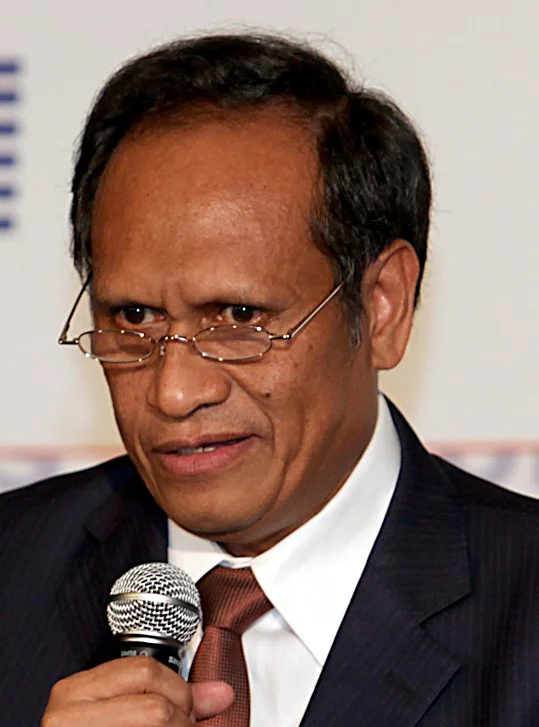
Complete exact Commons wikitext, all imageinfo/EXIF and expanded public creator permission read. Native 462×599 photograph by José Fernando Real, source First Lady’s office, explicit CC BY-SA 4.0 and confirmed VRT tickets 2015072310026871 and 2017042510009898. Private correspondence was not personally accessible; the public confirmed notices are the evidence. Editing/Facebook fields contain no conflicting photographer or rights reservation. Root inspected the actual supplied seated portrait and retained its whole native frame without crop or enlargement. Creator permission, rather than government publication alone, supports reuse; conversion and share-alike notice supplied.
Social inclusion and women’s economic autonomy
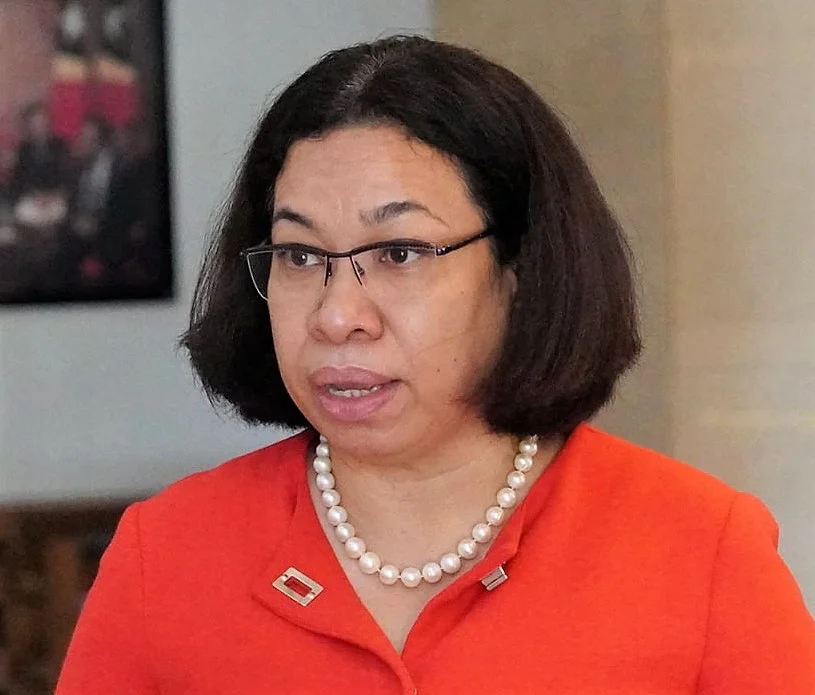
The social-affairs brief connected education to wider questions of inclusion. At the May 2016 CPLP meeting on gender equality in Dili, Conceição stressed women’s contribution to the independence struggle and the importance of education for autonomy. The meeting adopted an action plan and declaration addressing economic rights, entrepreneurship, property and access to resources.
The government’s account also set out practical policy tools, including vocational training, credit for entrepreneurial activities, business mentoring and community-leadership skills. These were collective government programmes rather than his personal projects. Their significance lies in the link he drew between learning, economic participation and social development; the policy statements alone do not demonstrate that gender inequality was overcome.
Sources for this section: [5] · [6]