In this biography
Quick facts
- Born
- 3 January 1905
- Died
- 3 February 1961
- Birthplace
- Los Angeles, California, United States
- Country
- United States
- Nationality
- American
- Known for
- The Toll of the Sea, Piccadilly, Shanghai Express and a transatlantic career shaped by racial barriers in casting
- Birth name
- Wong Liu Tsong
- Life dates
- 3 January 1905 – 3 February 1961
- Early leading role
- Lotus Flower in The Toll of the Sea (1922)
- European work
- Included Song (1928), Piccadilly (1929) and The Flame of Love (1930)
- Hollywood roles
- Prominent supporting work in Shanghai Express (1932); a leading role opposite Philip Ahn in Daughter of Shanghai (1937)
- Television
- Led The Gallery of Madame Liu-Tsong on the DuMont network in 1951
- Commemoration
- Hollywood Walk of Fame star in 1960; honoured on an American Women quarter in 2022
Why this life matters
Her international career made Asian American screen presence visible while exposing the distance between public stardom and access to substantial, varied roles.
Timeline
Key moments
Born in Los Angeles
Born Wong Liu Tsong on 3 January; grew up around the family laundry as filmmaking expanded nearby.
An extra in The Red Lantern
Began screen work as a teenager in a small, uncredited role.
The Toll of the Sea
Played the female lead in an early Technicolor feature at age seventeen.
Films in Europe
Worked in Germany and Britain, including Song, Piccadilly and The Flame of Love.
Shanghai Express
Appeared opposite top-billed Marlene Dietrich in Josef von Sternberg’s film.
A vehicle in Daughter of Shanghai
Led Robert Florey’s thriller with Philip Ahn, giving Asian American actors the two central roles.
The Gallery of Madame Liu-Tsong
Headlined a DuMont television series about an art dealer and detective.
Late recognition and death
Received a Hollywood Walk of Fame star in 1960 and died on 3 February 1961, aged fifty-six.
American Women quarter
The U.S. Mint honoured Wong with a coin depicting her face surrounded by a marquee-light motif.
A Los Angeles childhood close to filmmaking
Anna May Wong was born Wong Liu Tsong in Los Angeles on 3 January 1905. Her parents ran a laundry, and she grew up as film production was taking root around the city. The National Women’s History Museum describes her visits to sets, fascination with cinema and the racial bullying she experienced at school. She adopted the professional name Anna May Wong while still a child.
Her first film appearance was as an extra in The Red Lantern in 1919. Small parts followed while she was still at school. Choosing acting as a career required persistence within both her family circumstances and an industry that offered few substantial parts to young Chinese American women.
Early stardom and the limits of visibility
At seventeen, Wong played the female lead in The Toll of the Sea (1922), an early Technicolor feature. The performance established that she could carry a dramatic story. Her memorable appearance in Douglas Fairbanks’s The Thief of Bagdad (1924), however, was a supporting role as a slave and spy. Those two films illustrate an important distinction: recognition did not guarantee continuing access to leading parts.
Hollywood repeatedly offered roles organised around exoticism, danger or sacrifice. A career could include a star-making performance yet still narrow into stereotyped characters. Brian Taves’s film essay for the National Film Registry describes Wong moving between major roles and small character parts even as magazine coverage demonstrated her public popularity.
Building a career in European films
Wong sought broader opportunities in Europe from 1928, working first in Germany and then in Britain. In Piccadilly (1929), she played Shosho, a kitchen worker whose dancing makes her a nightclub attraction. The role gave her screen presence room to dominate a British silent film, although its reception could still reduce her to an exotic image.
Her work in Britain continued into the sound era. The Flame of Love (1930) was produced in multiple language versions, and later films included Tiger Bay and Java Head. The BFI’s account of this period shows that European opportunity coexisted with censorship and prejudice around interracial relationships. Working abroad expanded her repertoire without removing the barriers that shaped her choices.
Hollywood returns and a different kind of heroine
Shanghai Express (1932) placed Wong alongside top-billed Marlene Dietrich in a prominent supporting part. Such visibility did not end discriminatory casting: the Chinese female lead in MGM’s The Good Earth (1937) went to white actress Luise Rainer. Wong’s exclusion from that opportunity remains a concrete example of the gap between being celebrated and being considered for major roles.
Daughter of Shanghai (1937) offered another possibility. Directed by Robert Florey, it was developed as a vehicle for Wong and paired her with Philip Ahn as the central performers. Her heroine investigates her father’s death and exposes a smuggling operation. UCLA’s archive highlights the unusual presence of two Asian American leads in a Hollywood thriller of the period.
Television and later remembrance
In 1951 Wong led The Gallery of Madame Liu-Tsong on the DuMont network, playing an art dealer and detective. The U.S. Mint identifies this as the first U.S. television show with an Asian American lead actor. The claim is specific to a leading role in an American television series, rather than a claim that she was the first Asian performer anywhere on television.
Wong received a Hollywood Walk of Fame star in 1960 and died on 3 February 1961, aged fifty-six. The Mint honoured her in its 2022 American Women Quarters programme. That later recognition invites attention to her performances themselves: a varied body of screen work shaped by ambition, international collaboration and persistent restrictions on the parts available to her.
Quick answers
Frequently asked questions about Anna May Wong
- What was Anna May Wong’s birth name?
- She was born Wong Liu Tsong in Los Angeles on 3 January 1905 and used Anna May Wong as her professional name.
- Which films gave Anna May Wong leading roles?
- The Toll of the Sea (1922), Piccadilly (1929) and Daughter of Shanghai (1937) are key examples. Her celebrated appearances in The Thief of Bagdad (1924) and Shanghai Express (1932) were supporting work.
- Why did Anna May Wong work in Europe?
- She sought opportunities beyond Hollywood’s typecasting and worked in German and British productions. European films expanded her roles, although prejudice and censorship still constrained her work.
- What was her television milestone?
- She led the DuMont series The Gallery of Madame Liu-Tsong in 1951. The U.S. Mint credits her as the first Asian American lead actor in a U.S. television show.
Keep exploring
Lives connected to this story
- Amy Tan
Move from an early screen career to a later Chinese American writer whose fiction also reached film through The Joy Luck Club.
- Viet Thanh Nguyen
Explore a later Vietnamese American writer’s distinct work on representation, cultural memory and the power to tell stories.
Sources and further reading
Explore the evidence
These references support the biography and offer further reading. Official records, first-person accounts and independent reporting provide different perspectives; image records document attribution and licensing.
- 1. National Women’s History Museum · Kerri Lee AlexanderAnna May Wong
Read the full substantive museum biography. Used for exact life dates, birth name, childhood and debut. Its broad first-Technicolor wording and China-travel chronology are not repeated; neither is its conflation of marriage laws and screen censorship treated as a blanket rule for all films.
- 2. British Film Institute · Jasper Sharp · 3 January 2018A celebration of Anna May Wong in 6 films
Read the complete original six-film account. Used to distinguish leads from supporting parts, the Good Earth exclusion and the roles’ dramatic contexts. Its statement about US-born Wong being barred from naturalisation is not repeated, and the profile does not convert its tentative cinematic 'firsts' into absolute claims.
- 3. British Film Institute · Marc David Jacobs · 10 September 2025How Anna May Wong changed stardom in Britain
Read the full substantive 2025 BFI article. Used for 1928 European move, British work and the specific interplay of censorship and interracial romance. The article itself qualifies several first/earliest claims; these are omitted rather than broadened.
- 4. Library of Congress National Film Registry · Brian TavesDaughter of Shanghai — film essay
Read both pages of the Brian Taves essay via the web PDF text extraction. It explains the oscillation between major and minor parts and the agency of the Daughter of Shanghai heroine. The essay states that its views are the author’s, not necessarily the Library’s. No archival production files or television episodes were inspected.
- 5. UCLA Film & Television Archive · 18 September 2022Nitrate Treasures: Daughter of Shanghai
Read the full substantive archive screening note and credits. Used for the 1937 film’s status as a Wong vehicle and its two Asian American leads. No claim that Wong directed or produced it is made.
- 6. U.S. Mint · 25 January 2023American Women Quarters: 2022 In Review
Read the original Mint review’s Anna May Wong section. Used for the specified 1951 U.S. television lead milestone, 1960 Walk of Fame honour and 2022 coin. First status is explicitly limited to the U.S. series lead context and attributed to the institution; no universal first Asian actor claim is made.
- 7. Library of Congress · Carl Van Vechten CollectionPortrait of Anna May Wong — 20 April 1932 catalog record
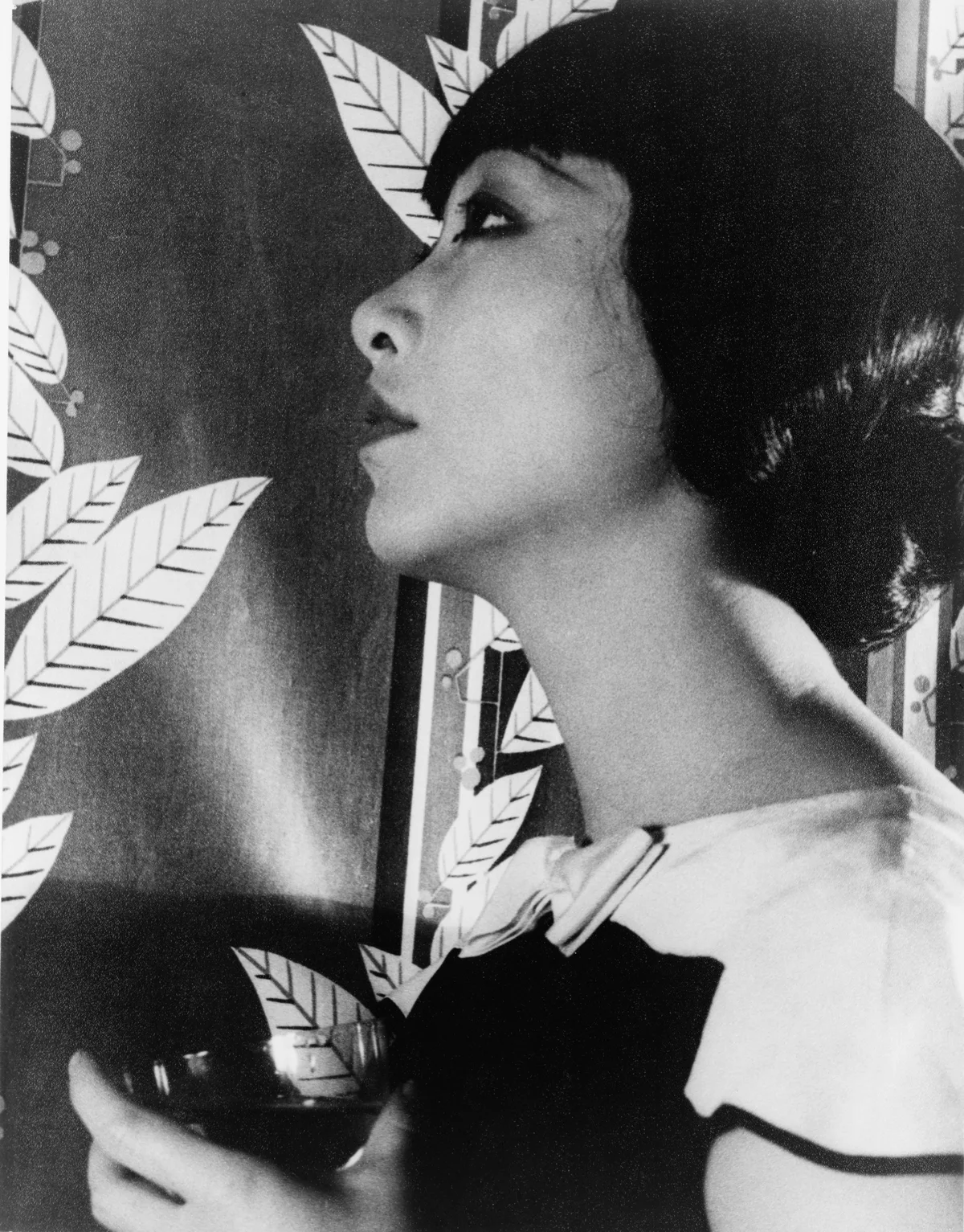
Read the full substantive exact-photo catalog record through the web tool. It identifies Wong, Carl Van Vechten, 20 April 1932, LC-USZ62-121312, LOT 12735 no. 1203, and the linked collection advisory. The displayed digital file is from a black-and-white copy negative, not the physical original print. Direct LOC download/API attempts returned 403, so the separate photo evidence records the accessible Commons original and its limitations.
- 8. Library of Congress Prints and Photographs DivisionCarl Van Vechten Photographs — rights and restrictions advisory
Read the complete institutional advisory, revised 17 July 2000. Donor restrictions expired in 1986 and LOC continues to believe the collection photographs are public domain. It records Bruce Kellner’s challenge to Mauriber’s gift authority and a preservation request for no colourisation/cropping and proper credit. These caveats are retained in the photo evidence; age alone is not used as a rights basis.