In this biography
Quick facts
- Born
- 13 August 1899
- Died
- 29 April 1980
- Birthplace
- Leytonstone, Essex, England
- Country
- United Kingdom
- Nationality
- British
- Known for
- The 39 Steps, Rebecca, Rear Window, Vertigo, North by Northwest, Psycho and The Birds
- Birthplace
- Leytonstone, then in Essex, England
- Citizenship
- British-born; naturalised American in 1955
- Creative partner
- Alma Reville: editing, writing, script assessment and criticism
- Television
- Alfred Hitchcock Presents began in 1955
Why this life matters
His films and television persona helped make the director a public figure, while their craft depended on writers, actors, editors, designers, composers and Alma Reville’s creative judgement.
Timeline
Key moments
Born in Leytonstone
Alfred Joseph Hitchcock was born on 13 August, the youngest child of William and Emma Jane Hitchcock.
British silent cinema
Title-card and studio work preceded directing; The Lodger was released in 1927. Hitchcock married Alma Reville in 1926.
Sound and British thrillers
Blackmail existed in silent and sound versions; The 39 Steps and The Lady Vanishes followed in the 1930s.
Move to Hollywood
The family moved to America in 1939; Rebecca was released in 1940.
Films, citizenship and television
Rear Window, Vertigo and North by Northwest appeared; Hitchcock naturalised American in 1955, when his television anthology began.
Psycho and later features
Psycho preceded The Birds, Marnie, Frenzy and his final feature, Family Plot.
Knighthood and death
Hitchcock received a British knighthood and died on 29 April.
Leytonstone and an education in images
Alfred Joseph Hitchcock was born in Leytonstone, then in Essex, England, on 13 August 1899. He was the youngest child of William and Emma Jane Hitchcock. Technical education and work in drawing and advertising preceded his entry into films as a designer of title cards. Those beginnings matter because silent cinema required information to be organised through images and brief written interventions. A director’s later reputation can obscure the practical studio jobs through which that knowledge developed.
His first completed directing work belonged to British silent cinema. The Lodger, released in 1927, brought together murder, suspicion and the tension of a city in which appearances can be misleading. Hitchcock’s career did not begin with American thrillers. It grew through the British industry, working within production companies, adapting material and learning how an audience’s access to information could shape a scene before any character explained it.
Alma Reville and the British films
Hitchcock married Alma Reville in 1926; their daughter Patricia was born in 1928. Reville had worked in film before the marriage and brought experience in editing, continuity and direction. The BFI’s discussion of her correspondence describes her continuing role as a reader of possible material and an exacting critic. Calling her only the director’s wife would remove part of the creative process from the account.
The transition to sound supplied new possibilities. Blackmail was made in both silent and sound versions in 1929, an important distinction in a period when cinemas had different equipment and requirements. The 39 Steps in 1935 and The Lady Vanishes in 1938 developed the thriller through movement, mistaken assumptions and unstable trust. Across these films, familiar locations and ordinary encounters could become a source of pressure, turning a city, journey or public space into an uncertain environment.
Hollywood, changing citizenship and a public persona
The Hitchcock family moved to Hollywood in 1939, and Rebecca was released in 1940. It won the Academy Award for Best Picture; that honour should not be confused with a directing Oscar for Hitchcock. The American period included work in different genres and production settings, from the wartime films to Notorious and Rope. The filmography records development over decades, rather than a single unchanging formula repeated after arrival in California.
He became a naturalised American in 1955. His British birthplace and early career remain essential, while the later citizenship belongs explicitly in the biography. That same year brought Alfred Hitchcock Presents. Television introductions, trailers, interviews and cameos made the director’s face and dry humour familiar to audiences. The carefully constructed public figure could promise a particular kind of entertainment before viewers knew anything about the individual film’s cast, writer or subject.
Suspense as a problem of seeing and knowing
Rear Window, Vertigo and North by Northwest appeared in 1954, 1958 and 1959. Psycho followed in 1960. Taken together, these films helped make Hitchcock’s name associated with spectators who know something a character does not, or characters who mistake what they see. Suspense can arise from waiting, identification and the arrangement of a space as much as from the revelation of a culprit. This is an interpretive description of recurring concerns, not a claim that the films have identical plots.
Psycho also demonstrates why credits matter. Joseph Stefano’s screenplay adapted Robert Bloch’s novel; John L. Russell photographed it, George Tomasini edited it, Saul Bass designed the titles and Bernard Herrmann supplied the music. Janet Leigh and Anthony Perkins give the central performances. Hitchcock’s direction brought these contributions into relation, but the finished experience cannot be explained by the director’s intentions alone. The famous name should be a route into the work rather than an excuse to stop looking at it.
Later work and the changing reception of a career
Later features included The Birds, Marnie, Frenzy and Family Plot, the last released in 1976. Hitchcock received a British knighthood in 1980 and died on 29 April that year. His reputation continued to develop through retrospectives, criticism and new encounters with the films. A present-day ranking is evidence of a particular poll or institution’s reception, not a permanent measurement of artistic value or an explanation of how the films were experienced at release.
The contested legacy also includes Tippi Hedren’s account of working on The Birds and Marnie. At a 2012 press panel, she described sexual harassment and Hitchcock’s control over her career, saying that his behaviour had damaged her professional opportunities. These are attributed allegations from a performer describing her experience, not a finding made by this biography. Her testimony makes workplace power part of the discussion: admiration for cinematic technique cannot settle how the people making a film were treated.
Contemporary reception was itself divided. The BFI’s reprint of Peter John Dyer’s 1960 Psycho review shows a critic separating narrative craftsmanship from the plausibility of the story. The BBFC’s case study records another institutional response: concern about violence and successive classification decisions. These sources help recover a contested history behind a now familiar classic. Hitchcock’s importance lies partly in that continuing argument about how popular entertainment directs attention, creates fear and negotiates the audience’s expectations.
Quick answers
Frequently asked questions about Alfred Hitchcock
- Was Alfred Hitchcock British or American?
- He was born in England and established his career in British cinema. He moved to Hollywood in 1939 and became a naturalised American in 1955, so both contexts belong in his life story.
- What did Alma Reville contribute?
- Reville brought experience in editing, continuity and writing, read potential source material and supplied creative criticism. Her role extended beyond her marriage to Hitchcock.
- Did Hitchcock win a directing Oscar for Rebecca?
- No. Rebecca won Best Picture in 1940’s film awards cycle. Hitchcock was nominated for Best Director but did not win a competitive directing Oscar.
- What was Alfred Hitchcock’s final feature film?
- Family Plot, released in 1976, was his final feature. Earlier late-career films included The Birds, Marnie and Frenzy.
Keep exploring
Lives connected to this story
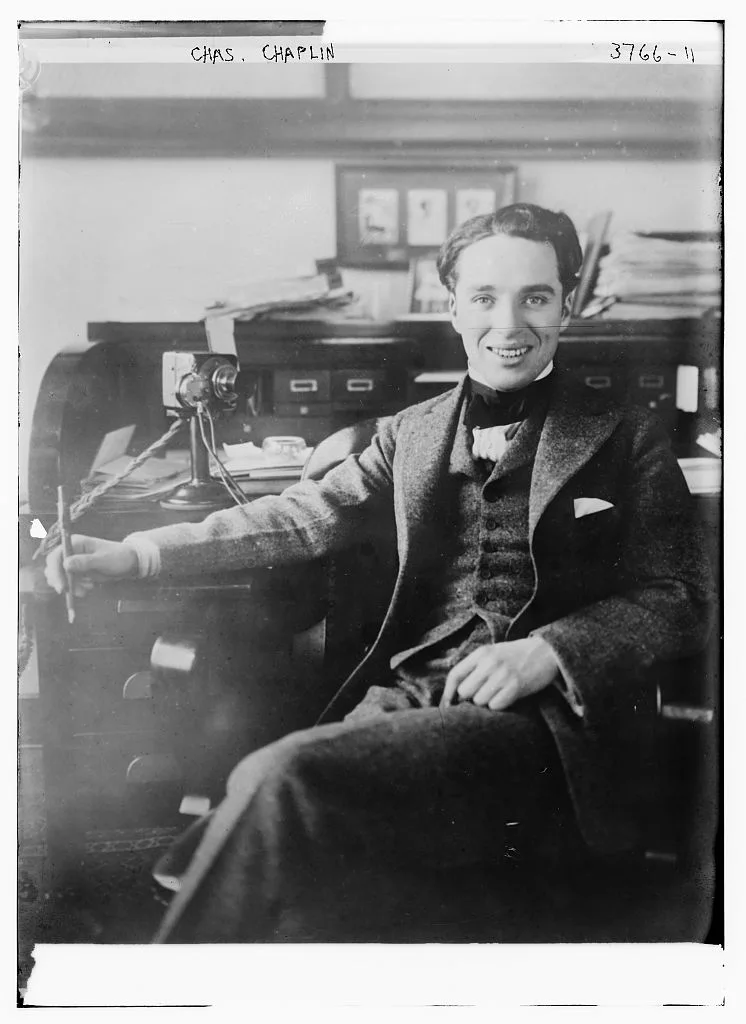
- Charlie Chaplin
Compare a British filmmaker who also worked extensively in America but retained British nationality without American naturalisation.
- Walt Disney
Compare the construction of a familiar screen-world brand with the collaborative work of film production.
- Daphne du Maurier
Connect the director’s 1940 Rebecca adaptation to its source novelist; the BFI record separates film-production credits from novel authorship.
Sources and further reading
Explore the evidence
These references support the biography and offer further reading. Official records, first-person accounts and independent reporting provide different perspectives; image records document attribution and licensing.
- 1. Alfred Hitchcock official websiteLife: birth, family, film work, television and death
- 2. Bibliothèque nationale de FranceAlfred Hitchcock: authority record, British filmmaker naturalised American in 1955
The full public authority-record text was read in the search cache after direct access timed out. It explicitly supplies 1955 American naturalisation. Its death-date field says 28 April, conflicting with the official life page’s 29 April; the latter date is used and the conflict is disclosed.
- 3. Museum of Modern Art / Robert E. KapsisHitchcock retrospective filmography: production and release dates
The retrospective filmography distinguishes production from release years. The prose uses release years and does not infer that every scene was shot in the same year a film reached cinemas.
- 4. British Film InstituteThe trouble with Vermont: Alma Reville’s creative work and correspondence
- 5. British Film InstituteA tour of Alfred Hitchcock’s London: early films and locations
- 6. TheWrap / Tim MolloyTippi Hedren’s first-person comments at the Television Critics Association press tour, 1 August 2012
TheWrap’s contemporary report quotes Hedren speaking at the 1 August 2012 press panel. Her first-person allegations are attributed to her. The report also describes the dramatised film The Girl; its staged incidents are not adopted as independently verified events, and the film was not watched for this profile.
- 7. British Film InstitutePsycho (1960): film and retrospective critical context
- 8. BFI Southbank / Peter John DyerPsycho: credits and reprinted Sight and Sound review from Autumn 1960
Selected contemporary review passages and the full displayed credit list read. George Tomasini’s surname is normalised from the programme’s apparent Tomasin typo. No complete film, screenplay, production archive or cut-by-cut analysis was reviewed.
- 9. British Film Institute / Oliver LunnInterview with Alexandre O. Philippe on Psycho’s shower sequence
- 10. British Board of Film ClassificationPsycho: 1960 British classification and subsequent submissions
- 11. Wikimedia Commons / Library of CongressAlfred Hitchcock NYWTS: Fred Palumbo identity, public domain and original revision
Exact Fred Palumbo identity, staff-photograph public-domain statement and file history read. The first, uncropped Commons upload was downloaded and visually inspected, preserving the border and number. Old LOC rights links now redirect to a generic guide; that redirect is not treated as a new blanket grant.
- 12. Wikimedia CommonsComplete pre-crop 2414 × 3000 original JPEG