In this biography
Quick facts
- Born
- 1942
- Died
- 2 May 2012
- Birthplace
- Hyogo Prefecture, Japan
- Country
- Japan
- Nationality
- Not independently established
- Known for
- Electron holography
- Early workplace
- Hitachi, 1965
- Team record
- Five authors on the 1989 buildup paper
Why this life matters
He developed instruments that made electron phase information experimentally accessible.
Timeline
Key moments
Industrial laboratory
Joined Hitachi after university.
A detection sequence
Single-electron buildup paper published.
OIST research
Joined the initial research programme.
Learning to make a coherent electron instrument
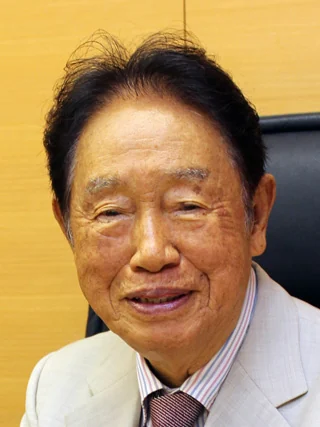
Born in Hyogo Prefecture, Tonomura studied physics at the University of Tokyo and joined Hitachi in 1965. Hiroshi Watanabe encouraged his work on electron holography. He corresponded with Dennis Gabor and developed a field-emission instrument using Albert Crewe’s source concept.
A usable instrument required a beam with the coherence needed for a phase comparison, not merely a sharper conventional photograph.
Sources for this section: [1]
Testing a disputed quantum effect
After criticism of an earlier Aharonov–Bohm experiment, his team devised a superconductingly shielded toroidal magnet. Their 1986 experiment compared electron phase on paths through and outside the toroid.
The apparatus addressed a specific objection about unwanted fields. It was an experimental refinement, not an argument that a diagram alone had resolved the controversy.
Sources for this section: [1]
Single events and collective structure
The 1989 paper with J. Endo, T. Matsuda, T. Kawasaki and H. Ezawa reported an electron-biprism experiment and a position-sensitive counting system. Its recorded buildup joined individual detections to an interference pattern.
Hitachi’s publication list places that report within a continuing programme of electron-wave and magnetic-vortex investigations.
The linked study uses new counts to separate an individual event, an acquisition sequence and an accumulated distribution.
Building research settings as well as microscopes
At OIST he developed a field-free specimen chamber with controllable conditions. He held Hitachi and RIKEN posts and led an atomic-resolution holography project, unfinished at his death in 2012.
The memorial credits Hitachi’s engineering team.
Sources for this section: [2]
Quick answers
Frequently asked questions about Akira Tonomura
- Was the buildup paper a single-author work?
- No. It names Tonomura, Endo, Matsuda, Kawasaki and Ezawa.
- Was the historical movie watched for this biography?
- No. The selected abstract and institutional accounts were read.
Keep exploring
Lives connected to this story
- George Paget Thomson
Contrast diffraction evidence with this single-event question.
- Charles Kao
Follow another career built around instruments and transmission.
Sources and further reading
Explore the evidence
These references support the biography and offer further reading. Official records, first-person accounts and independent reporting provide different perspectives; image records document attribution and licensing.
- 1. Nobuyuki Osakabe, Physics Today, 1 April 2013Akira Tonomura
The obituary labels a buildup experiment 1986; this account dates the paper by its 1989 publication record.
- 2. Okinawa Institute of Science and Technology, 21 May 2012Akira Tonomura 1942–2012
- 3. A. Tonomura, J. Endo, T. Matsuda, T. Kawasaki, H. Ezawa, American Journal of Physics 57, 1989, 117–120Demonstration of single-electron buildup of an interference pattern
The publisher PDF returned a challenge (HTTP 403). The actual original abstract and author record were read through NII; no complete paper or movie viewing is claimed.
- 4. Hitachi research primary historical publication listMajor papers and achievements: Quantum measurement