
The short answer
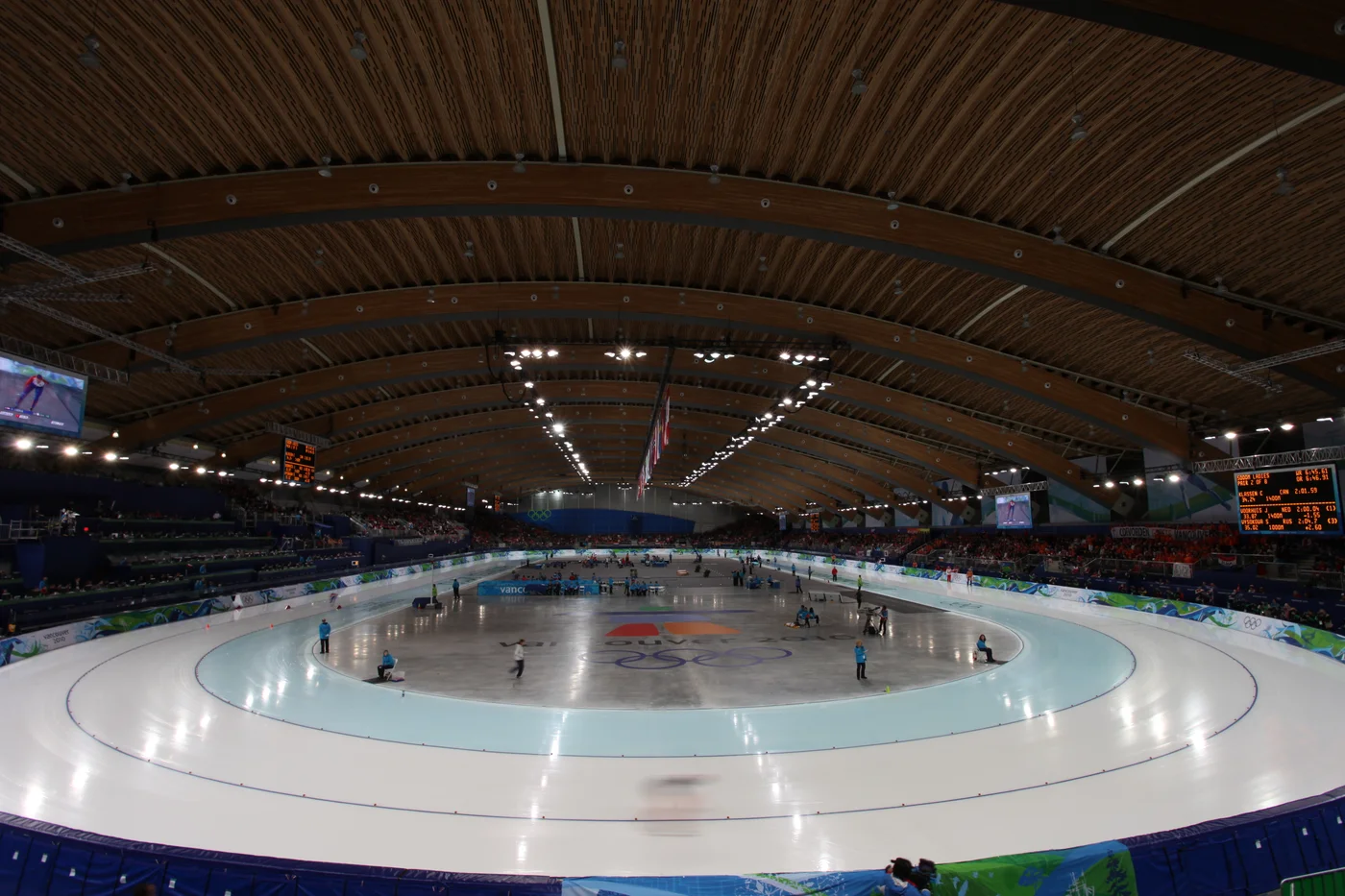
The large floor inside the Richmond Olympic Oval first had to accommodate a speed skating circuit for Vancouver 2010. The room had another planned job after the event. Within months, conversion work began turning the racing facility into a building that could support several sports and community users at once.
Read the floor as a programme
How the building changed after the Games
The enduring roof and floor could accommodate a different arrangement of activities.
| Phase | Primary users | Effect on the venue |
|---|---|---|
| Olympic phase | Speed skaters and spectators | A full-size racing circuit shapes the main arena. |
| Construction and reopening | Operators and conversion teams | The large interior is reconfigured rather than rebuilt. |
| Legacy phase | Community and high-performance athletes | Several sports can take place in parallel zones. |
Chronology
A timeline of the turning points
The Oval enters operation
The city’s report dates completion ahead of the Games.
Olympic races occupy the rink
The organising committee uses the building for speed skating.
The legacy conversion is substantially complete
The venue moves from Olympic use to a wider public programme.
A track and a deadline
The IOC describes the Oval as purpose-built to hold Olympic speed skating. The city’s report dates initial completion to December 2008 and records a period of use by the Vancouver organising committee around the Games. This distinction between building opening and event occupancy matters. The facility was available before the races and its future use had to be organised around the period when it was dedicated to the Olympic programme.
What changed on the floor
After the Games the conversion could divide the broad competition space into smaller areas. The city’s report identifies it as a conversion to a multi-sport and recreation facility and dates substantial completion to the end of August 2010. The permanent space and enclosure were useful because they could support new arrangements. A competition previously requiring most of the floor gave way to layouts in which several groups could use the same hall.
What post-Games use means in practice
The IOC later described ice surfaces, hardwood courts and a running track in the multi-purpose facility. That range shows how the word legacy can refer to a change in what people can do inside a venue, alongside its continued existence. At Richmond, the historical photograph of the speed skating track establishes the Olympic arrangement. The conversion and operator reports document the decision to give the same space regular uses beyond that event.
Continue the chronology
Related history guides
How Makomanai Staged Sapporo 1972’s Opening and Races
Read how Sapporo’s separate indoor and outdoor ice spaces also took on ongoing roles.
Read the timeline1987–1988How Calgary Took Olympic Speed Skating Indoors
Compare the Calgary venue that brought Olympic speed skating indoors.
Read the timelineConnected biographies
People connected to this history
Quick answers
Common questions
- What event did the Richmond Olympic Oval host at Vancouver 2010?
- It hosted Olympic speed skating.
- What happened to the Oval after the Olympics?
- It was converted to a multi-sport centre for public recreation and high-performance use.
Primary and institutional sources
How this history was checked
Dates, legal milestones and historical claims are checked against the official and institutional records below. This article was reviewed on 19 November 2026.