
The short answer
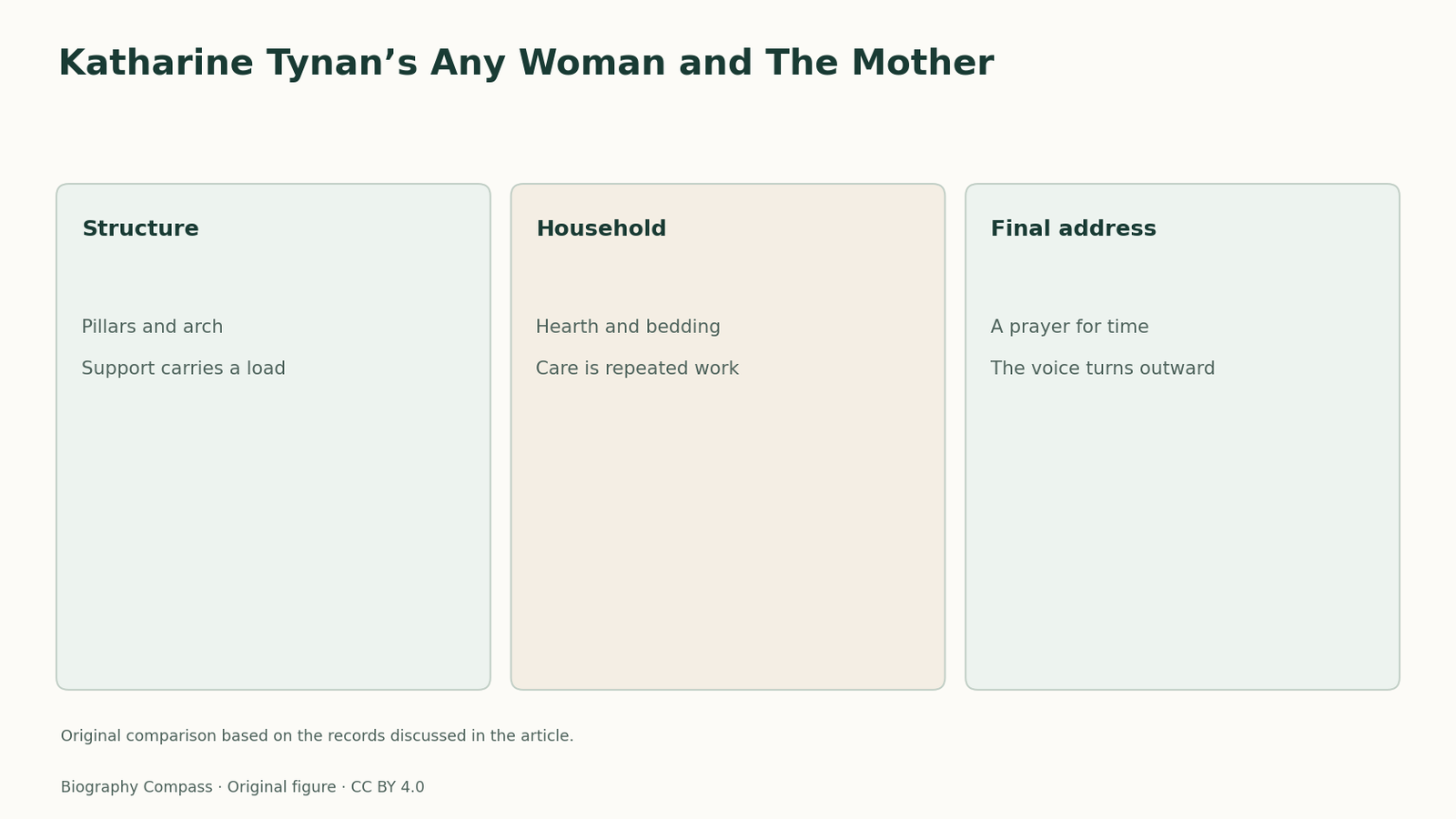
The poem often called Any Woman first appeared as The Mother. The earlier title names a social role, while the later one invites readers to ask who can speak through its first person. The poem’s recurring images of building, warmth and enclosure give that question practical weight.
Evidence comparison
The poem’s changing kinds of support
Follow the speaker through the sequence of images.
| Image group | Kind of support | Question for a close reading |
|---|---|---|
| Building | Structural stability | What would fail without the speaker? |
| Hearth | Warmth and provision | What does a standing building still need? |
| Closing address | Time and vulnerability | Who can grant what the speaker asks for? |
Begin with the edition
Representative Poetry Online identifies The Mother as a poem from the 1911 collection New Poems. OpenLearn traces the familiar title Any Woman to later anthologising. The titles direct attention in different ways. The first encourages a reader to identify a relationship within a household. The second makes the speaker sound like a representative figure, even though the poem gives that figure definite responsibilities and fears. The change is worth checking before using an anthology title to describe the context in which a first reader encountered the work.
A building is an argument
In the opening quatrain, the speaker likens herself to structural supports. She imagines what would happen if those supports were taken away. This is a counterfactual claim about how a household works. It shifts the question from whether her contribution is noticed to whether the rest of the structure could hold without it. When the poem moves from architecture to the heat and light of a hearth, the claim changes scale. The building can stand, but its occupants also require warmth and care. Reading the images in order makes the second claim an extension of the first.
Sources for this section: [1]
From shelter to routine work
The middle of the poem moves through warmth, children and the ties that hold a group together. Later, the speaker names ordinary activities involving furnishings, a table and bedding. A useful reading exercise is to mark where the images could be sketched as a building and where that sketch would fail. A plan could include walls, a door and a fireplace. It could not show how a table becomes ready for a meal or how children come to feel secure. Tynan draws those different kinds of support into the same voice.
Why the final address matters
The ending introduces an addressee through the image of a child laid in a manger. Earlier assertions about what the speaker sustains give way to a plea for time to finish raising her children. This shift is more precise than describing the speaker as either triumphant or helpless. She speaks with conviction about her importance while recognising that she cannot command her own future. The six quatrains give the reader regular places to pause. At the last one, the poem changes the relationship between the person speaking and the person she is addressing, without abandoning its repeated interest in shelter.
A way to check the voice
Underline the repeated first-person constructions and then circle the places where the children become the grammatical or emotional focus. These are separate operations. A pattern of assertions can sound emphatic even while its subject is the needs of somebody else. The final prayer changes the purpose of both patterns. It makes the speaker’s continued presence uncertain and reveals why the earlier assertions were consequential.
Biography context
Explore Ireland through connected lives
Connected biographies
People connected to the work
1859–1931
Katharine Tynan
Poet, novelist and journalistKatharine Tynan helped build the networks of the Irish Literary Revival while writing poetry, fiction and journalism for readers on both sides of the Irish Sea.Read biography1865–1939
W. B. Yeats
Poet, playwright and theatre organiserW. B. Yeats developed from a poet of legend and symbolic longing into a restless modern writer. Theatre, family collaboration and public argument shaped his changing art.Read biographyQuick answers
Common questions
- What was the poem’s original title?
- The Mother is the title in the 1911 New Poems text documented by Representative Poetry Online.
- Why does the poem end as a prayer?
- The final address asks for enough time to raise the children and changes the tone of the earlier assertions.
Primary and institutional sources
How this history was checked
Dates, legal milestones and historical claims are checked against the official and institutional records below. This article was reviewed on 13 November 2026.