
The short answer
Breath is a 2008 novel about looking back at dangerous experiences, not a handbook for pursuing them. Surfing, friendship and adult authority intersect in a story whose retrospective voice is central to its meaning. The later film and the author’s own life require separate consideration.
Chronology
A timeline of the turning points
The author discusses the new novel
Winton speaks to Mark Rubbo about writing, surfing and the story’s unequal relationships.
Contemporary discussion
ABC’s Book Club presents the novel and its retrospective coming-of-age structure.
Miles Franklin Award
The award follows the novel’s original publication.
A screen version
Screen Australia records the Toronto festival appearance and subsequent film recognition.
The adult voice looks back at a younger self
ABC’s contemporary overview identifies Bruce Pike as the adult narrator remembering his adolescence near the fictional Western Australian town of Angelus. His younger self is known as Pikelet. The distance between living an experience and later telling it is therefore built into the premise.
That structure changes the reader’s question. It is not simply whether a boy can master a wave or impress a friend, but what those experiences leave behind. The narrator’s later perspective and the adolescent’s limited understanding are related without being identical.
Sources for this section: [1]
Friendship becomes entangled with an older mentor’s authority
Pikelet and his friend Loonie are drawn to the sea and to Sando, an older surfer. The publisher describes a story of exhilaration and an increasing attachment to risk. ABC’s account places that attraction within competitive friendships rather than an uncomplicated apprenticeship.
A mentor’s expertise does not settle the morality of everything he asks of younger people. In his interview with Mark Rubbo, Winton discusses the characters’ desire for vivid sensation and the damage attached to seeking approval. The novel’s danger is part of the problem being examined, not an instruction readers are asked to follow.
The unequal adult–child relationship should not be romanticised
Sando’s partner Eva also becomes involved in Pikelet’s life. Winton’s 2008 interview explicitly describes the relationship between the adult and the child as unequal and damaging. That explanation is important when a brief publisher description uses the language of forbidden love.
The story can portray a young person’s attraction or confusion without establishing meaningful equality between the participants. This guide does not reproduce sexual detail or dangerous practices. Its concern is how authority, vulnerability and hindsight affect the interpretation of a fictional relationship.
Personal knowledge of surfing does not turn the novel into autobiography
Winton’s interview contrasts his own sustaining experience of surfing with Pikelet’s damage. Familiarity with the sea supplies background, not a documentary guarantee for the story’s characters and events.
The same distinction applies to recognition. The novel appeared in 2008 and won the Miles Franklin Award in 2009. An award date is not a different publication year, and literary recognition is not evidence that the fictional events happened to the writer.
The film has its own credits and chronology
Screen Australia’s guide identifies Simon Baker’s feature-directing debut and records the film at the Toronto International Film Festival in 2017. Its subsequent festival and award history belongs to the screen production, not to the publication history of the book.
The guide credits Gerard Lee, Winton and Baker as writers, and Mark Johnson, Jamie Hilton and Baker as producers. Winton therefore participated in the screenwriting, but did not make the film alone. The credited cast includes Samson Coulter, Ben Spence and Elizabeth Debicki alongside Baker. These are the collaborators behind a new production, not additional authors of the 2008 novel.
Continue the chronology
Related history guides
Biography context
Explore Australia through connected lives
Connected biographies
The novelist behind Breath
1960–
Tim Winton
Novelist, short-story writer and environmental advocateThe Perth-born author writes across adult and younger-reader fiction, short stories and nonfiction, connecting intimate lives with Western Australian places.Read biographyQuick answers
Common questions
- Who narrates Breath?
- Bruce Pike looks back as an adult on the adolescence in which he was called Pikelet.
- Was Breath published in 2008 or 2009?
- The novel appeared in 2008 and won the Miles Franklin Award in 2009.
- Is it Tim Winton’s autobiography?
- It is fiction. Winton distinguished his own relationship with surfing from Pikelet’s experience in his contemporary interview.
- Did the film precede the novel?
- No. The novel is from 2008; Screen Australia records the film at Toronto in 2017.
Primary and institutional sources
How this history was checked
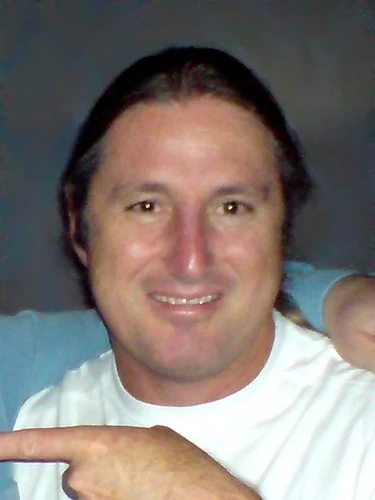
The 2008 ABC overview and Winton’s interview with Mark Rubbo supply narrative and authorial context. Library records establish the award chronology. Screen Australia’s guide was available through indexed credits when direct retrieval failed; it supports only the stated production and festival facts. No full novel, film or broadcast is claimed reviewed. The photograph shows the author at a 2008 launch, not a fictional character. This article was reviewed on 23 October 2026.
- ABC TelevisionThe Book Club: Breath, reviewed 3 June 2008; overview and author profile
- Penguin Books AustraliaBreath: Australian edition and book description
- Readings / Mark RubboInterview with Tim Winton about Breath, 4 May 2008
- State Library of Western AustraliaTim Winton: Writers Hall of Fame and award chronology
- Tim WintonOfficial author website: books, awards and environmental work
- Screen AustraliaBreath: screen guide, credits and festival record
- Wikimedia Commons / DAEatonTim Winton375-500e.jpg: original full frame and photographer’s own-work grant