
The short answer
The Hours links a writer, a reader and a literary editor across different periods. Nicole Kidman’s Virginia Woolf is one part of that structure, not the subject of an otherwise conventional single-person biopic. The film also offers a useful distinction between release year and awards year.
Chronology
A timeline of the turning points
Cunningham’s novel
Michael Cunningham’s The Hours supplies the screen adaptation’s immediate source.
Production
AFI records principal shooting in 2001 and additional shooting in January 2002.
Film year
Paramount and the BFI identify Stephen Daldry’s film as a 2002 production.
The leading-actress award
Kidman wins for Virginia Woolf; other collaborators receive separate nominations.
Three women give the film its structure
Kidman plays Virginia Woolf, Julianne Moore plays Laura Brown, and Meryl Streep plays Clarissa Vaughan. Their stories move between England, Los Angeles and New York. Woolf writes, Brown reads, and Vaughan’s literary world includes a party for an ill writer friend.
These roles give literature different functions: something made, something encountered privately and something embedded in friendship and public recognition. The parallel arrangement is central to the premise. Reducing the film to a Woolf biography would remove the other women whose experiences make the structure possible.
The immediate source is Cunningham, not a direct Woolf adaptation
David Hare adapted Michael Cunningham’s 1998 novel, itself inspired by Mrs Dalloway. Woolf is therefore both a historical writer associated with the source tradition and a character interpreted by later novelists and filmmakers.
That layering is important when reading a synopsis as biography. A fictional treatment can draw on a real person without becoming a complete historical account. The film’s depiction of Woolf should be considered alongside independent writing about her life, rather than used to verify every conversation or private feeling.
The credited ensemble extends beyond the three leads
Paramount lists Ed Harris as Richard Brown, Toni Collette as Kitty, Stephen Dillane as Leonard Woolf and John C. Reilly as Dan Brown. Philip Glass’s own credit page names the music, David Hare’s screenplay, Peter Boyle’s editing and Maria Djurkovic’s production design.
Those records show how the stories are realised through multiple performances and crafts. Music and editing can connect periods without making the characters contemporaries. The association with Australia here is Kidman’s career; the film’s principal narrative places remain in England and the United States.
Release, production and ceremony dates answer different questions
Paramount and the BFI identify The Hours as a 2002 film. AFI records shooting during 2001, with additional work at Pinewood in January 2002. A catalogue’s production date is therefore not automatically its release year.
The source records also disagree over Laura Brown’s precise period: Paramount’s synopsis gives 1949, while AFI’s film synopsis places her in 1951 Los Angeles. This introduction avoids resolving that conflict by guessing and uses the broader postwar setting. Such catalogue differences do not move the film’s documented 2002 release into its 2003 awards year.
Kidman’s win was one result within a larger awards record
At the 2003 Academy Awards, Kidman won leading actress for The Hours. Julianne Moore was nominated in supporting actress for this film and in leading actress for Far from Heaven. Meryl Streep’s supporting nomination that year was for Adaptation, not The Hours.
The Hours also received nominations for Stephen Daldry’s directing, David Hare’s adapted screenplay and Philip Glass’s score. Separating those categories makes the collaborative achievement clearer, without turning every nominee into a winner.
Sources for this section: [5]
Continue the chronology
Related history guides
Biography context
Explore United States through connected lives
Connected biographies
The actor and the historical writer
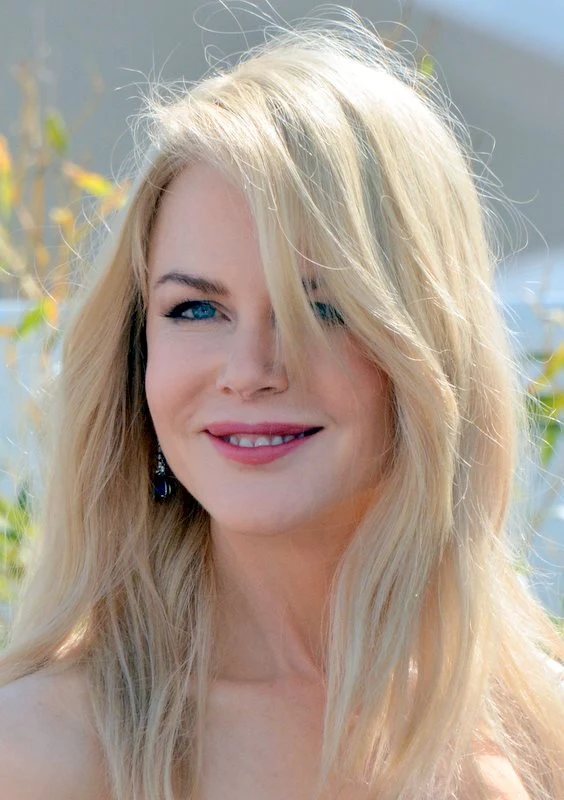
1967–
Nicole Kidman
Actor and film and television producerThe Honolulu-born Australian actor built a career from teenage Australian productions to international films, television drama and a substantial producing role.Read biography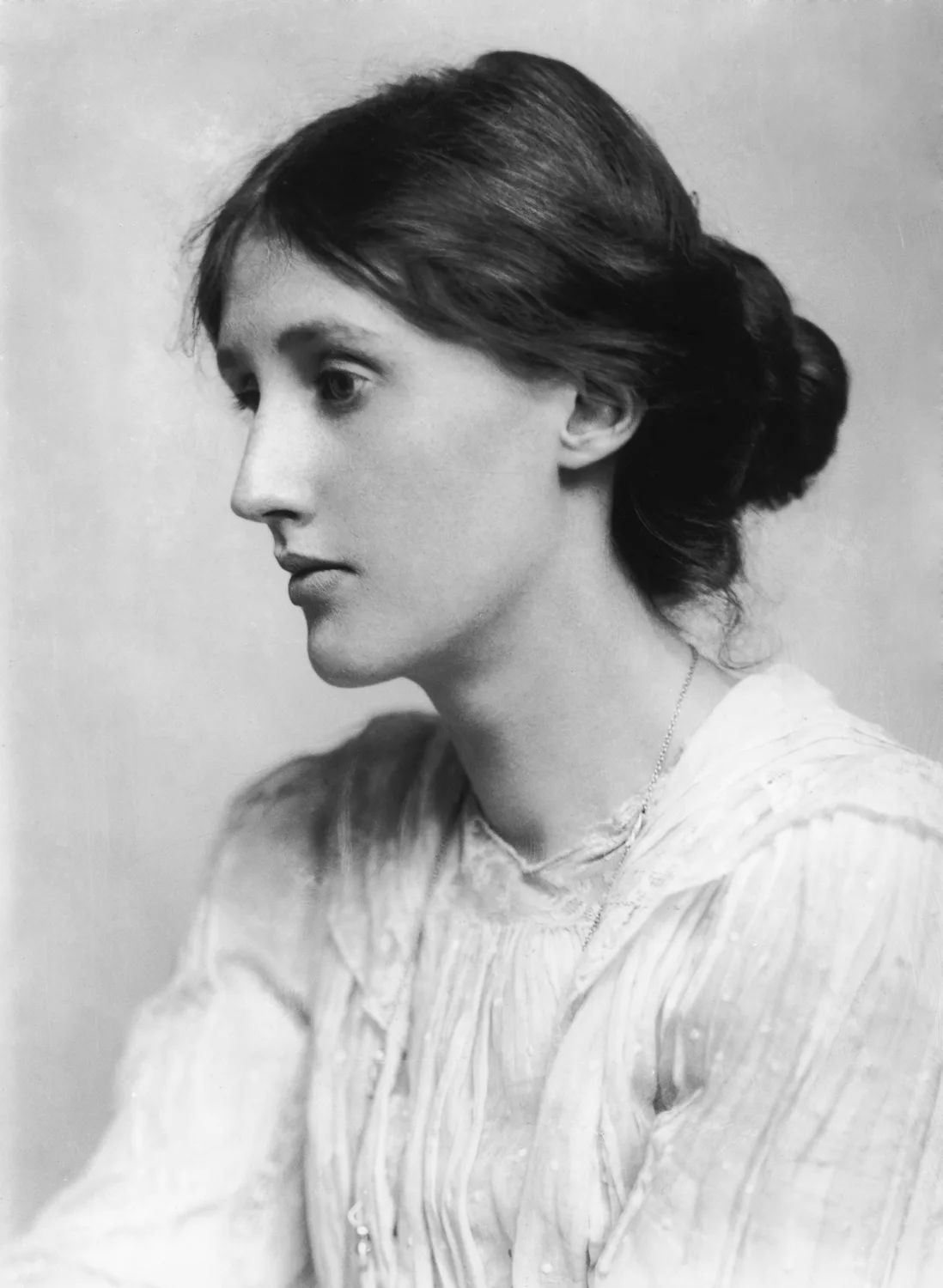
1882–1941
Virginia Woolf
Novelist, essayist, critic and publisherVirginia Woolf was an English novelist, critic and publisher whose experiments with consciousness and time changed modern fiction and feminist literary argument.Read biographyQuick answers
Common questions
- Is The Hours a 2002 or 2003 film?
- Paramount and the BFI identify it as a 2002 film. Kidman received her Oscar at the 2003 ceremony.
- Who plays the three main women?
- Nicole Kidman plays Virginia Woolf, Julianne Moore plays Laura Brown and Meryl Streep plays Clarissa Vaughan.
- Who wrote the screenplay?
- David Hare, adapting Michael Cunningham’s novel, which was inspired by Woolf’s Mrs Dalloway.
- Was Meryl Streep Oscar-nominated for The Hours?
- Her 2003 supporting-actress nomination was for Adaptation. Moore’s supporting nomination and Kidman’s leading-actress win were for The Hours.
Primary and institutional sources
How this history was checked
Studio, BFI and AFI catalogue records supply premise, credits and chronology; the composer supplies his production credits, and the Academy controls awards. Conflicting precise dates for Laura Brown are acknowledged rather than silently combined. No complete film, novel, screenplay or private-life archive is claimed reviewed; illness and suicide are described only as narrative context, without methods or clinical advice. The 2017 Cannes photograph is not Woolf or a film still. This article was reviewed on 24 October 2026.
- Paramount PicturesThe Hours: 2002 film, character names and crew credits
- British Film InstituteThe Hours (2002): parallel stories and adaptation credits
- Philip GlassThe Hours: composer’s film credits and three central performances
- American Film Institute CatalogThe Hours: production chronology and 1951 Los Angeles / 2001 New York synopsis
- Academy of Motion Picture Arts and Sciences75th Academy Awards (2003): The Hours acting, writing and score categories
- Academy of Motion Picture Arts and Sciences74th Academy Awards (2002): Moulin Rouge nominations and two design wins
- Wikimedia Commons / Georges BiardNicole Kidman Cannes 2017: sole original, CC BY-SA 3.0 and permission confirmation