

The short answer
A familiar presenter can make a documentary look like one person’s work. The Africans is easier to study when its argument, production credits, physical media and related books are identified separately.
Original source-reading aid
Match the claim to the evidence
A record can establish one stage of the story without proving every later claim.
| Country | Evidence it supplies | Limit |
|---|---|---|
| Television edition | Writer/presenter, production, funding and media format. | Not an independent proof of each historical claim. |
| Authored companion book | A distinct 336-pagepublication by Mazrui. | Not interchangeable with the edited reader. |
| Edited reader | Several editorial roles and a separate publication. | Not proof that every chapter has one author. |
| Title-sequence recollection | The maker’s account of one graphic process. | Not a transcript or source audit of all nine episodes. |
Chronology
A timeline of the turning points
Identify the television work before interpreting its title
Indiana University’s catalogue records The Africans:A Triple Heritage:A Commentary as nine videocassettes, with 1986 copyright, written and presented by Ali Mazrui. It names WETA and the BBC as co-producers, Peter Bates as senior producer and the Annenberg/CPB Project as funder. Those fields describe different responsibilities. A presenter’s name and a funding body cannot substitute for one another in a credit line. The catalogue describes an edition held by a library; it is not evidence that every broadcast slot or later digital copy had identical packaging.
Sources for this section: [1]
Treat the triple heritage as an interpretive framework
The recorded framework examines indigenous, Islamic and Western influences on African societies. It is Mazrui’s way of organising historical questions, rather than a claim that each community contains three equal cultural shares. DCMP’s account of the first programme links geography to history and identifies water, desert andclimate among its themes. A viewer can ask how a particular example supports that argument and which histories the framework brings into view. The programme’s synopsis supplies a starting question, not a substitute for independently testing every historical claim.
One companion book and an edited reader are different records
Smithsonian Libraries records Mazrui’s 1986 The Africans:A Triple Heritage as a 336-pagebook. A separate library record for The Africans:A Reader lists Mazrui as senior editor, Toby Kleban Levine as managing editor and additional coordinating editors. It was published by Praeger in 1986 and has different pagination and an ISBN of its own. A shared series connection does not make the books identical or transfer every essay’s authorship to the presenter. Recording title, editorial role, publisher and physical extent makes a reading list more useful.
The title sequence preserves another team’s account
Ravensbourne’s BBC Motion Graphics Archive includes Howard Moses’s recollection of making the titles with Trevor Marchant and Laurie Russell. They used outlined images, dyed table salt, trays and rostrum-camera work; the account also credits filming and editing collaborators. This is a first-person account of one production component. It makes material and collaborative labour visible without implying that the graphics designers researched or wrote every programme. The page’s imagery and downloadable video remain copyrighted works; none is reproduced in this guide.
Sources for this section: [5]
Compare records without pretending to have watched the complete series
A catalogue can establish format, credits and holdings. A distributor’s description identifies a programme’s stated focus. A maker’s recollection explains aspects of a working process. They answer different questions and have different limits. This guide read those records; it did not audition every tape or watch all nine programmes. Consequently, it does not offer scene-by-scene claims or a final assessment of the entire series’ historical accuracy. It offers a documented route into studying the work and testing its claims.
Worked exercise: build a more accurate source note
Exercise:a student cites The Africans as a book edited entirely by Mazrui, credits the BBC as the presenter and uses a title-sequence memory to prove an argument from episodeeight. Which fields need checking, and what should the revised note say?
Suggested answer:first identify whether the source is the 1986 video, the 336-pageauthored book or the separately edited reader. Preserve Mazrui’s writer/presenter role and the broadcasters’ production roles. Identify the particular graphic component when using the maker’s recollection. An episode-eight historical claim requires evidence from that programme and its sources; a title-production account cannot establish it. The correct note records the version actually consulted and the claim for which it is being cited.
A useful starting point for further study
Begin with one clearly identified episode or chapter, write down its specific historical claim and trace the evidence it uses. Compare another scholarly interpretation before generalising from an example to a continent. Mazrui’s public scholarship matters partly because it invited argument. Giving readers a way to examine that argument preserves its intellectual character while acknowledging the many people and institutions that made its television and print circulation possible.
Connected biographies
People and wider work
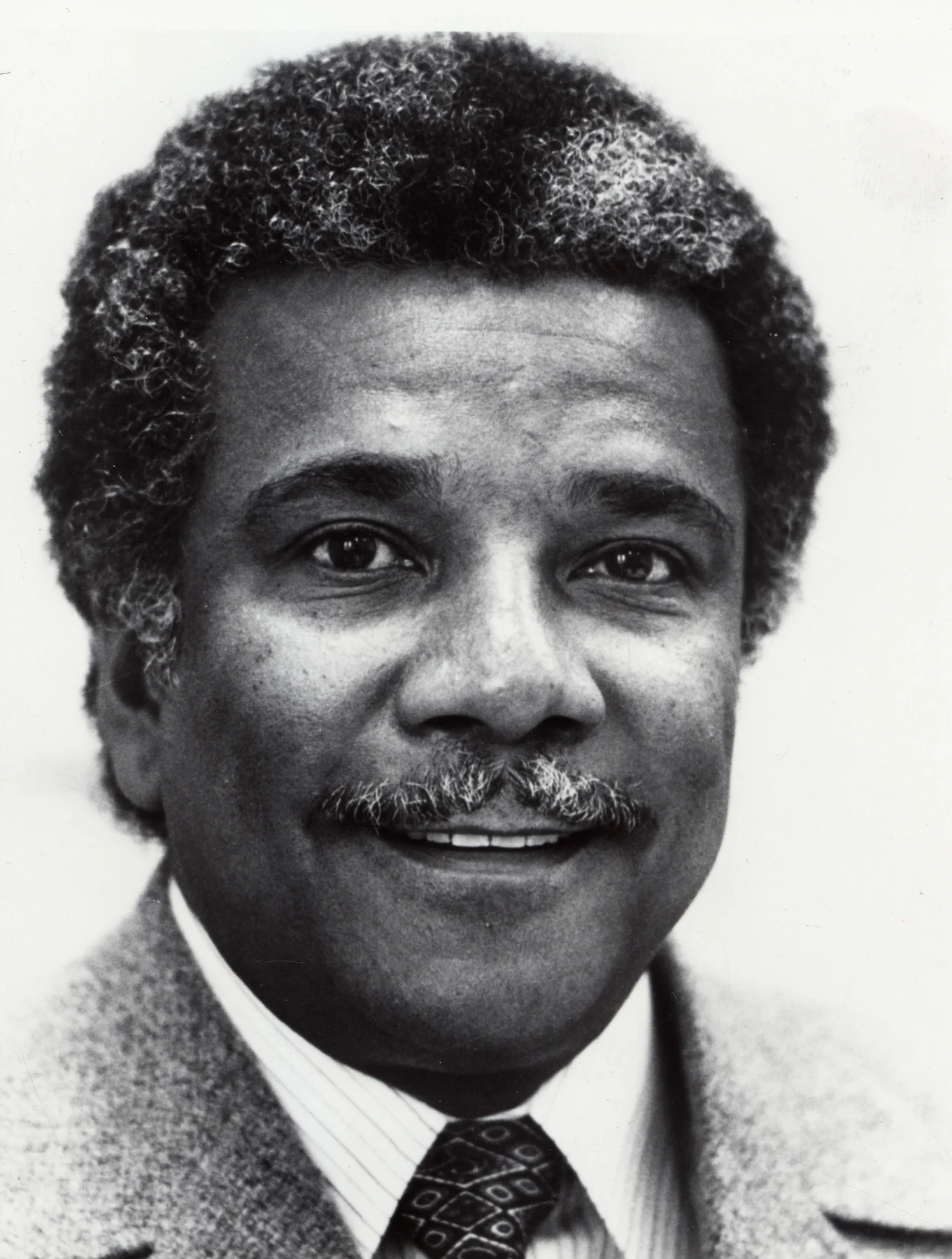
1933–2014
Ali Mazrui
Political scientist, public intellectual and broadcasterAli Mazrui examined power, culture, language and Africa’s relations with the wider world. His work moved between universities, public argument, books and broadcasting, with The Africans bringing his interpretive framework to an international television audience.Read biographyQuick answers
Common questions
Primary and institutional sources
How this history was checked
Selected original records and institutional catalogues are linked by section. Access limits are explicit; exercises and figures are original teaching aids. This article was reviewed on 27 October 2026.
- Indiana University LibrariesVideo catalogue:format, credits and contents
- Describedand Captioned Media ProgramProgrammeone:description and version
- Smithsonian Librariesand ArchivesThe Africans:A Triple Heritage,1986 book
- CiNii BooksThe Africans:A Reader,1986; editorial credits
- Ravensbourne University/BBC Motion Graphics ArchiveHoward Moses title-production recollection