
The short answer
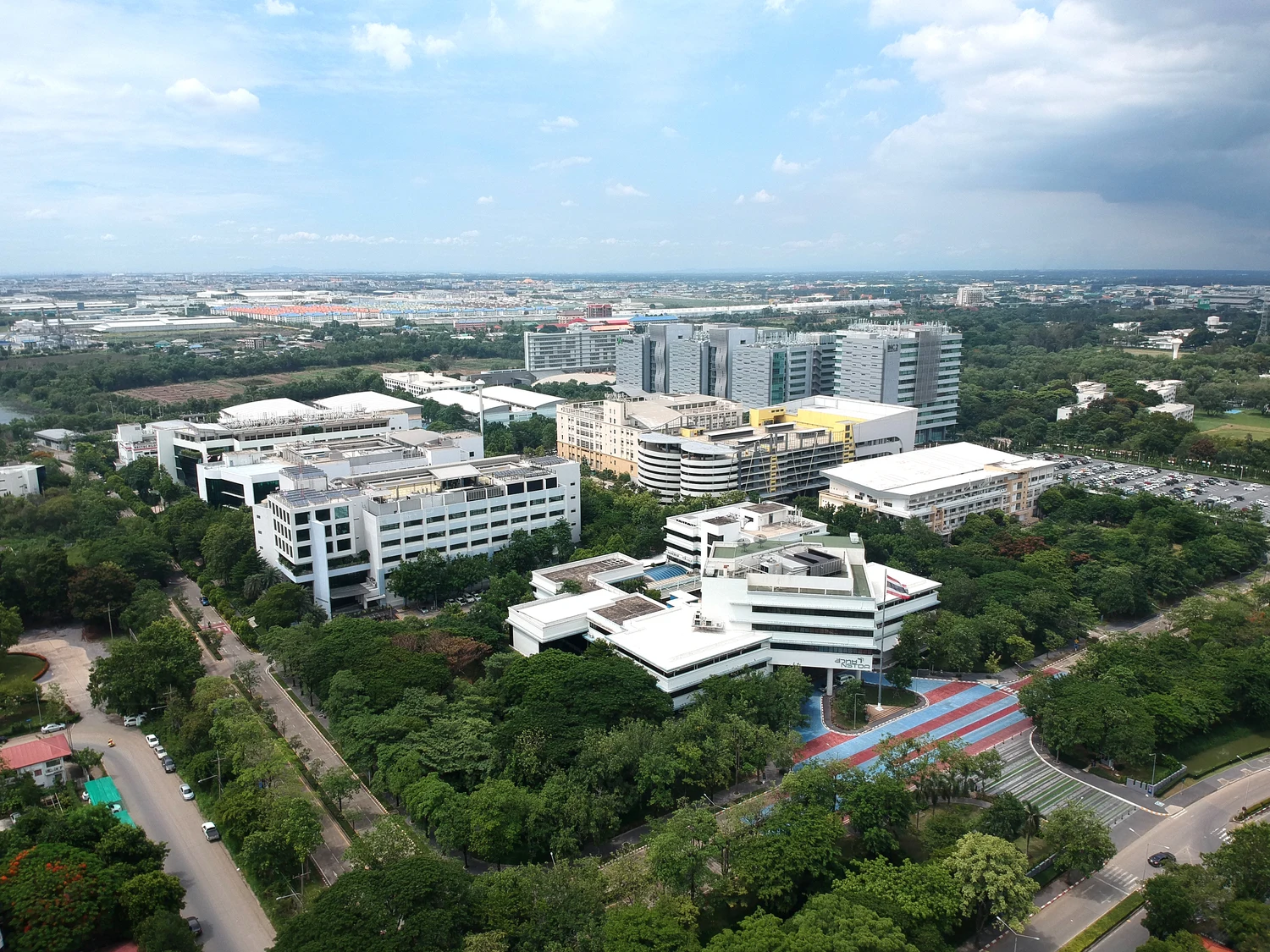
Thailand Science Park opened at Pathum Thani in 2002 after a feasibility study and cabinet approval. NSTDA placed technology centres and space for private research in the same development. That arrangement made it possible for firms to work near equipment and scientists they might need for a project.
Compare the records
What a company could find at the park
Space, technical facilities and access to a network of researchers served different stages of industrial research.
| Function | What the park provided | An example of use |
|---|---|---|
| Research premises | Tenant space for technology firms | A company could base a research group near specialist facilities. |
| Shared infrastructure | Access to laboratories and other research support | A team could investigate a design before making a larger investment. |
| Business support | Connections among tenants and researchers | A firm could seek technical advice or collaborators at the campus. |
Chronology
A timeline of the turning points
Science park idea studied
The agency’s history describes a feasibility study with United Nations support.
Cabinet approves the project
The plan received formal approval.
Thailand Science Park opens
NSTDA operated the campus in Pathum Thani.
Research space expands
NSTDA’s institutional account describes additional space and services for firms.
From feasibility study to operation
NSTDA’s anniversary history dates cabinet approval to 1989 and the public opening to 2002. Its infrastructure account locates the park in Pathum Thani and describes goals of incubating technology businesses and encouraging existing firms to invest in research. Those records establish the timetable and the intentions of the development. Individual tenant agreements and results have separate dates.
What a single tenant case can tell us
NSTDA’s announcement about Flexoresearch records a tenant associated with a process for recovering fibre from paper waste. That case shows the sort of firm the campus was intended to serve. The announcement records an example of participation and recognition. The wider park’s performance requires evidence across firms and years, including how often companies used its facilities and what projects they carried forward.
Continue the chronology
Related history guides
How Thailand’s 1991 Science Act Established NSTDA
Read the history of NSTDA and the specialist centres behind the park.
Read the timeline1963–1979How Thailand’s Applied Research Corporation Became TISTR
Compare a separate applied research institute and its testing services.
Read the timeline1998–2023How Vietnam Planned the Hòa Lạc Hi-Tech Park
Compare the planning and governance of Vietnam’s Hòa Lạc Hi-Tech Park.
Read the timelineConnected biographies
People connected to this history
Quick answers
Common questions
- When did Thailand Science Park open?
- It officially opened in 2002 after cabinet approval in 1989.
- Why did Thailand put companies and public laboratories on the same campus?
- NSTDA designed the park to encourage technology businesses and give them access to nearby facilities, research teams and collaborators.
Primary and institutional sources
How this history was checked
Dates, legal milestones and historical claims are checked against the official and institutional records below. This article was reviewed on 19 November 2026.