
The short answer
The 1832 settlement redistributed parliamentary seats and expanded voting in England and Wales. It was a major constitutional change, but it retained property-based political power and formally excluded women. Separate laws addressed Scotland and Ireland.
Chronology
A timeline of the turning points
A reforming government
Grey’s Whig administration committed to parliamentary reform.
Russell introduced the bill
A first proposal began a prolonged parliamentary struggle.
Defeat and mobilisation
An election and another bill did not immediately overcome resistance in the Lords.
Constitutional crisis
The possibility of creating new peers helped force an accommodation.
Royal Assent
The England and Wales measure became law.
Separate national reforms
Distinct Acts altered representation and voting in Scotland and Ireland.
Further demands
Campaigns continued for a wider franchise and other electoral reforms.
Seats had not kept pace with population and economic power
Before reform, very small boroughs could return MPs while major industrial towns lacked equivalent representation. Local franchises varied and patronage gave landowners powerful control in some constituencies. Critics challenged both the allocation of seats and the restricted right to vote.
Grey’s government sought change that would strengthen the legitimacy of the constitution. Many Whigs expected an enlarged propertied electorate to stabilise representative government. Their purpose was not to transfer equal power to every adult. Reform could challenge particular abuses while preserving an elite conception of political leadership.
Passage required parliamentary crisis and pressure beyond Westminster
Russell introduced the Whig bill in March 1831, but it did not pass in that form. Parliamentary defeats, a general election and renewed legislation followed. Public mobilisation made the issue more than a disagreement between individual MPs.
The Lords remained a major obstacle. Grey sought the king’s willingness to create enough peers to overcome resistance. The prospect helped induce opponents to abstain. Royal Assent on 7 June 1832 therefore followed a struggle involving ministers, the Crown, both Houses and reformers outside Parliament.
Redistribution and the franchise were different changes
The Act removed all representation from fifty-six boroughs and reduced thirty-one others to one MP. New constituencies included industrial towns such as Manchester, Birmingham and Leeds. The geographical map of parliamentary power changed.
Voting rules changed too. Borough occupation of qualifying premises worth at least £10 a year became a central route to the vote, subject to conditions. County rules extended qualifying categories while retaining property as a foundation. New seats did not mean that every adult living in those places could elect their representatives.
Most working men and women remained excluded
Property conditions kept most working men outside the electorate. The Act also defined the new statutory parliamentary franchise through male persons, making women’s exclusion explicit. It did not establish universal suffrage or a secret ballot.
This distinction matters when the measure is called “Great”. The name conveys its constitutional importance, not the completeness of its democracy. People excluded by the settlement continued to demand wider political rights. The institutional precedent that Parliament could reform itself coexisted with an electorate deliberately bounded by sex and property.
England and Wales were one part of a wider 1832 settlement
The Act’s original title explicitly refers to England and Wales. Scotland and Ireland received separate reform legislation with their own franchises and circumstances. Treating the England and Wales rules as a uniform British or UK code would flatten those differences.
The practical question is therefore which territory, voting qualification and election is being discussed. Later reform Acts widened participation further, and the long struggle for women’s parliamentary votes belonged to another phase. The 1832 measure was an important alteration of representation within a system that continued to exclude many of those it governed.
Continue the chronology
Related history guides
Biography context
Explore United Kingdom through connected lives
Connected biographies
Reformers and the limits of the franchise
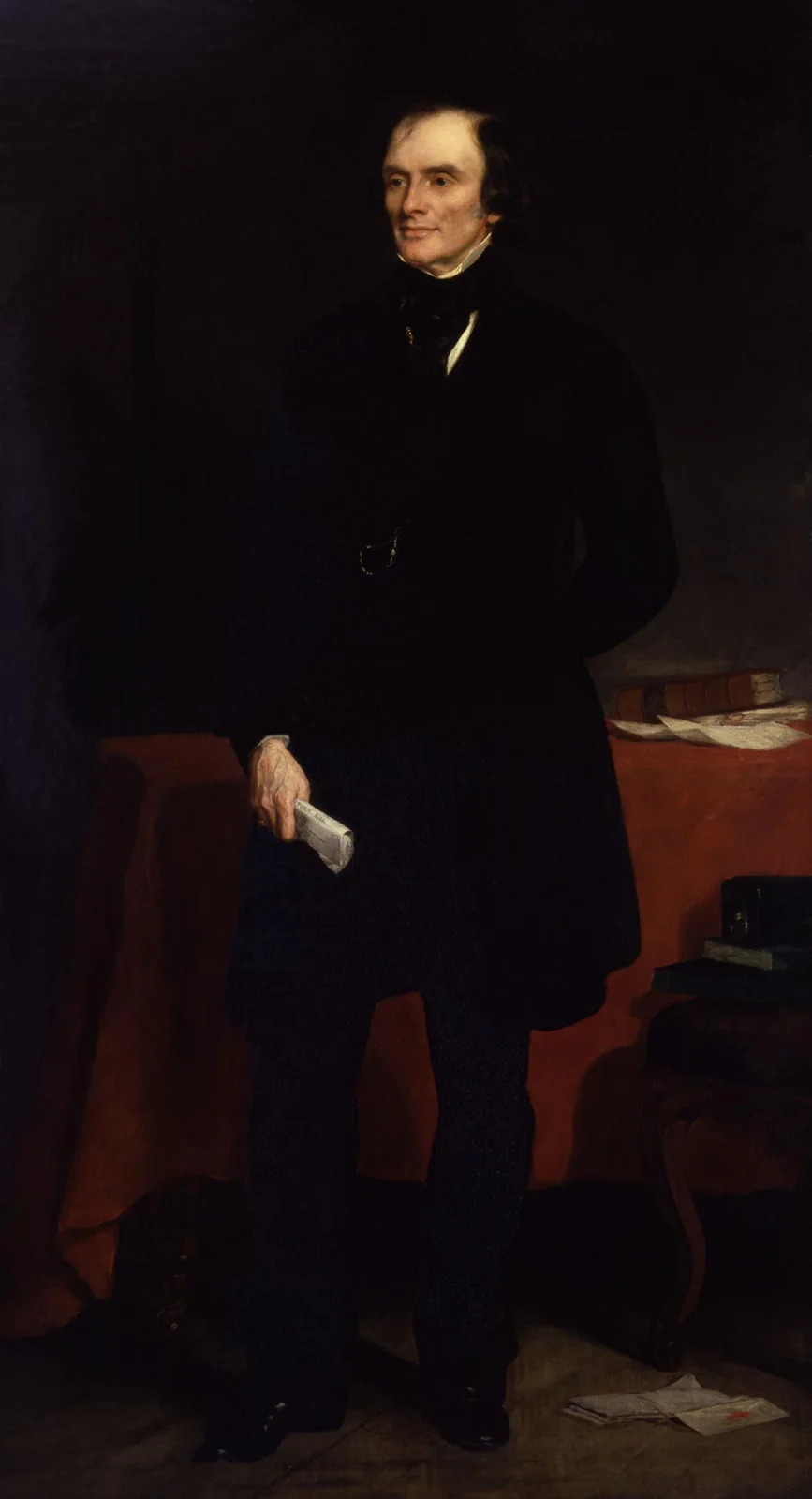
1792–1878
John Russell, 1st Earl Russell
Whig and Liberal reformer and prime ministerLord John Russell helped carry parliamentary reform in 1832 and later served twice as prime minister. His reforming Whiggism defended constitutional liberty and property, while his government’s inadequate response to the Irish famine remains central to his record.Read biography
1847–1929
Millicent Fawcett
Suffragist, writer and education campaignerMillicent Fawcett built a constitutional campaign for women’s votes through speaking, writing, lobbying and national organisation. She also promoted women’s education, while her Unionism and support for imperial war complicate a simple equality narrative.Read biographyQuick answers
Common questions
- Did the Act apply to all of the UK?
- This Act applied to England and Wales. Separate 1832 legislation addressed Scotland and Ireland.
- Did it introduce universal male suffrage?
- No. Property conditions continued to exclude most working men.
- Could women vote under the new statutory franchise?
- No. The Act expressly defined it in male terms. Women’s parliamentary voting rights required later reforms.
Primary and institutional sources
How this history was checked
Read the original Act’s opening, redistribution and franchise passages and the Commons Library’s sections on 1832 and the separate Scottish and Irish measures. Parliament’s overview supplies accessible context; its sidebar claim that the Act abolished the forty-shilling franchise is not adopted. The original Act and the Library account take priority on qualifications. This is historical explanation, not advice about present electoral eligibility. This article was reviewed on 23 October 2026.
- The National Archives, legislation.gov.ukRepresentation of the People Act 1832, 2 & 3 Will IV c 45: original print
- House of Commons Library / Neil JohnstonThe History of the Parliamentary Franchise, Research Paper 13/14, sections 4–5
- UK ParliamentThe Reform Act 1832: constituencies, franchise and exclusions
- Journal of Liberal HistoryLord John Russell, 1792–1878: Bloy, Little and Parry
- Museum of the Prime MinisterJohn Russell: reform, famine and premierships
- Wikimedia Commons / National Portrait GalleryGrant’s John Russell painting: PD-Art, provenance and file history
- Creative CommonsPublic Domain Mark 1.0