
The short answer
Wapakoneta’s recycled-paper mill was a manufacturing project before it became a political stage. Its history connects financing, an end market for recovered fibre and the engineering needed to turn mixed material into containerboard. The September 2019 presidential visit and the company’s later account of an October opening mark different aspects of that story.
Chronology
A timeline of the turning points
Finance and construction
OAQDA records financing for Pratt Paper’s Ohio project.
A planned new end market
Trade reporting describes recovered-fibre inputs and a startup still ahead.
A public ceremony
The US president and Australian prime minister tour the facility.
Operational opening
The company’s subsequent mill-manager account dates the opening to this month.
Processing is explained
The mill manager describes cleaning mixed recovered paper and continuing technical development.
Financing preceded the political visit
The Ohio Air Quality Development Authority’s 2017 report records US$210 million in project financing for Pratt Paper LLC at Wapakoneta. It describes a facility under construction that would process mixed waste paper and old corrugated containers. This dated record places industrial preparation well before the September 2019 ceremony.
The authority describes conduit financing and tax-exemption arrangements in its programme explanation. The recorded amount should not be relabelled an unrestricted cash gift, the total cost of every associated facility or a personal payment to Anthony Pratt. Finance enabled construction; it did not by itself establish completed output or an operating profit.
Sources for this section: [1]
A mill creates demand for material that collection alone cannot use
Resource Recycling’s September 2019 report identified the project as an additional end market for recovered paper. It described mixed paper and corrugated material among the intended inputs, with startup still expected later that year. The report also noted that planning preceded disruption associated with China’s restrictions on mixed-paper imports.
This chronology guards against a simple reactive origin story. Collection and processing capacity must connect to a buyer capable of using the recovered fibre. A new mill could provide that industrial outlet, but demand for its finished product and the cost of preparing feedstock remained commercial questions. A planned capacity is not a measured year’s production.
Sources for this section: [2]
The September ceremony presented a project already in motion
The White House’s 22 September 2019 tour transcript records Pratt explaining recycled inputs and discussing jobs with President Trump. Australian Prime Minister Scott Morrison’s participation gave the facility a bilateral-investment setting. The event demonstrated how an industrial project could serve as a public argument about manufacturing and employment.
It did not establish that the politicians’ visit originated the investment or that every job figure discussed had already become a permanent employee. Construction employment, prospective operating positions and company-wide totals describe different populations. The earlier financing record makes the longer development process visible behind the ceremony.
The operating account explains why preparation technology mattered
A 2021 company publication reproducing a mill-manager interview dates the Wapakoneta opening to October 2019. Manager Ed Kersey described a stock-preparation system able to clean a broad mixture of recovered paper. This supplies an operational milestone distinct from the September tour and a practical explanation of the mill’s input strategy.
Mixed recovered material cannot simply be fed unchanged into any paper machine. Preparing it for reuse is part of manufacturing, not an administrative step after recycling. The account is the operator’s explanation rather than an independent test of every efficiency claim, but it identifies the technical task behind the environmental label.
Sources for this section: [4]
Forecasts and environmental labels need a consistent basis
The authority’s project profile projected early output and later expansion; the trade report described planned annual recovered-fibre capacity. Those are not necessarily the same measure: input and finished-product output differ, as do startup performance and a mature plant’s design capability. Neither source supplies an audited production series for this guide.
Similarly, using recycled fibre does not make a plant free of energy use, emissions or residues. Ohio’s financing programme focused on air-quality facilities and compliance, while the operator emphasised cleaning and process development. The project’s significance lies in adding a route from recovered material to saleable packaging paper—not in proving that any manufacturing process has no environmental cost.
Continue the chronology
Related history guides
Biography context
Explore Wapakoneta, Ohio, United States through connected lives
Connected biographies
The industrialist behind a cross-border manufacturing investment
Born 1960
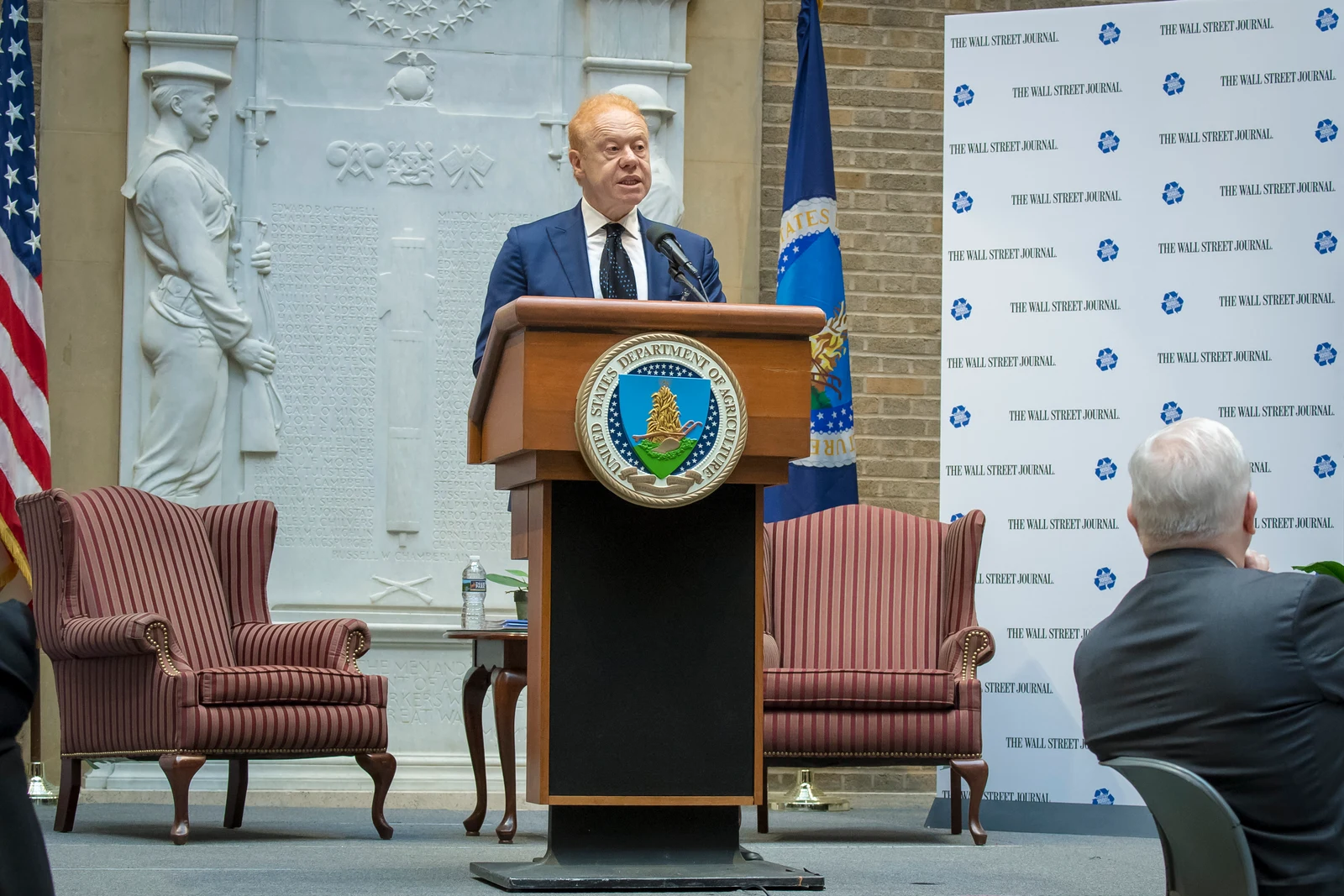
Anthony Pratt
Recycled-paper and packaging industrialistAnthony Pratt developed an international manufacturing career within an established family enterprise, leading American expansion before taking charge at Visy in 2009. His businesses connect recovered paper, industrial processing and packaging customers. Capital investment, inherited corporate responsibilities and highly visible political relationships all belong in that account; he was not the original founder of Visy.Read biographyQuick answers
Common questions
- Is Wapakoneta in Australia?
- No. This project is in Wapakoneta, Ohio, United States; the guide uses that place explicitly.
- Was the financing an unrestricted grant to Pratt personally?
- No. The authority identifies project financing for Pratt Paper LLC; its programme includes conduit-finance arrangements.
- Did the political tour and operational opening occur together?
- They are distinct milestones: the tour was in September, while the later company account dates opening to October 2019.
- Do the published capacity figures prove actual annual output?
- No. Forecast capacity, recovered-fibre input and finished-paper output must be distinguished from measured production.
Primary and institutional sources
How this history was checked
Only the authority’s printed-page-3 programme explanation, page-4 financing table and page-9 Pratt profile were read, not its full financial statements. Independent trade reporting supplies the pre-visit market setting. The official tour transcript is limited to its recycled-input and employment discussion. A later company/industry interview supplies the opening month and process explanation, not independently audited environmental or output performance. This article was reviewed on 24 October 2026.
- Ohio Air Quality Development Authority2017 report: printed pages 3–4 and 9, conduit finance and Pratt Paper project
- Colin Staub / Resource Recycling17 September 2019: planned mill startup, recovered-fibre market and construction chronology
- US White House archive22 September 2019: selected Wapakoneta tour transcript
- Pratt Industries / Paper & Packaging Board interview8 October 2021: opening month and mill manager’s stock-preparation account
- Tom Witham / USDA, Wikimedia Commons copyAnthony Pratt 20180307-OSEC-TEW-459: full official federal photograph
- U.S. Department of AgricultureExact USDAgov Flickr publication: named photographer and Public Domain Work designation
- Creative CommonsPublic Domain Mark 1.0