
The short answer
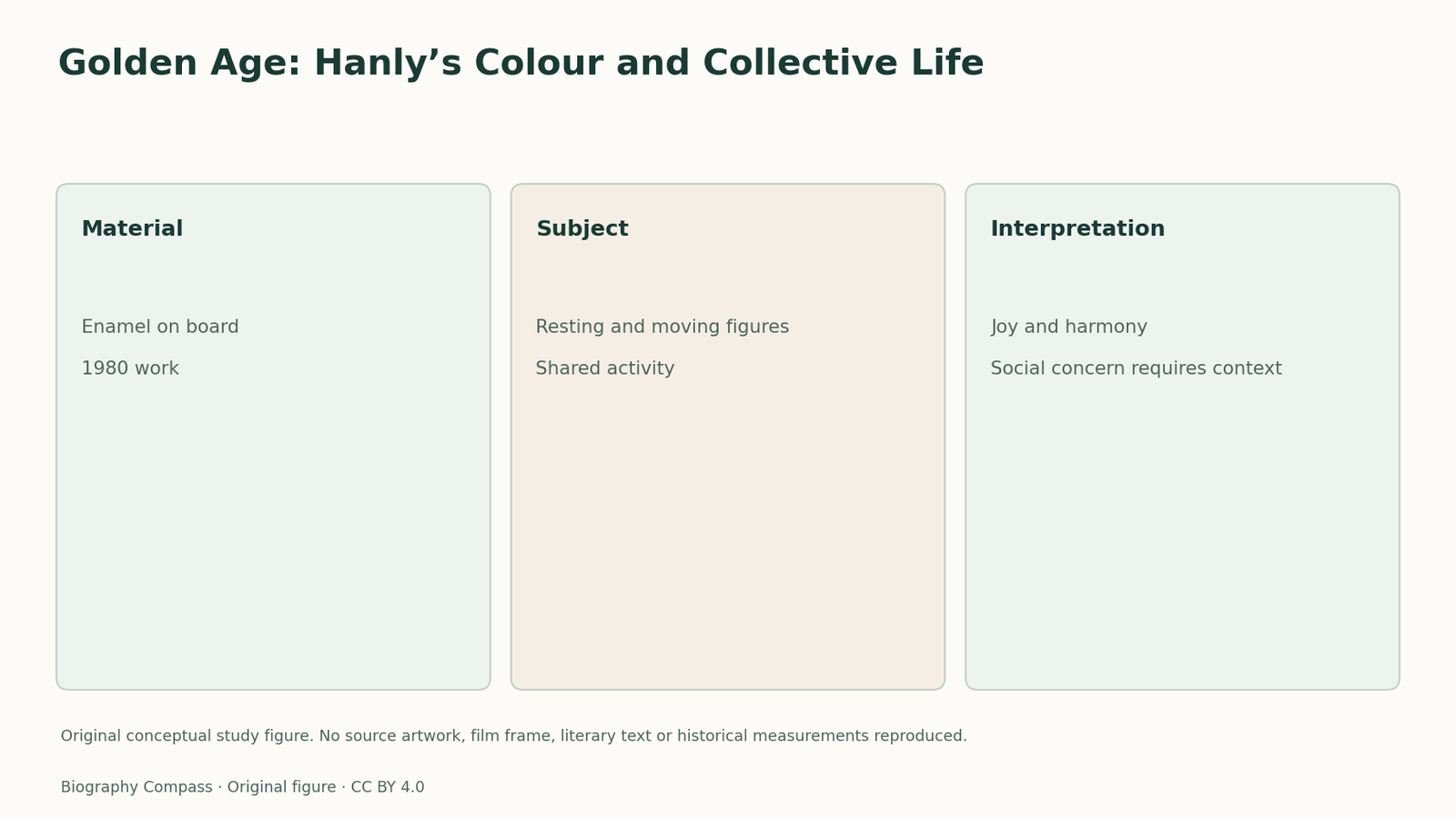
Interpret the 1980 enamel painting through its grouped figures, experimental technique and the distinction between joyful colour and social indifference.
Read the evidence
Sources, interpretation and production roles
The records answer different questions about this work. The final exercise is an original teaching model.
| Record or question | Supported reading | Boundary or contrast |
|---|---|---|
| Object record | 1980 enamel on board; purchased the following year. | Acquisition is a different event from production. |
| Museum interpretation | Grouped leisure figures suggest harmony and hope. | The reading does not identify a specific campaign. |
| Original making task | Combines a planned relation with an open procedure. | Unpredictability does not eliminate selection. |
A dated enamel painting with a collective subject
Golden Age is a 1980 enamel painting on board in Christchurch Art Gallery, purchased in 1981. The museum’s description identifies dancing, resting and sunbathing figures and reads the atmosphere through freedom, hope and harmony. Those are specific elements of the institutional account. The title should not be treated as a statistical claim that life in 1980 was ideal. It establishes a pictorial and interpretive question about the kind of human world the work makes available.
Sources for this section: [3]
Joyful colour can carry more than one public meaning
In this guide’s reading, a scene of shared ease can be understood as a proposal about valued life rather than an escape from every social concern. That possibility fits a career in which direct political work and joyful images both occurred. It does not prove that Golden Age illustrates one named campaign. The more useful distinction is between a painting’s immediate subject and a wider practice of social engagement. Colour and figures may invite an account of pleasure, while historical evidence determines which particular political associations can responsibly be added.
Experimental making is not the absence of decisions
The gallery discusses Hanly’s use of pouring, dripping, found tools and tilting supports within his experimental practice. These methods can introduce effects that the maker then accepts, changes or rejects. They are not evidence that the result required no judgement. The obituary’s account of his repeated reinvention also complicates a picture of effortless exuberance. In this interpretation, an energetic surface can be the outcome of difficult selection. A description of possible technique should still be distinguished from a verified technical reconstruction of every mark in this particular painting.
Continue the chronology
Related history guides
Biography context
Explore New Zealand through connected lives
Connected biographies
People and related creative practices
1932–2004
Pat Hanly
New Zealand painter, printmaker and art teacherPat Hanly developed an energetic practice across painting, prints and public work while combining international experience with teaching and social engagement in Auckland.Read biography1919–1987
Colin McCahon
Painter, gallery worker and art teacherColin McCahon was a New Zealand painter whose work joined landscape, religious questions and written language. Employment in galleries and teaching ran alongside an evolving practice that drew on local places and international art.Read biography1946–present
Robin White
New Zealand painter, printmaker and collaborative Pacific artistRobin White’s career extends from New Zealand painting and printmaking to long-term Pacific relationships and collaborative work in customary materials.Read biographyQuick answers
Common questions
- Is Golden Age an oil painting?
- The museum identifies enamel on board.
- Does the guide claim a specific protest message for this work?
- No. It distinguishes a reading of the pictured group from the wider career’s documented commitments.
Primary and institutional sources
How this history was checked
Sources include production records, institutional collections and the specifically identified passages discussed here. Interpretations and teaching models are distinguished from credits and publication facts. This article was reviewed on 8 November 2026.