
The short answer
The city of Okayama dates the first installation of tactile paving to 18 March 1967, at the Haraoshima intersection near its school for blind students. Seiichi Miyake had devised the blocks in 1965 to help people who are blind or have low vision travel more safely. Raised surfaces made part of the street readable underfoot or with a cane.
Surface patterns and their purpose
Why two tactile forms matter
A change in texture can tell a traveller either to pay attention or to follow a direction.
| Feature | Information conveyed | Example use |
|---|---|---|
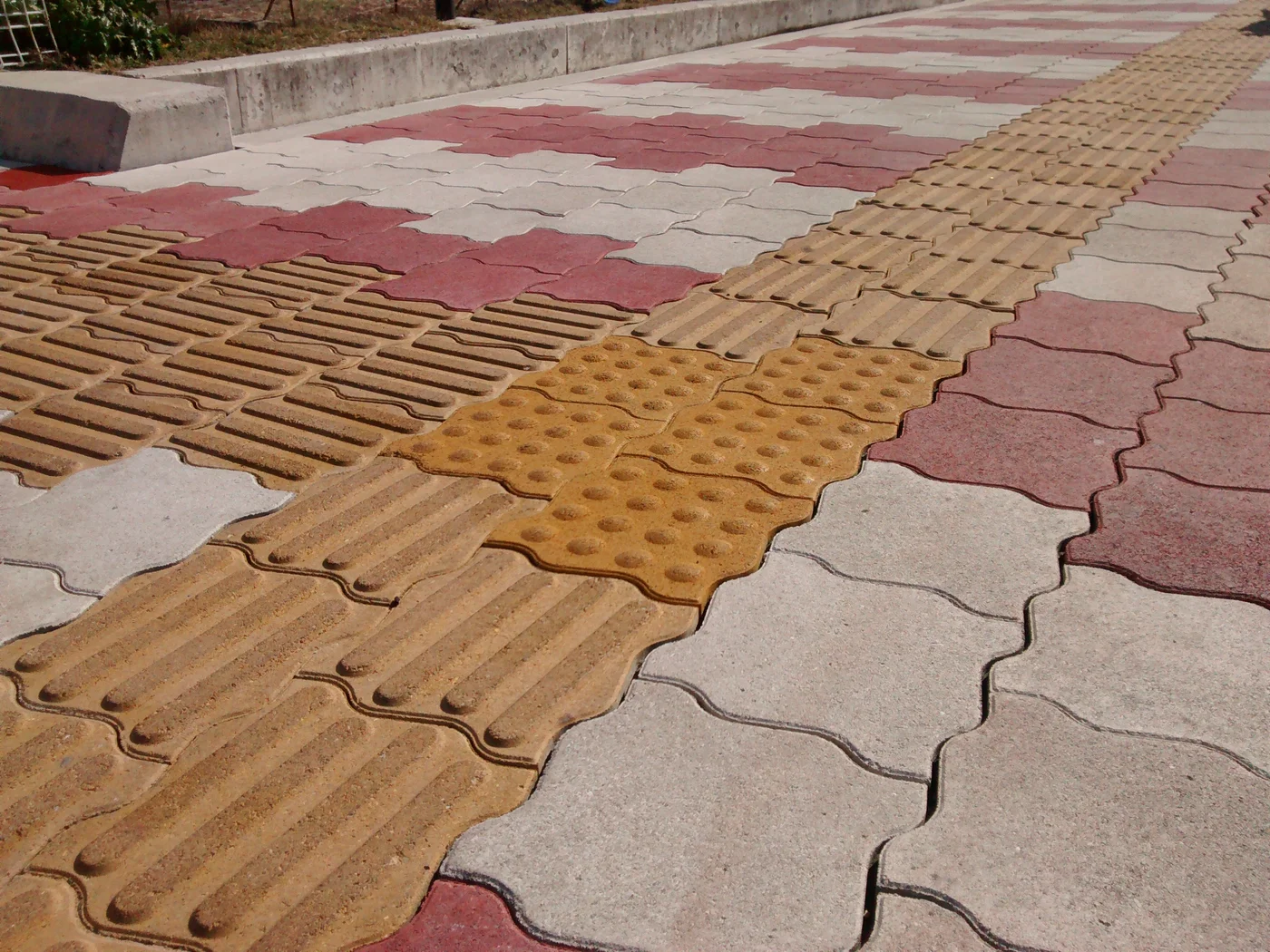
| Raised dots | Call attention to a change or a place requiring care. | A pedestrian approaches a boundary such as an intersection. |
| Raised bars | Provide directional information. | A traveller follows the alignment of the bars along a route. |
| Visible contrast | Can help someone with residual vision identify the path. | A contrasting strip makes a route easier to pick out against surrounding paving. |
Chronology
A timeline of the turning points
Miyake designs the blocks
Raised features provide information that can be felt while travelling.
The first blocks are installed in Okayama
The location is an intersection near the local school for blind students.
Okayama marks 18 March as Tactile Paving Day
Local organisations use the date to explain accessible walking and the purpose of the blocks.
Why the first location mattered
An intersection is a place where a person can reach the end of a pavement, change direction and decide where to cross. Those decisions make the surroundings as important as the paving itself. Okayama’s records name Haraoshima and explain that the first installation was close to the school. The site provides a dated example of the surface being placed into everyday street use.
How the patterns communicate different things
Okayama’s guidance distinguishes raised dots from raised lines. Dots identify a location demanding attention. Lines offer a direction to follow. The distinction lets similar-looking blocks carry two kinds of information through touch. Visible contrast can also assist people who have some useful vision.
The pattern makes sense in relation to the route. A directional strip helps when it leads to the right place. A warning surface is useful when it is placed before a hazard or decision point.
What the anniversary represents
The city marks 18 March through public awareness activities, and its account of a local organisation describes walks and outreach around the date. This continued work helps connect the history of one installed surface to the experience of people trying to follow a route today. The 1967 milestone identifies the installation. The design’s wider use required decisions about how the blocks could fit into many other environments.
Continue the chronology
Related history guides
How Japan Broadened Its Barrier-Free Transport Law
Read how later Japanese policy connected building, transport and street accessibility.
Read the timeline2000–2006How Singapore Retrofitted Its First MRT Stations with Lifts
Compare a rail retrofit that combined accessible entrances with guidance inside stations.
Read the timelineConnected biographies
People connected to this history
Quick answers
Common questions
- When and where was the first tactile paving installed?
- Okayama dates the first installation to 18 March 1967 at Haraoshima, near the local school for blind students.
- What do raised bars and dots communicate?
- In Okayama’s guide, bars give a direction and dots call attention to points requiring care.
Primary and institutional sources
How this history was checked
Dates, legal milestones and historical claims are checked against the official and institutional records below. This article was reviewed on 19 November 2026.
- City of OkayamaTactile Paving Day and first installation chronology
- Okayama PrefectureBarrier-free design and origin of tactile paving in Haraoshima
- Okayama PrefectureBarrier-free features in the street: a guide to tactile blocks
- City of OkayamaLocal awareness work on tactile paving and accessible walking