
The short answer
The Civil Liberties Act of 1988 emerged from a long campaign to make the United States acknowledge its wartime treatment of Japanese Americans. Norman Mineta brought the experience of incarceration into Congress, but survivors, organizers, commissioners and legislators together made redress possible. The law’s signing and its administration were separate stages.
Three connected stages
Investigation, enactment and administration
Each institution performed a different task in making redress possible.
| Stage | Principal work | Historical distinction |
|---|---|---|
| Commission | Gathered records and testimony; issued findings and recommendations | Established evidence and proposed remedies, without itself making restitution payments |
| Congress and president | Passed and signed Public Law 100-383 on 10 August 1988 | Acknowledged injustice and authorized the redress program |
| Office of Redress Administration | Located recipients, determined eligibility and administered payments | Delivered the program after enactment, using appropriated funds and historical verification |
Chronology
A timeline of the turning points
A federal commission is established
President Jimmy Carter signs the law creating the Commission on Wartime Relocation and Internment of Civilians.
Witnesses testify
The commission holds twenty days of public hearings and hears more than 750 witnesses.
Findings and recommendations
Personal Justice Denied enters the public debate; a separate recommendations volume follows in June.
Congress considers H.R. 442
The House passes the bill in September 1987; the Senate passes an amended version in April 1988, followed by agreement on a final measure.
Reagan signs the law
H.R. 442 becomes Public Law 100-383, acknowledging injustice and authorizing redress.
First redress payments are presented
The first payments and presidential apology letters reach elderly recipients after funding and administrative preparation.
A survivor’s experience within a wider movement
Mineta’s family was forced from San Jose and incarcerated during World War II, including at Heart Mountain, Wyoming. As a representative, he could connect that childhood experience to the responsibilities of the government that had imprisoned him. His testimony made the injustice personal without making the campaign his alone.
The redress movement drew strength from survivors, families and community groups. The Japanese American Citizens League, National Coalition for Redress and Reparations, and National Council for Japanese American Redress pursued a shared demand through different approaches. Their organizing made the issue visible and helped sustain it through years when acknowledgment and compensation remained politically uncertain.
Hearings turned memories and records into public evidence
Congress established the Commission on Wartime Relocation and Internment of Civilians in 1980. Its inquiry combined government records with testimony from people who had lived through the policies. Between July and December 1981, it held twenty days of hearings and heard more than 750 witnesses, including Japanese Americans, Aleuts, former officials and researchers.
Personal Justice Denied challenged the wartime claim that mass exclusion and detention had been required for security. The commission identified racial prejudice, wartime fear and failures of political leadership as the underlying causes. Its findings and the separate June 1983 recommendations supplied a public evidentiary basis for later legislation. A commission could investigate and recommend; Congress still had to act.
Coalition work carried the proposal through Congress
Mineta worked with fellow Japanese American legislators Robert Matsui, Daniel Inouye and Spark Matsunaga, as well as other congressional supporters. They needed votes, committee action and agreement between the chambers. The work required persuasion beyond those who had personally experienced incarceration.
The formal sponsor of H.R. 442 in the 100th Congress was Thomas S. Foley, who introduced it on 6 January 1987. That record should not be replaced by a shorthand claim that Mineta alone authored or sponsored the law. The House passed the measure in September 1987; the Senate passed an amended version in April 1988. Agreement on the final legislation followed that summer.
The signature acknowledged injustice and authorized remedies
President Ronald Reagan signed H.R. 442 on 10 August 1988, making it Public Law 100-383. Its purposes included acknowledging the injustice, apologizing on behalf of the nation, supporting public education and providing restitution. The law also addressed wartime losses suffered by Aleut communities through separate provisions.
The Japanese American redress provisions authorized a $20,000 payment to each eligible individual. Authorization established a legal program, but it did not mean every recipient received money on the day of signature. Reagan’s signing remarks recognized that money could not restore the years people had lost. The public acknowledgment and the material remedy were connected parts of the legislation.
Implementation required funding, identification and delivery
The Justice Department’s Office of Redress Administration carried out the program. Locating people, checking historical records and determining eligibility required extensive administrative work and cooperation with community organizations. Congressional funding was necessary before the authorized promise could become payments.
The first redress payments and apology letters were presented in October 1990, more than two years after enactment. In September 1998 the Justice Department reported payments to 81,974 individuals, totaling more than $1.6 billion. That was a dated departmental count, not a claim that every later case had been resolved. Keeping enactment, appropriations and administration separate explains why the campaign continued after the celebrated signing ceremony.
Historical eligibility also reveals the remedy’s boundaries
The program did not compensate everyone touched by wartime discrimination. Its historical requirements included being alive on 10 August 1988 and having the specified citizenship or permanent-resident status during the relevant wartime period. Qualifying deprivation also had to result from federal action based on Japanese ancestry. These conditions excluded some people who had suffered, including those who died before enactment.
The Justice Department said the program stopped receiving claims on 10 August 1998 while timely filed cases remained under review. These dates describe a historical restitution program. Mineta’s contribution is best understood within that bounded achievement: a coalition secured acknowledgment and a concrete remedy, while the record of incarceration and the work of public remembrance remained larger than the payment program.
Biography context
Explore United States through connected lives
Norman Mineta
Place the redress campaign within his childhood incarceration, House career and two distinct cabinet appointments.
Explore the biographiesDocumentary contextDorothea Lange
Explore a photographer whose record includes Japanese American removal and incarceration during World War II.
Explore the biographiesConnected biographies
People and the record of incarceration

1931–2022
Norman Mineta
San Jose mayor, U.S. representative and cabinet secretaryA Japanese American public servant whose childhood incarceration informed a career in local government, Congress and two presidential administrations.Read biography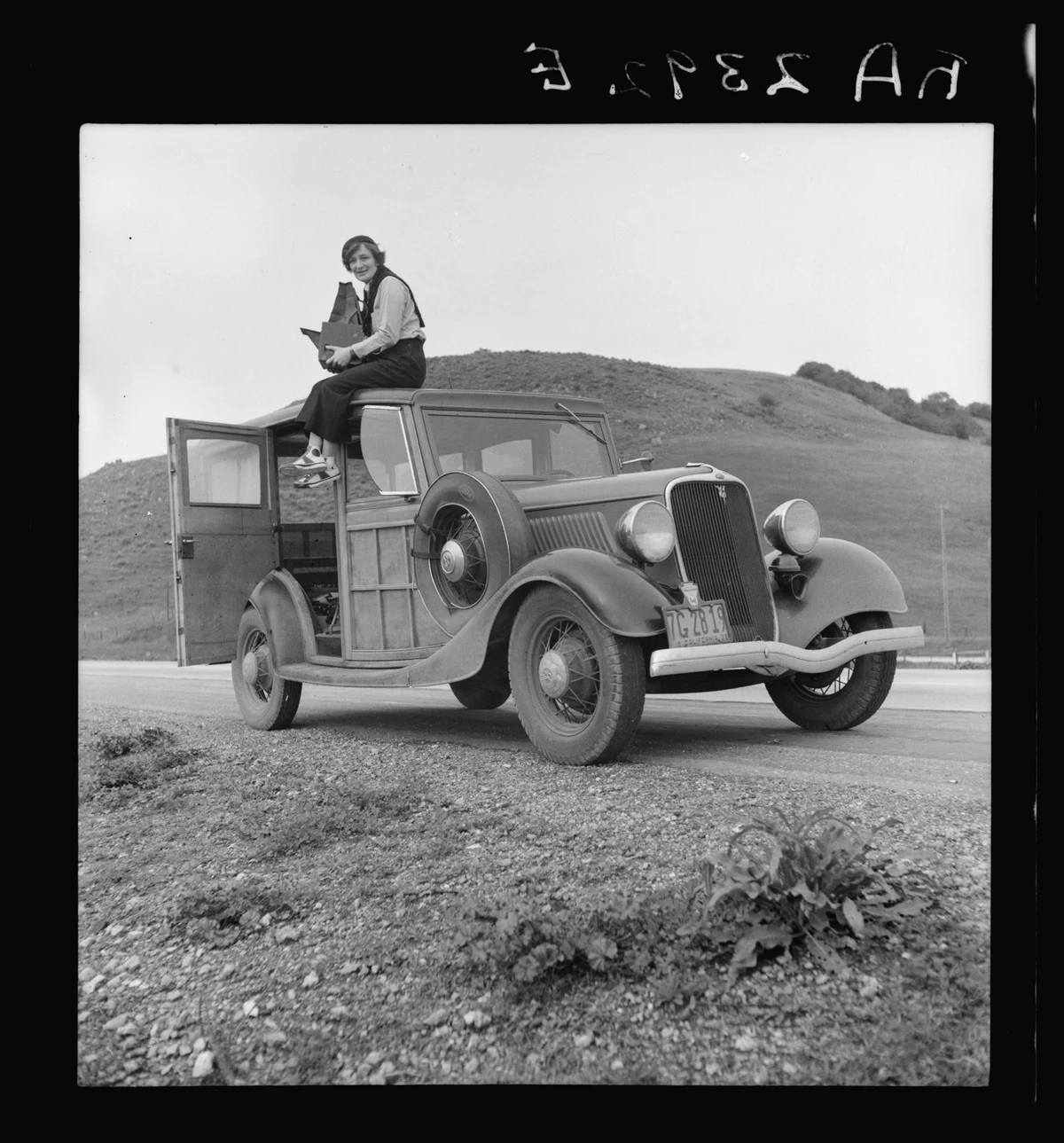
1895–1965
Dorothea Lange
Documentary and portrait photographerA photographer who combined portraiture, observation and written context to document labor, displacement and the effects of public policy on individual lives.Read biographyQuick answers
Common questions
- Was Norman Mineta the sole author of the Civil Liberties Act?
- No. He was a central advocate in a collective campaign involving survivors, community organizations, commissioners and many legislators. Thomas S. Foley was the formal sponsor of H.R. 442 in the 100th Congress.
- When did the Civil Liberties Act become law?
- President Ronald Reagan signed it on 10 August 1988. It became Public Law 100-383 and included acknowledgment, apology, education and restitution provisions.
- Did payments begin at the 1988 signing?
- No. The first redress payments and apology letters were presented in October 1990. Funding, identification of recipients and eligibility verification were separate implementation tasks.
- Did the law compensate every person affected by incarceration?
- No. It imposed historical eligibility conditions, including survival to 10 August 1988 and specified wartime citizenship or permanent-resident status. The original claims program later closed; this guide describes its history rather than an open application process.
Primary and institutional sources
How this history was checked
Primary legislation and institutional histories distinguish the commission’s inquiry, congressional passage and the later delivery of redress. This article was reviewed on 21 October 2026.
- U.S. House of Representatives, History, Art & ArchivesMINETA, Norman Y. — congressional biography
- National ArchivesResearching an Individual or Family — CWRIC public hearings and testimonies
- National ArchivesPersonal Justice Denied — report and recommendations index
- Congressional Record, Congress.govRobert T. Matsui, Personal Justice Denied, 24 February 1983
- U.S. House of Representatives, History, Art & ArchivesLong Road to Redress
- Congress.gov, Library of CongressH.R. 442, 100th Congress — sponsor, actions and enactment
- United States Statutes at Large, Congress.govPublic Law 100-383, 10 August 1988, 102 Stat. 903
- Ronald Reagan Presidential Library and MuseumRemarks on Signing the Bill Providing Restitution for the Wartime Internment of Japanese-American Civilians, 10 August 1988
- U.S. Department of JusticeAttorney General Reno Celebrates Successful Completion of Redress Program for Japanese Americans, 10 September 1998
- U.S. Department of JusticeJanet Reno: A Celebration Recognizing the Achievements of the Civil Liberties Act of 1988, 10 September 1998
- National ArchivesWorld War II Japanese American Incarceration: Post-War Legacy
- George W. Bush Presidential CenterStatement on Secretary Norman Y. Mineta — 2006 White House photograph and credit
- National ArchivesCopyright and Permissions — federal official-duty works