
The short answer
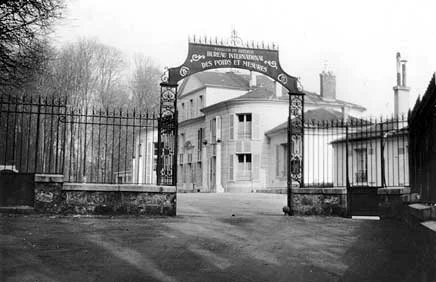
Seventeen governments signed the Metre Convention in Paris on 20 May 1875. The treaty gave them a permanent institution for comparing physical standards. Fourteen years later, the first General Conference on Weights and Measures sanctioned international prototypes of the metre and kilogram and reviewed how closely the national copies matched.
Treaty institutions
Who was responsible for what?
The conference, committee and bureau have separate responsibilities under the treaty.
| Body | Principal role | How the role appears in the records |
|---|---|---|
| BIPM | Permanent bureau for measurements and comparisons. | Its staff work with international and national standards. |
| CIPM | International committee supervising the bureau’s work. | Its president and members report on prototype comparisons. |
| CGPM | General Conference of delegates from governments. | Its first meeting formally sanctions the international prototypes. |
Chronology
A timeline of the turning points
Governments sign in Paris
The convention creates an international bureau with scientific and institutional responsibilities.
Annexed regulations assign duties
The annex establishes the relationship between the conference, committee and permanent bureau.
First conference sanctions prototypes
The international metre and kilogram gain formal status as physical reference standards.
What the 1875 agreement set up
A common name for a unit is easy to agree on. The practical question was how a laboratory in one country could tell whether its metre bar matched the reference used by another. The treaty answered by creating a permanent laboratory and putting it under international oversight. Its annex assigned work that included comparing standards and safeguarding the international prototypes.
The original signatories included governments in the Americas and Europe. The conference and committee gave their agreement an institutional form that could continue after the delegates went home.
What the delegates approved in 1889
The conference sanctioned a platinum–iridium bar to represent the metre at the temperature of melting ice and a platinum–iridium cylinder to represent the kilogram. The proceedings describe comparisons with the older French archive standards and with the national prototypes. The recorded differences between the national kilogram prototypes and the international kilogram were within one milligram.
The differences show the purpose of distributing calibrated copies. Laboratories needed documented relationships to the reference. For the metre bars, the conference also specified the temperature scale used for comparison because bar length changes with temperature.
Comparison and domestic adoption
A treaty participant could use the international comparison system while dealing with adoption through its own institutions. A factory still needed agreed design specifications, suitable machinery and workers trained to read them. The later British Metrication Board illustrates that work at the national level.
The 1889 objects also help explain the later redefinition of the kilogram. The technical route to sharing the unit changed from comparing mass artefacts to realising a definition based on a fixed constant. Laboratories still needed a reliable way to compare measurements.
Continue the chronology
Related history guides
How Japan Shifted from Shaku and Kan to Metric Units
Follow the domestic timetable for adopting metric units in Japan.
Read the timeline1960How Krypton Light Became the Standard for the Metre
Read how a reproducible atomic wavelength replaced the prototype metre in 1960.
Read the timeline1965–1969How Britain Organised Industrial Metrication
See how one government and its industries coordinated the practical adoption of metric units.
Read the timeline2018–2019How the Kibble Balance Helped Redefine the Kilogram
Follow the transition from the international mass prototype to a fixed physical constant.
Read the timelineConnected biographies
People connected to this history
Quick answers
Common questions
- What did the Metre Convention establish?
- It created the BIPM and a system of international governance through a committee and a general conference.
- When were the international metre and kilogram prototypes approved?
- The first General Conference on Weights and Measures sanctioned both in 1889.
Primary and institutional sources
How this history was checked
Dates, legal milestones and historical claims are checked against the official and institutional records below. This article was reviewed on 19 November 2026.
- International Bureau of Weights and MeasuresThe Metre Convention and its original signatories
- International Bureau of Weights and MeasuresFounding documents and annexed regulations
- General Conference on Weights and Measures1889 declaration sanctioning the international prototypes
- International Bureau of Weights and MeasuresThe kilogram in the history of the International System of Units
- UK ParliamentMetrication statement, 26 July 1968