
The short answer
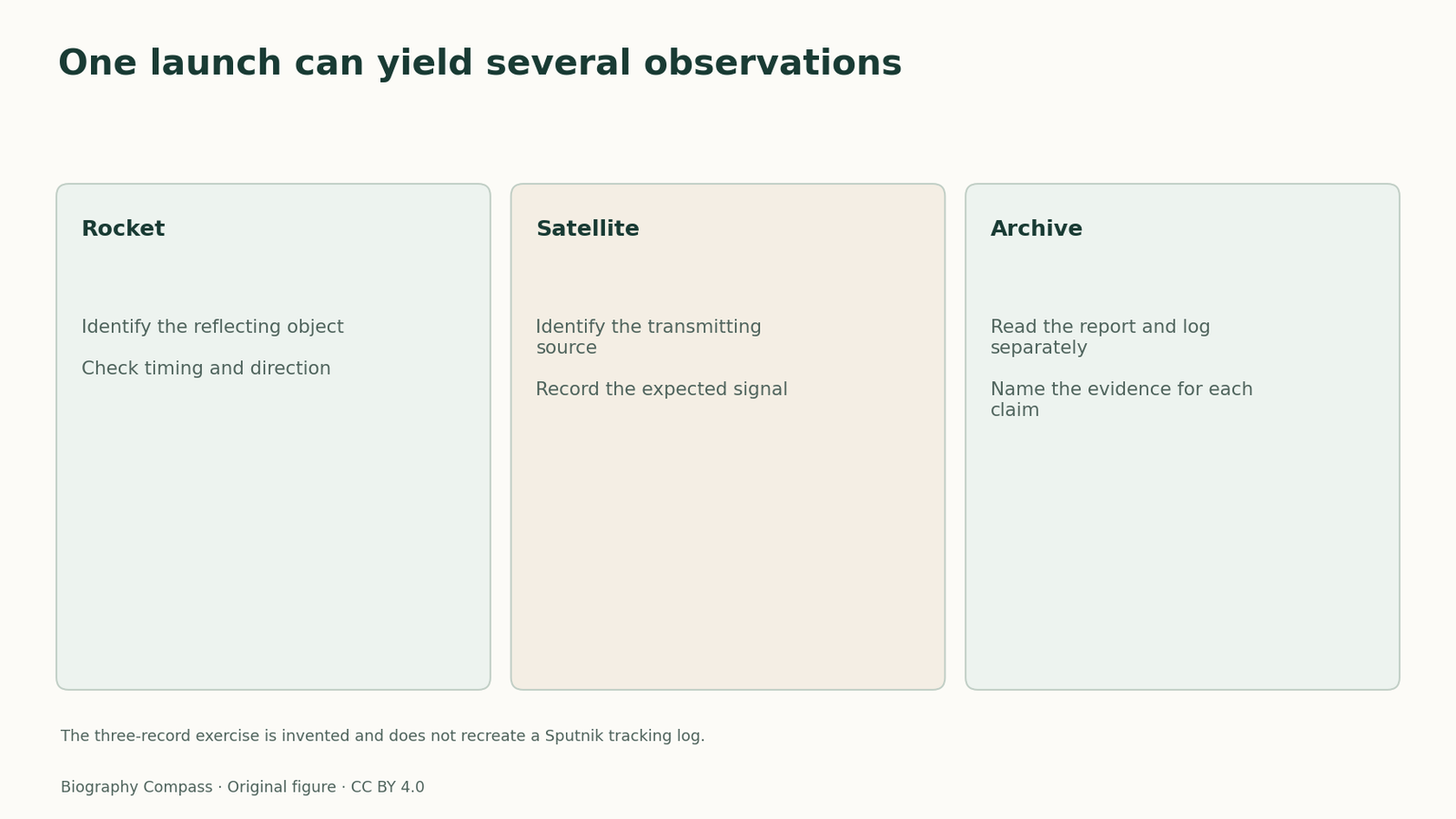
A launch can leave more than one object in orbit. A tracking claim needs to name the object, the observation method and what the recorded signal can establish.
Reading the evidence
Identify both target and method
Keep the three records separate until the observations support a match.
| Stage | Observation | Missing evidence |
|---|---|---|
| Launch | Report of a rocket leaving Earth. | Where each object went after separation. |
| Radar | A return from energy sent toward a target. | Which object reflected the pulse. |
| Beacon | A signal transmitted from a source. | Which spacecraft carried that transmitter. |
Name the object first
The University of Manchester describes the Mark I telescope following the rocket that carried Sputnik 1. The satellite and the launch vehicle had separate identities after the launch. It is tempting to call either observation “tracking Sputnik,” but a reader then cannot tell whether the claim concerns the beacon on the satellite or the rocket body.
The observatory’s account of early space work distinguishes what it could detect or interpret from the official announcements of missions. A large steerable instrument was useful because it could follow a moving target rather than wait for one direction to pass through a fixed beam.
Separate a transmitted signal and an echo
A radio receiver can listen to energy that a satellite emits. Radar can instead transmit toward a target and receive a reflection. A reflected echo need not mean that the tracked object contained a working transmitter. For a historical report, ask which instrument produced the signal, which merely received it, and how timing or direction was used to associate it with an object.
The early tracking record does not turn every detection into an independent explanation of every spacecraft operation. Identification remains a separate inference from the mere fact that a signal was recorded.
Sources for this section: [2]
Sort three records from an invented launch
One record gives the time of liftoff. Another gives a time and direction for a radar return. A third reports a repeated beacon signal. Which record tells you the launch time? Which shows a reflection, and which reports an active transmitter? To match the latter two to a rocket or payload, add expected paths and compare the observations. A single shared launch date is insufficient.
Continue the chronology
Related history guides
Biography context
Explore United Kingdom through connected lives
Connected biographies
People in the records
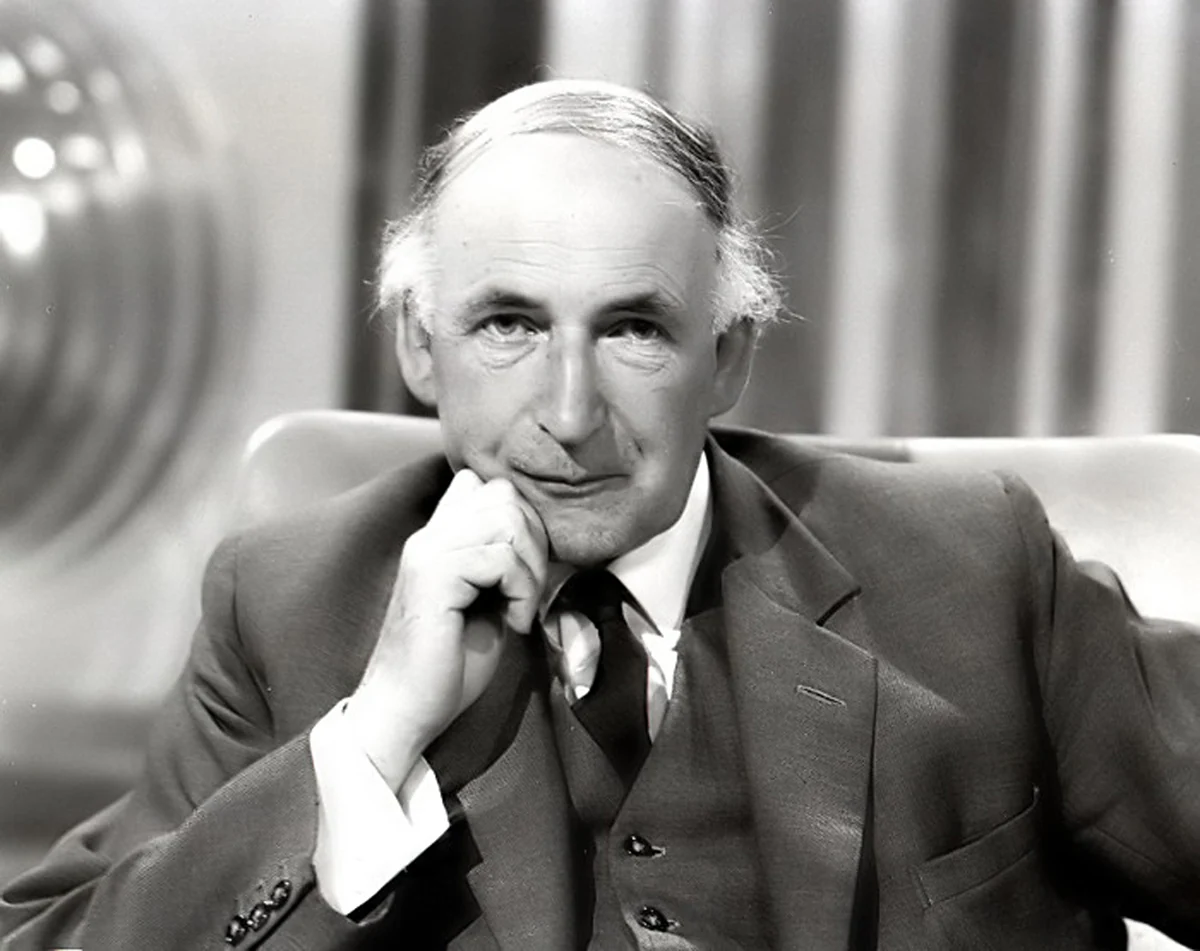
1913–2012
Bernard Lovell
Radio astronomer and founder of Jodrell Bank ObservatoryLovell built an observatory programme that turned wartime radio techniques into instruments for astronomy and tracking.Read biographyQuick answers
Common questions
- Why distinguish the launch rocket from the satellite?
- They were distinct targets after launch, and a radar echo from a rocket establishes a different observation from reception of a satellite beacon.
Primary and institutional sources
How this history was checked
Dates, legal milestones and historical claims are checked against the official and institutional records below. This article was reviewed on 5 November 2026.