
The short answer
What changed when a garden was dedicated to public use?
A worked comparison
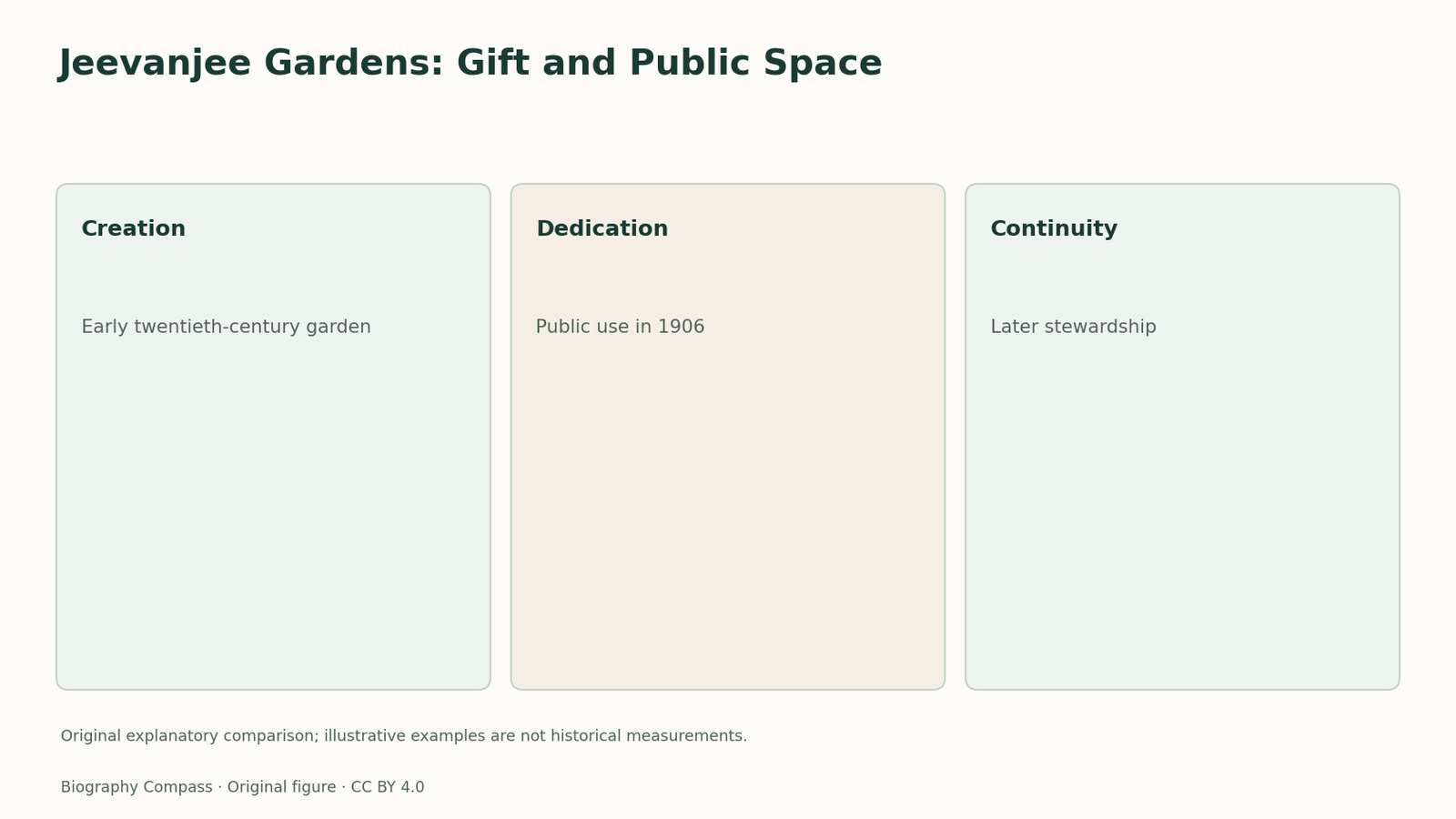
What each part contributes
Use the specific distinctions developed in the study.
| Part or record | What it establishes | Why the distinction matters |
|---|---|---|
| Development | Making the garden | Different from dedication |
| Public purpose | Recreation and access | Different from commercial value |
| Stewardship | Later protection and maintenance | Continues after the donor’s life |
What changed when a garden was dedicated to public use?
Jeevanjee Gardens in central Nairobi offers a concrete question about civic philanthropy: how did a private benefactor’s project become an amenity intended for the wider public? Inspected histories distinguish development around 1904 from the 1906 dedication. The county’s museum-exhibition account places public space at the centre of the gift’s significance. The useful analysis therefore follows three stages, making the garden, assigning it a public purpose and maintaining that purpose over time. A single date or a donor’s statue cannot by itself explain all three.
Commercial construction and a recreational gift had different purposes
Jeevanjee’s business was associated with the buildings and services of colonial East Africa. A garden set aside for public recreation supplied a different kind of urban resource. Instead of being measured only by rent or commercial floor space, its use included rest, gathering and access to open space. These are functional distinctions, not a newly discovered set of legal clauses in a deed. The actual deed has not been transcribed here. The sources inspected establish the public dedication and its later place in the city’s heritage story.
A later heritage study records the garden as a place
The University of Nairobi study includes the garden among its cultural sites and identifies the Jeevanjee monument in its fieldwork material. That contribution is spatial and observational: it connects the remembered benefactor with a surviving urban location. It is different from a biography explaining where his wealth originated or a legal instrument defining the land’s status. Using the study at its actual scale allows the place to be understood without inventing visitor counts, a complete planting plan or a detailed survey result not contained in the inspected passage.
Sources for this section: [3]
Public purpose required later stewardship
Historical reporting describes later proposals to redevelop the grounds and opposition from family members and other advocates. The 2026 county exhibition likewise recognises Zarina Patel’s role in defending the garden. These records show that a civic gift can remain a matter of public decision after the donor’s lifetime. They do not make him the participant in later campaigns. The distinction between founding intention and continuing stewardship is useful: a public amenity has a history of use, maintenance and contested choices, rather than becoming permanently secure merely because it was once donated.
Public-space exercise and checked answer
A fictional donor provides land for a public garden. Decades later a proposal offers substantial income from building over it. Does the new financial value alone answer whether the proposal preserves the original civic purpose? No. The checked answer first identifies the relevant public-use commitment and the actual legal and planning records, then considers access, users and alternatives. This exercise supplies no invented clause from the Jeevanjee gift. It explains why a history of public space must distinguish commercial valuation from the function the space was intended to serve and from the later decisions that kept it available.
Continue the chronology
Related history guides
Biography context
Explore Kenya through connected lives
Connected biographies
People and wider context
1856–1936
Alibhai Mulla Jeevanjee
merchant, contractor and civic benefactorAlibhai Mulla Jeevanjee was a merchant, contractor and civic benefactor, known for East African commerce, public advocacy and the gift of Jeevanjee Gardens to Nairobi.Read biographyQuick answers
Common questions
- Did Jeevanjee personally lead the later campaigns to defend the gardens?
- No. Those later actions involved family members and other advocates after his death.
Primary and institutional sources
How this history was checked
The source notes distinguish original records, institutional descriptions and later historical interpretation. Exercises and comparisons are original editorial analysis. This article was reviewed on 8 November 2026.
- Margret Frenz, Oxford Dictionary of National BiographyJeevanjee, Alibhai Mulla: accessible extract
- Daily Nation, family interviewAlibhai Mulla Jeevanjee: the man who built Nairobi
- University of Nairobi repositoryValorisation of cultural heritage: Jeevanjee site passage
- County Government of Kisumu, Kisumu Pasha 003Kisumu Museum exhibition honouring Jeevanjee