
The short answer
The Philippines created the Intramuros Administration on 10 April 1979. The charter gave one agency a mandate to restore Manila’s walled district and oversee its development. This drew together upkeep of the walls and gates with decisions about activity and construction inside the district.
Compare the records
Two different kinds of conservation work
An urban district contains physical remains and buildings that continue to be used.
| Function | What it covers | What it helps explain |
|---|---|---|
| Restoration and upkeep | Walls, ravelins, moat and other public areas | Why a heritage agency manages physical works across the district |
| Development control | Standards and review of building and land-use proposals | Why new or altered work is considered in relation to the historic district |
Chronology
A timeline of the turning points
Preservation scope extended
Presidential Decree No. 1537 brings preservation and restoration of the broader walled city into the earlier framework.
Special administration created
Presidential Decree No. 1616 gives it a district-wide remit.
Revised implementing rules
The agency publishes rules for modern administration under the amended charter.
Why the district needed a dedicated organisation
The 1978 decree extends a protection framework that had focused on the walls and related features to the walled city itself. The next year’s decree creates an administration for orderly restoration and development. The geographic scope matters. A gate can be conserved as one feature, while neighbouring buildings and their uses can affect how the historic district is experienced as a whole.
What restoration and regulation have in common
The charter includes restoration and maintenance of the walls, ravelins and moat. It also assigns a role in land-use and architectural standards. The same district can contain work on inherited fabric and proposals to change buildings that remain in use. The statute gives the administration an institutional route to address both and preserve the relationship between individual sites and their surroundings.
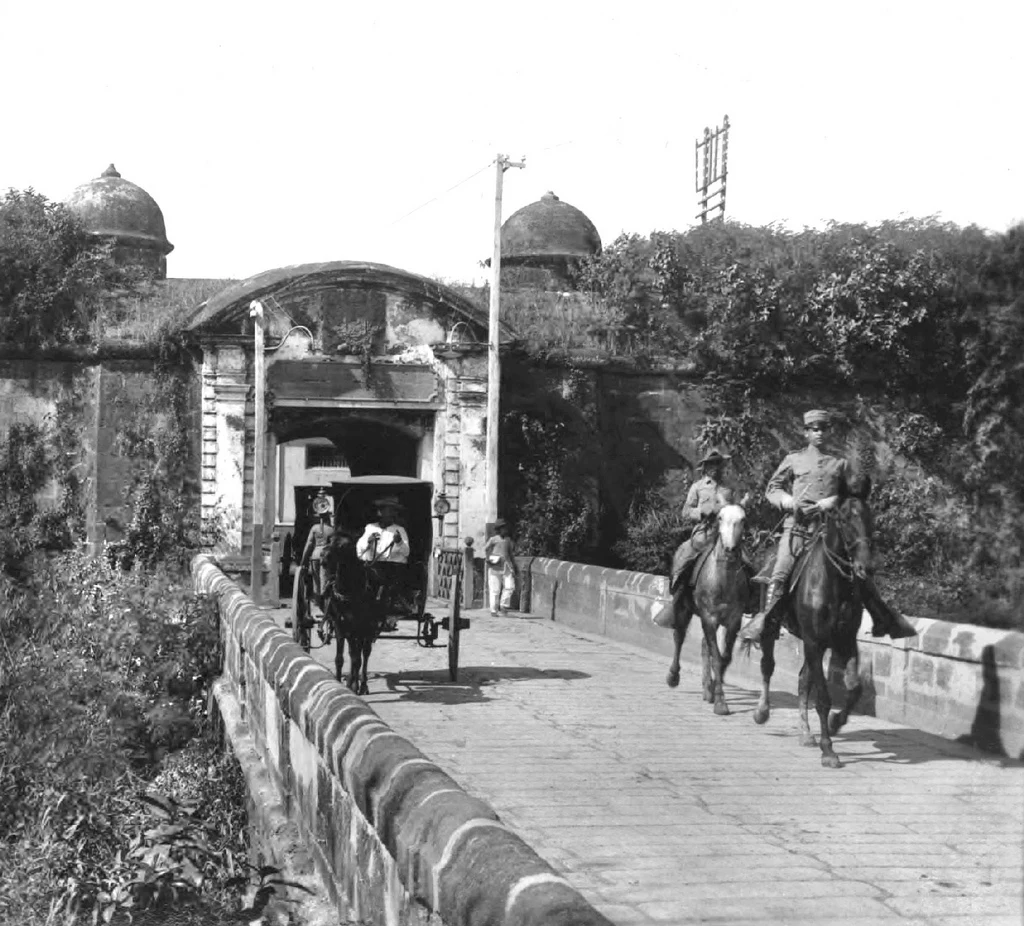
How to read the historic gate photograph
The Puerta Real photograph shows an earlier appearance of one structure in the district. The modern administration’s rules are a different kind of evidence. They show the framework used to review interventions, rather than documenting when a particular stone, wall or opening was repaired. Project records and dated photographs are needed to describe changes to individual parts of the gate.
Continue the chronology
Related history guides
How Manila’s Metropolitan Theater Reopened in 2021
Compare the restoration of a performing arts building elsewhere in central Manila.
Read the timeline1940–2018How Manila Opened Its National Museum of Natural History
Read how another historic Manila building was converted to a new public use.
Read the timelineConnected biographies
People connected to this history
Quick answers
Common questions
- When was the Intramuros Administration established?
- Presidential Decree No. 1616 created it on 10 April 1979.
- Did its mandate include buildings and land use within the district?
- Yes. The charter includes development control and architectural standards as well as restoration work.
Primary and institutional sources
How this history was checked
Dates, legal milestones and historical claims are checked against the official and institutional records below. This article was reviewed on 19 November 2026.