
The short answer
On 8 November 2016 India announced the withdrawal of legal-tender status from the existing ₹500 and ₹1,000 notes. The event is best examined through its legal mechanism, disruption to cash transactions and evidence about outcomes rather than a single verdict based on how many notes returned.
Chronology
A timeline of the turning points
Currency withdrawal announced
The government notification and RBI circular identified the existing high-value notes affected.
General legal-tender withdrawal operated
Limited exceptions and exchange arrangements accompanied the change.
Deposits and changing restrictions
Banks received old notes while replacement currency was introduced.
Main deposit window ended
The original scheme set this endpoint, with separate arrangements for specified cases.
Processing and reconciliation
The RBI counted and verified returned specified banknotes.
RBI annual report published
The report recorded ₹15,310.73 billion returned from ₹15,417.93 billion in circulation.
The measure affected specified notes, not every rupee
The announcement concerned the existing series of ₹500 and ₹1,000 banknotes, which the RBI called specified banknotes. Their general legal-tender status was withdrawn from the start of 9 November 2016, subject to stated exceptions. Other notes and coins were not all invalidated, and bank balances did not disappear.
This distinction explains the disruption. People could possess money in the form of notes that could no longer be used normally at a shop or to pay a worker. Converting those holdings into a bank deposit or replacement cash required access to a banking system suddenly processing an exceptional volume of transactions.
Sources for this section: [1]
The stated aims were different from demonstrated results
The RBI’s original scheme explanation referred to counterfeit currency, illicit activity and the hoarding of unaccounted money. These were the government’s stated reasons for withdrawing the notes. Recording an objective is necessary, but does not establish that the measure achieved it or that its costs were proportionate.
Unaccounted wealth is not held solely in physical cash, while lawful households and enterprises also use cash intensively. A currency measure can therefore affect people who are not evading tax. Assessing it requires asking which mechanisms could uncover wrongdoing, how people adapted and what burdens fell on ordinary transactions.
Replacement currency and banking access shaped the shock
The original circular provided routes for exchange and deposit, with identification and account requirements and a main window through 30 December. Restrictions and operating arrangements changed during implementation. Those historical details should not be mistaken for exchange instructions that remain available today.
The sudden shortage of usable notes mattered differently across districts, households and firms. Access to bank branches, replacement currency and alternative payment methods affected the ability to continue buying, selling and paying wages. The NBER study uses variation in the severity of that cash shortage to investigate economic consequences rather than assuming every part of India experienced an identical interruption.
The returned-note figure answers an accounting question
After verification and reconciliation, the RBI reported ₹15,417.93 billion in specified notes outstanding at the time of withdrawal and ₹15,310.73 billion returned from circulation. The ratio is approximately 99.3 per cent. A later government answer in Parliament repeated those totals, providing a second institutional record of the accounting result.
The figure limits any claim that a large share of the affected cash simply became worthless because holders never returned it. It does not reveal, by itself, whether each depositor had declared the income, whether an intermediary was used or what enforcement later found. The return of a note and the legality of its owner’s funds are separate questions.
Economic effects require comparisons and defined time periods
The study by Chodorow-Reich, Gopinath, Mishra and Narayanan examines district variation using currency distribution, employment, economic-activity proxies, payments and banking data. It finds greater short-term reductions in activity and credit where the cash shock was more severe, alongside faster use of alternative payment methods.
That result is more informative than treating either a long queue or a rise in digital payments as a complete national verdict. A causal estimate depends on its comparison, data and time horizon. Temporary effects can still impose serious losses, while later adaptation does not mean the earlier interruption was costless.
Sources for this section: [4]
Separate objectives, implementation and outcomes when evaluating it
Three questions help organise the evidence: what the government intended, how the withdrawal and replacement process operated, and what measurable effects followed. Returned-note totals mainly address one part of implementation and accounting. Studies of activity or tax compliance address different outcomes and require different evidence.
The episode should therefore not be reduced to the assertion that returned money proves legitimacy, nor to the assumption that a disruptive policy could have no subsequent effects on behaviour. A historical evaluation can document the shock and test particular claims without pretending that one statistic settles every aim. This account is a retrospective explanation, not present-day currency or financial advice.
Continue the chronology
Related history guides
The different logic of the 1991 reforms
Compare a structural opening of the economy with the sudden withdrawal of specified notes.
Read the timeline2016–2017GST’s legislative and federal preparation
Distinguish the currency episode from the tax system introduced the following year.
Read the timelineBiography context
Explore India through connected lives
Connected biographies
Political leadership during the currency withdrawal
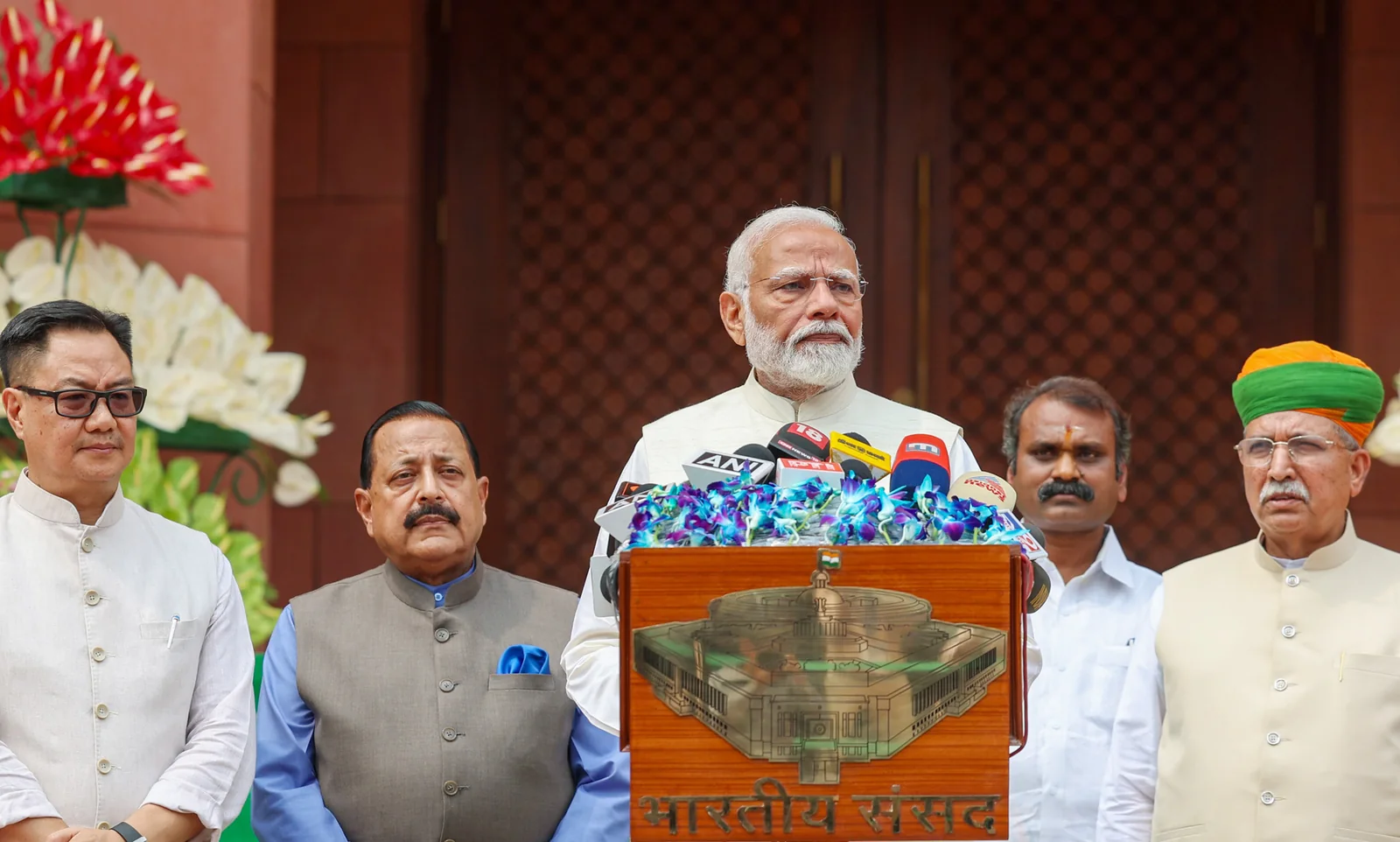
1950–
Narendra Modi
Prime minister and former chief minister of GujaratNarendra Modi rose through RSS and BJP organisation before becoming chief minister of Gujarat and then prime minister in 2014. Electoral success, welfare and infrastructure programmes, centralised leadership and disputes over minority rights and state power have shaped his career.Read biographyQuick answers
Common questions
- Were all Indian banknotes withdrawn?
- No. The 2016 measure concerned the specified existing ₹500 and ₹1,000 series, with limited exceptions and conversion arrangements.
- What does the 99.3 per cent figure measure?
- It is the approximate value of specified banknotes returned compared with their reconciled value outstanding at withdrawal.
- Does a returned note prove that the money was legitimate?
- No. Depositing currency and establishing whether income was lawfully earned or declared are different matters.
- Can the 2016 deposit instructions be used today?
- They describe a historical scheme with its own deadlines and exceptions. This article is not a current exchange or financial guide.
Primary and institutional sources
How this history was checked
The historical RBI circular supplies the original scheme. The annual-report return totals were checked in indexed passages and a parliamentary answer; the full debates and every subsequent enforcement case were not read. The research discussion uses the NBER abstract and publication record, not a claim to reproduce all estimates in the paper. The illustration is from 2024. This article was reviewed on 23 October 2026.
- Reserve Bank of IndiaWithdrawal of legal-tender status: circular of 8 November 2016 and historical scheme
- Reserve Bank of IndiaAnnual Report 2017–2018, chapter VIII: verification and return of specified banknotes
- Rajya Sabha Secretariat12 December 2018: government answer on returned specified banknotes, selected indexed passage
- Gabriel Chodorow-Reich, Gita Gopinath, Prachi Mishra and Abhinav Narayanan / NBERCash and the Economy: Evidence from India’s Demonetization, abstract and publication record
- Prime Minister’s Office / Wikimedia CommonsModi addressing the media on 24 June 2024: complete photograph and licence
- Government of IndiaGovernment Open Data Licence: Gazette, February 2017
- Prime Minister’s Office, IndiaWebsite policies: accurate reproduction and attribution
- Press Information Bureau, IndiaCopyright policy: free reproduction and third-party exclusion