
The short answer
The Super Cub C100 is a useful design case because convenience did not come from one isolated invention. Its engine position, step-through form, clutch and wheels had to work together for the rider. Read the dated specification beside the development recollections to understand how that system took shape.
Design comparison
From a rider’s need to a system choice
An original synthesis of the C100 model sheet and named development accounts. These are relationships to examine, rather than a ranking of motorcycles.
| Rider’s task | Design response | Engineering question |
|---|---|---|
| Change gear with fewer hand controls | Automatic centrifugal clutch and a foot-operated three-speed gearbox | How will clutch operation and gear selection coordinate? |
| Mount and stop with confidence | Low step-through form and 17-inch rims | How do wheel size, foot reach and overall proportions interact? |
| Use a small engine in everyday travel | 49cc four-stroke engine in a compact layout | How can the engine meet its output and cooling needs within that space? |
| Compare fuel consumption fairly | Retain the stated 30 km/h constant-speed test condition | Does the comparison use the same test, load and operating conditions? |
Chronology
A timeline of the turning points
A product brief emerged
Honda and Fujisawa’s European journey informed the search for a practical small motorcycle.
Systems developed together
Engine, clutch, chassis and styling work proceeded through specialist teams.
C100 introduced
Honda began sales and mass production at its Yamato plant.
United States exports
The Super Cub entered Honda’s early American business.
Assembly outside Japan
Production using component sets began in Taiwan.
Start with the rider’s actions
Honda’s recollections describe a brief shaped by Soichiro Honda and Takeo Fujisawa after their 1956 European trip: a small, quiet and economical four-stroke machine with approachable styling and simplified controls. The requirement to remove the hand clutch was especially consequential. Rather than treating appearance as the final decorative step, the team had to consider mounting, balancing at a stop and changing gear as connected parts of one experience. The frequently repeated noodle-delivery anecdote explains the period’s brief; it is not advice to ride one-handed today.
Sources for this section: [1]
Read the C100 specification as a dated document
Honda’s one-page historical sheet identifies a 49cc, air-cooled, single-cylinder OHV engine producing 4.5 PS at 9,500 rpm. It lists a dry weight of 55 kg, a three-speed gearbox and a wet multiplate automatic centrifugal clutch. These are specifications for the 1958 C100, not for every later Super Cub. The same sheet’s 90 km/L fuel figure comes from a constant-speed test at 30 km/h. It should be read with that test condition attached, rather than presented as a promise for ordinary traffic or modern fuel-use comparison.
Sources for this section: [2]
Assign the work to an actual team
Yoshiro Harada coordinated the project, Daiji Hoshino handled engine development, and Akira Akima worked on the clutch mechanism. Styling designer Jozaburo Kimura translated packaging constraints into the bike’s form. Honda’s engineering recollections also identify suspension, frame and brake teams. The automatic clutch did not remove the gearbox: the rider still selected gears with a foot pedal. Simplifying one control therefore created another engineering task, coordinating clutch engagement and disengagement with the transmission. The founder’s brief and the specialists’ solutions describe different contributions to the same product.
Wheel size helped organize the whole machine
Kimura’s account connects the 17-inch rim choice with foot reach, mounting and the size of the motorcycle. The team even adapted existing tires for a mockup before the required size was available. In the finished layout, a low engine and a generous opening made the machine easier to straddle. This is an important sequence for a design student: the wheel was not an interchangeable detail attached after styling. Its dimensions helped determine proportions and the relationship between the rider, seat and ground. Suppliers were part of making that choice manufacturable.
Sources for this section: [4]
Separate launch, expansion and later totals
Honda’s model chronology places the C100’s Japanese sales start in August 1958, United States exports in 1959, and component-set production in Taiwan in 1961. Those steps describe market entry and production expansion, not three different invention dates. Later Super Cub production totals cover a defined family of models. Honda’s 2017 announcement, for example, counted qualifying motorcycles across the series. A cumulative series figure cannot be assigned to the original 1958 C100 alone or used as a precise count of individual people whose lives it changed.
Sources for this section: [5]
Try a constraint-based reading
Use the comparison below to trace one design requirement through a feature and then through an engineering consequence. Next, choose two requirements that might conflict: making the machine lower and narrower, for example, while leaving room for its engine and controls. Write a short explanation of what evidence would let you judge the trade-off: a dimensioned drawing, a test condition or a team member’s account. This exercise asks how the requirements fit together. A list of impressive specifications alone cannot explain why this particular combination was selected.
Continue the chronology
Related history guides
Connected biographies
People behind the work
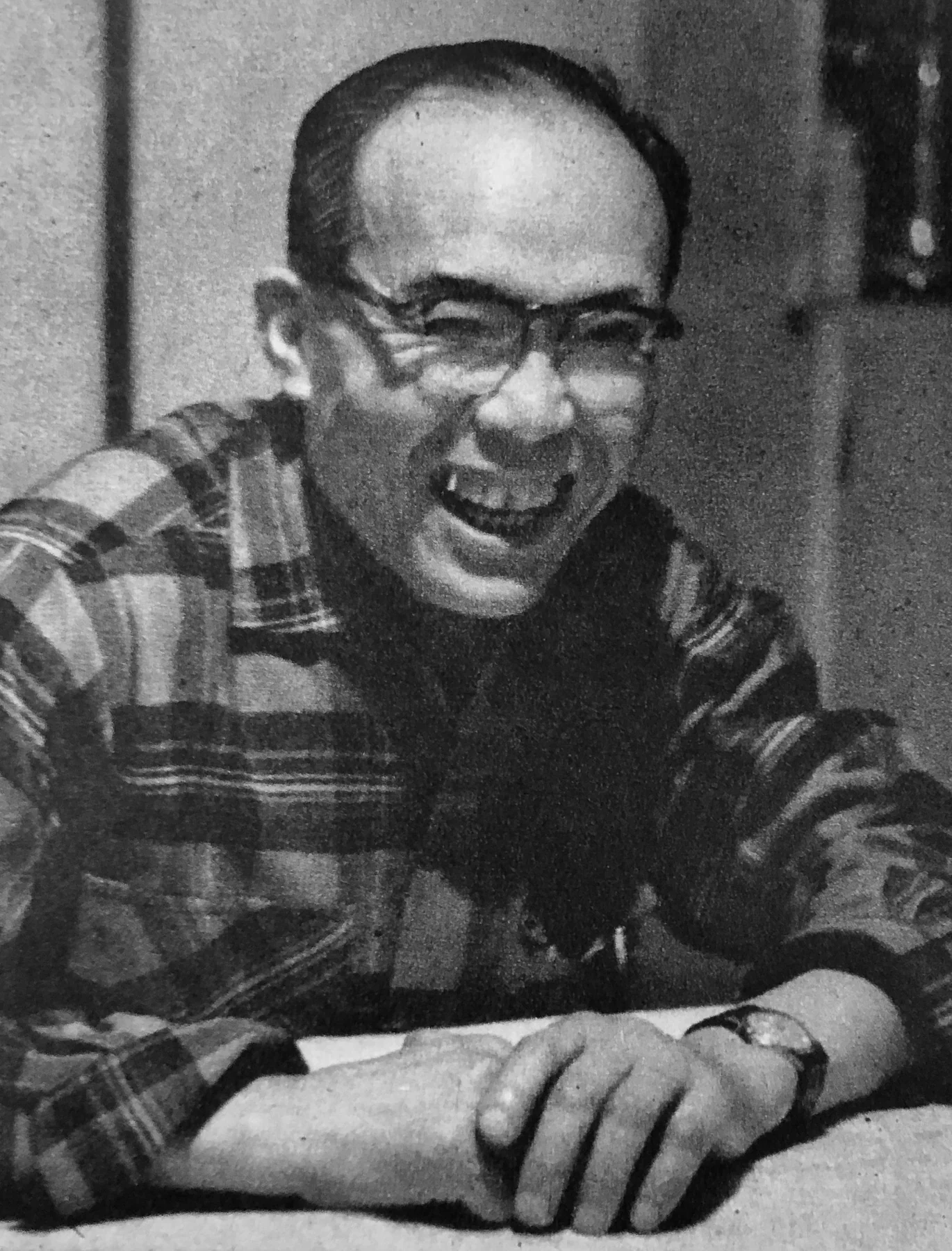
1906–1991
Soichiro Honda
Industrialist and founder of Honda Motor Co.Soichiro Honda moved from vehicle repair and piston-ring manufacture into a motorcycle company with an international reach. His technical leadership worked alongside Takeo Fujisawa’s commercial organization and the contributions of specialist engineering teams.Read biographyQuick answers
Common questions
- Was the first Super Cub an automatic scooter?
- Its clutch operated automatically, but the 1958 C100 had a three-speed gearbox selected by the rider. Calling it simply automatic conceals that distinction.
- When was the original C100 launched?
- Honda’s historical model chronology records August 1958 in Japan. United States exports began in 1959.
- Does the guide’s photograph show the 1958 development project?
- No. The proposed image is a portrait of Soichiro Honda photographed in 1954 and published in a 1955 magazine. It illustrates the founder, not the C100 launch or engineering tests.
Primary and institutional sources
How this history was checked
Honda’s model sheet supplies dated specifications. Its later corporate histories preserve named participants’ recollections; they are valuable firsthand testimony selected and published by the company. This article was reviewed on 27 October 2026.
- Honda Motor Co.Cub Stories, Vol. 1: The Birth of the Super Cub, page 1
- Honda Motor Co.Super Cub C100 1958.08: historical model sheet and specifications, one-page PDF
- Honda Motor Co.Quality Products Have No International Boundaries: Super Cub development recollections
- Honda Motor Co.Cub Stories, Vol. 1: tires, mockups and production, page 2
- Honda Motor Co.Super Cub 100 million production milestone: historical model chronology (2017)