
The short answer
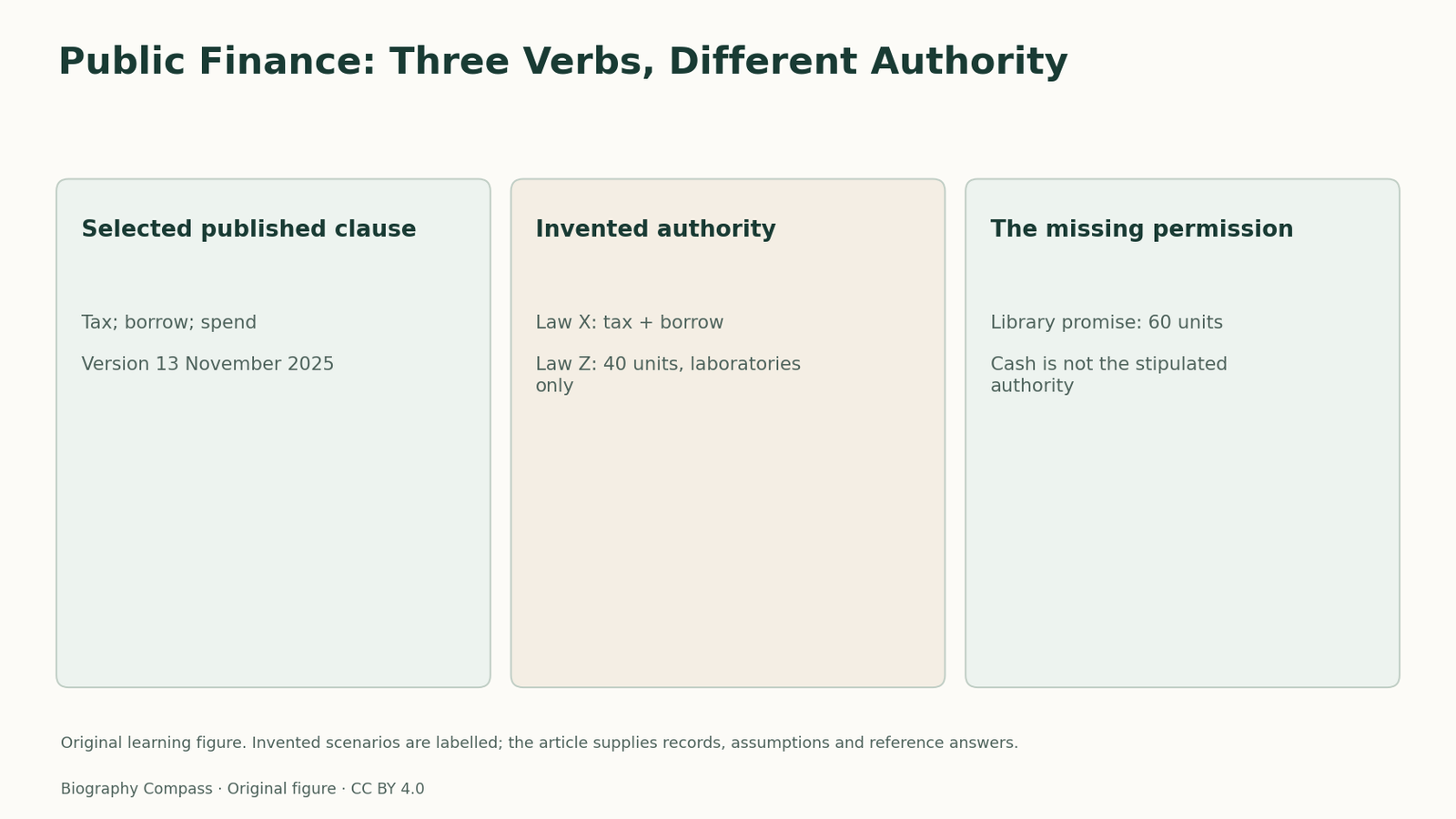
Money available and permission to use it are different questions. The selected statutory wording names three activities, and the exercise asks the reader to preserve both the activity and the supplied limit.
Read the specified record
Ask which activity is authorised
Keep the source version and the stipulated scope alongside the monetary amount.
| Activity | The question | An incomplete substitute |
|---|---|---|
| Tax | What authority supports the levy? | A promise about later spending. |
| Borrow | What authority supports receiving borrowed money? | An account containing funds. |
| Spend | What purpose and amount are covered? | Revenue authority alone. |
Chronology
A timeline of the turning points
Act title
The statute’s original enactment year.
Amendment annotation
Borrowing paragraph substituted.
Version used
Dated published text, not an original 1986 scan.
Read a dated version, not an imagined original
In the published text dated 13 November 2025, section 22 requires authority by or under an Act of Parliament for the Crown to levy tax, borrow or receive borrowed money, and spend public money. Its annotation dates the borrowing paragraph’s substitution to 25 January 2005.
The 1986 title does not mean that every word in a later published version was enacted in 1986. The date attached to the source is therefore part of this exercise. We examine the selected wording, without reconstructing all earlier versions or treating a short clause as the whole public-finance system.
Sources for this section: [1]
Three activities do not require three separate Acts
The repeated legal condition attaches to different activities. Permission to raise funds and permission to spend them are not identical propositions. The phrase by or under also matters: the selected text does not demand a newly enacted, separately named statute for every individual payment.
A reader must identify the actual authority and its scope rather than count documents. One stipulated law could cover several activities; several documents could still fail to supply the authority relevant to the proposed act. This is why a political promise cannot fill a missing field in the small model below.
Sources for this section: [1]
Original authority task
Invent Law X authorising a tax and borrowing, but no spending. A minister then promises 60 units for a library. Stipulate that there is no other relevant authority. Which of the three activities still lacks its supplied statutory basis?
Now invent Law Z authorising expenditure of 40 units only on laboratories. Does it authorise the library promise? Would cash already in an account answer either question? Treat the exercise’s stated purposes and amounts as binding inputs; it supplies no discretion to transfer between them.
Sources for this section: [1]
Reference answer
The missing activity is spending. Law X’s authority to raise funds does not supply the omitted spending power in this model. Law Z does not cover the promised library: its stated purpose is laboratories, and its limit is 40 rather than 60 units. The two mismatches should be identified separately.
An account balance records available money, not the missing permission stipulated here. This is a textual classification exercise with invented laws and amounts. It does not decide a real appropriation, interpret an uninspected delegation or supply a complete answer about a current government transaction.
Sources for this section: [1]
Continue the chronology
Related history guides
Biography context
Explore New Zealand through connected lives
Connected biographies
A connected working life
Born 1942
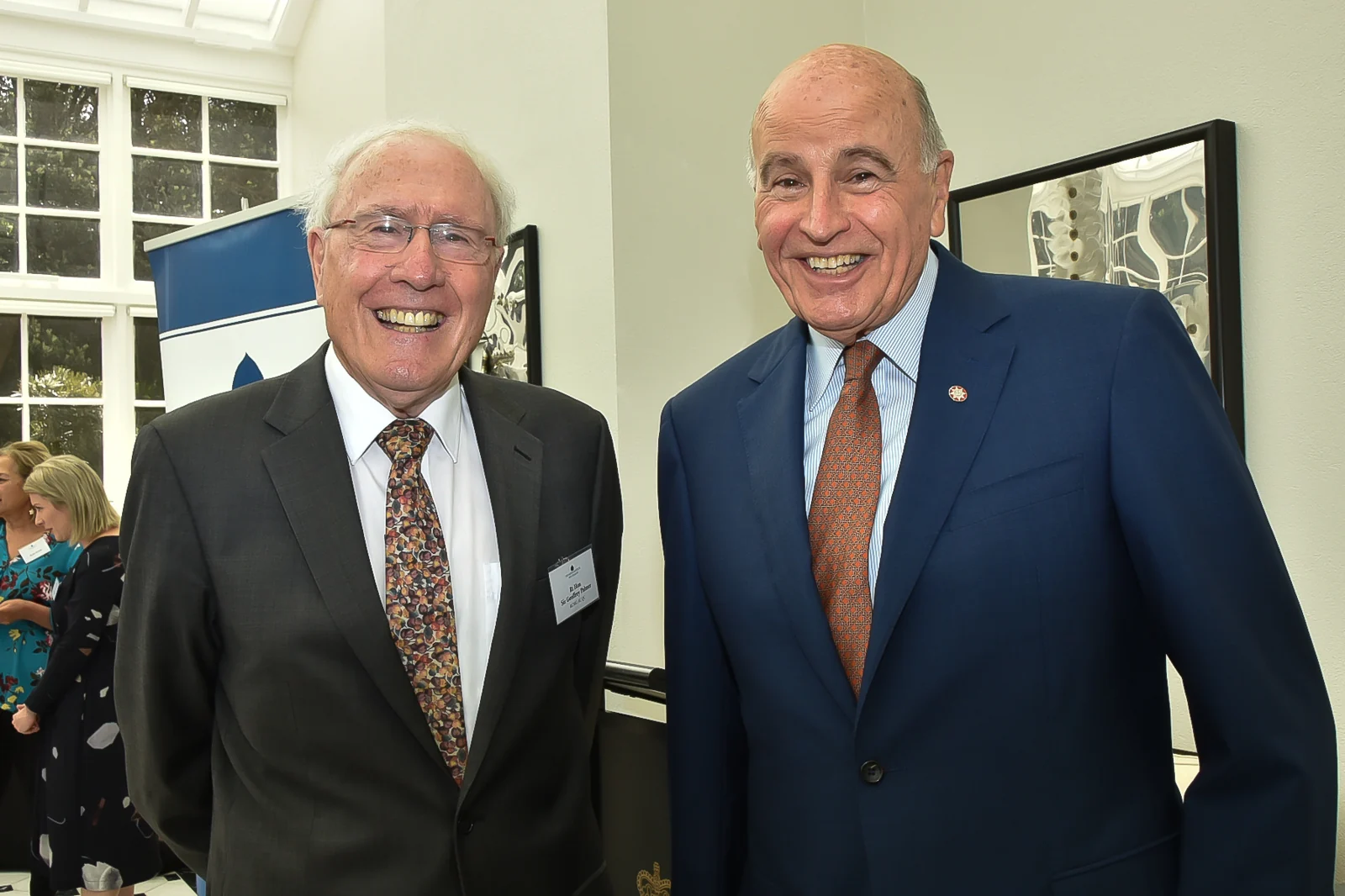
Geoffrey Palmer
Former prime minister and constitutional lawyerHis working life connects teaching, ministerial reform, legal practice and the continuing argument over how government power should be organised.Read biographyQuick answers
Common questions
- Does the exercise require one Act for each activity?
- No. It asks which stipulated authority covers an activity; a single law could cover more than one.
Primary and institutional sources
How this history was checked
The study identifies selected records and their dates. Its invented examples are learning models, with reference answers supplied in the article. This article was reviewed on 31 October 2026.