

The short answer
A health programme can involve many residents while leaving its decisions elsewhere. In a 2020 policy-and-practice paper, Miriam Were and four coauthors asked what it would mean for communities to help shape primary health care. Their examples help distinguish attending, delivering, reviewing and deciding.
Original evidence comparison
What does each observation actually show?
The first two rows paraphrase reported historical roles; the last two use fictional cards.
| Record or case | Observation | Evidence of a role | Question still open |
|---|---|---|---|
| Freetown example | Community review of local data | Deliberation and recommendations | Who responds, and what changes? |
| Peru example | Budget and service oversight | A formal management role | What resources and representativeness? |
| Invented meetingA | A meeting took place | Attendance | Could residents change a decision? |
| Invented budgetD | Mandate and budget specified | A decision right on the card | Was it exercised inclusively in practice? |
Chronology
A timeline of the turning points
Peru example
Table 1 dates the original CLAS arrangement and notes a later modification.
Freetown example
The 2020 table describes a participatory health-information system.
Publication
The coauthored paper appeared in the WHO Bulletin.
What kind of paper is this?
Emma Sacks, Meike Schleiff, Miriam Were, Ahmed Mushtaque Chowdhury and Henry B. Perry published Communities, universal health coverage and primary health care in the Bulletin of the World Health Organization. It is a policy-and-practice argument drawing on earlier evidence and programmes. It does not report one new trial in which every example received the same intervention.
The authors argue that community members should help plan, make decisions, implement and evaluate services. Their concern includes the distribution of authority and resources. An attendance count, service total or questionnaire response cannot by itself establish how much influence residents have.
Sources for this section: [1]
Read the programme roles without turning them into a ranking
Table 1 describes several forms of participation. In Freetown, Sierra Leone, community data-review committees used locally gathered health information to consider action. In Peru, the CLAS model involved local entities overseeing budgets and services. The table’s Peru period is 1994–2008, with a footnote that the original arrangement was modified.
These examples describe different mechanisms in different settings. Comparing their roles is useful, but the table does not supply a common experiment proving which mechanism produced the best clinical result. Programme dates described as “present” belong to the 2020 account, not a fresh claim about their status today.
Sources for this section: [1]
Original exercise: ask which decision can change
Consider four invented cards. A: residents attend a meeting after the service plan is final. B: volunteers deliver that fixed plan. C: a local committee reviews data and can submit recommendations requiring a written response. D: elected local representatives have an agreed budget and authority to choose between two approved priorities.
A demonstrates attendance; B describes implementation; C adds a channel for deliberation and accountability; D specifies a decision right. None of these short cards measures whether participation is inclusive, whether people can safely disagree or whether the arrangement works well. They identify different things to investigate, rather than a universal quality score.
Sources for this section: [1]
Reference answers require records, not labels
For A, request the plan’s decision date and minutes showing whether any resident proposal could still change it. For B, ask who sets the tasks and what support the volunteers receive. For C, inspect the committee’s membership, recommendations and recorded official responses. For D, compare the written mandate, available resources and actual budget decisions.
A promise of participation is not evidence that a decision right was exercised. Conversely, delivering a centrally specified service can be valuable without establishing local control over its priorities. The distinction keeps an evaluation from confusing useful activity with a different claim about agency.
Sources for this section: [1]
Connect the argument to a career, with its limits
Were’s earlier community-health work and medical teaching help explain her continuing interest in residents’ role in health systems. Her presence among the five authors does not make all the programmes in the paper her own projects. The article brings several researchers’ perspectives into a common argument.
Its conclusion is a research agenda as well as a policy position: examine equity, authority, ownership and how communities judge success, alongside service measures. Our cards provide a way to practise that reading. They do not establish the effectiveness of a real programme or replace evaluation in its own historical and social setting.
Continue the chronology
Related history guides
Biography context
Explore Worldwide through connected lives
Connected biographies
Researchers and related work
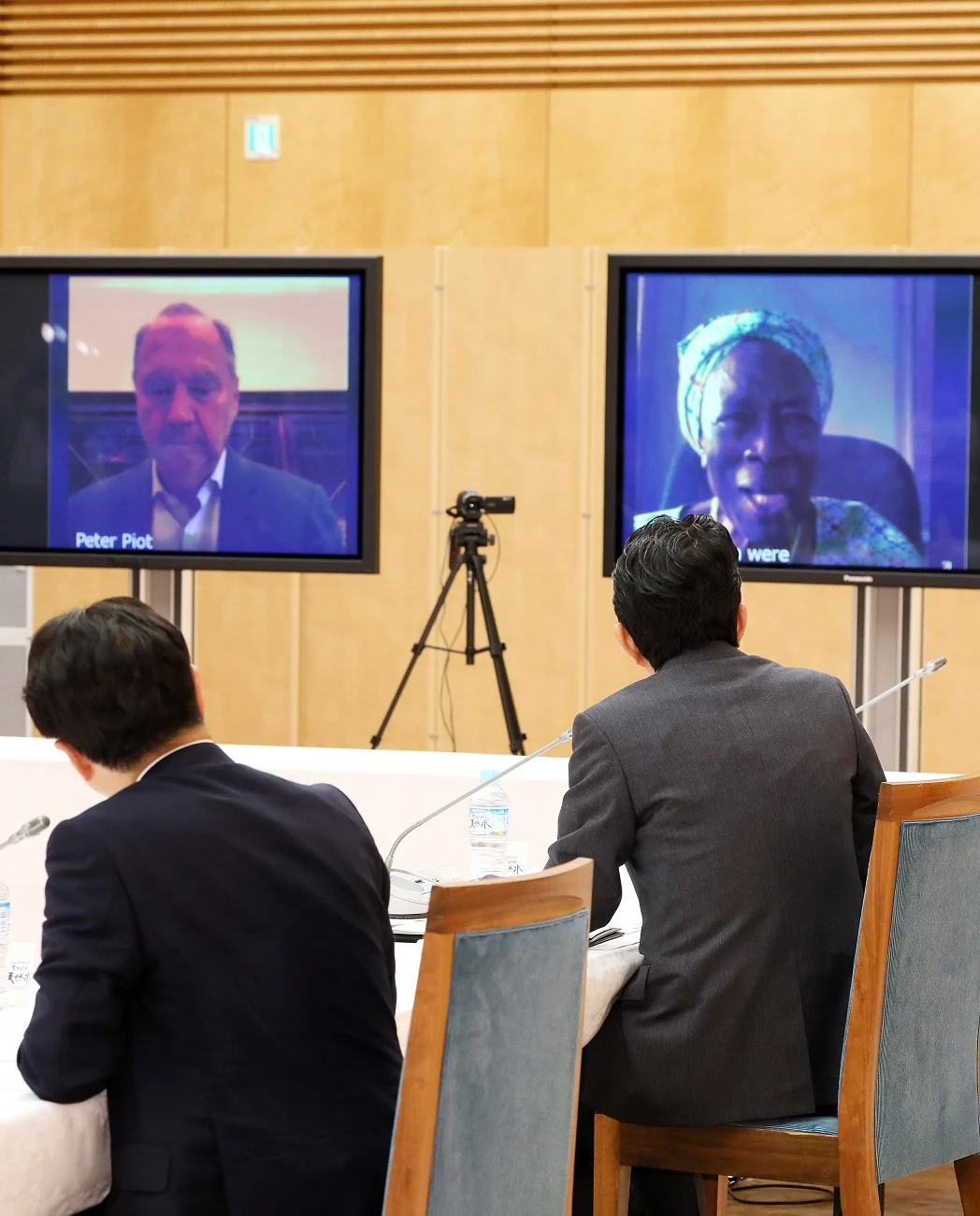
Born 1940
Miriam Were
Public-health physician, researcher and community-health advocateMiriam Were is a Kenyan physician whose career joins medical education, community-led health work and international public service. She received the inaugural Hideyo Noguchi Africa Prize for Medical Services in 2008.Read biographyQuick answers
Common questions
- Does a large attendance figure prove community control?
- No. It measures attendance. Evidence about mandates, resources and decisions is needed to assess control.
- Is the 2020 paper a single clinical trial?
- No. It is a policy-and-practice paper drawing on earlier studies and programmes.
- Are the four cards real projects?
- No. They are original hypothetical exercises designed to separate forms of participation and identify useful follow-up records.
Primary and institutional sources
How this history was checked
Selected primary records support the historical comparison. Worked examples are original teaching exercises; their assumptions and limits are stated below. This article was reviewed on 27 October 2026.