
The short answer
The phrase “splitting the atom” can hide the experimental question. At Cambridge, John Cockcroft and Ernest Walton directed artificially accelerated protons at lithium and investigated the particles that emerged. Following the evidence explains both the achievement and the limits of that familiar description.
Original bookkeeping check
What is conserved in the simplified reaction?
These sums explain the notation; they do not reproduce the experimental measurements.
| Quantity | Incoming | Outgoing | Check |
|---|---|---|---|
| Nucleon count | 7 + 1 = 8 | 4 + 4 = 8 | Balanced |
| Electric charge | 3 + 1 = 4 | 2 + 2 = 4 | Balanced |
| Released energy | Integer mass numbers are insufficient | Precise masses and state information are needed | Not calculated here |
Chronology
A timeline of the turning points
An earlier transformation
Walton’s Nobel lecture credits Rutherford’s work using naturally emitted alpha particles.
Lithium experiment
Walton observes scintillations after accelerated protons strike a lithium target.
Publication
Cockcroft and Walton publish Disintegration of Lithium by Swift Protons in Nature.
Retrospective technical accounts
Their Nobel lectures explain experimental development nearly twenty years later.
A controllable beam changed the research question
Walton opens his 1951 lecture by describing earlier experiments with naturally emitted alpha particles. Rutherford’s 1919 nitrogen work was already an example of induced nuclear transformation. The 1932 achievement therefore needs a narrower description than the first occasion on which anyone changed an atomic nucleus.
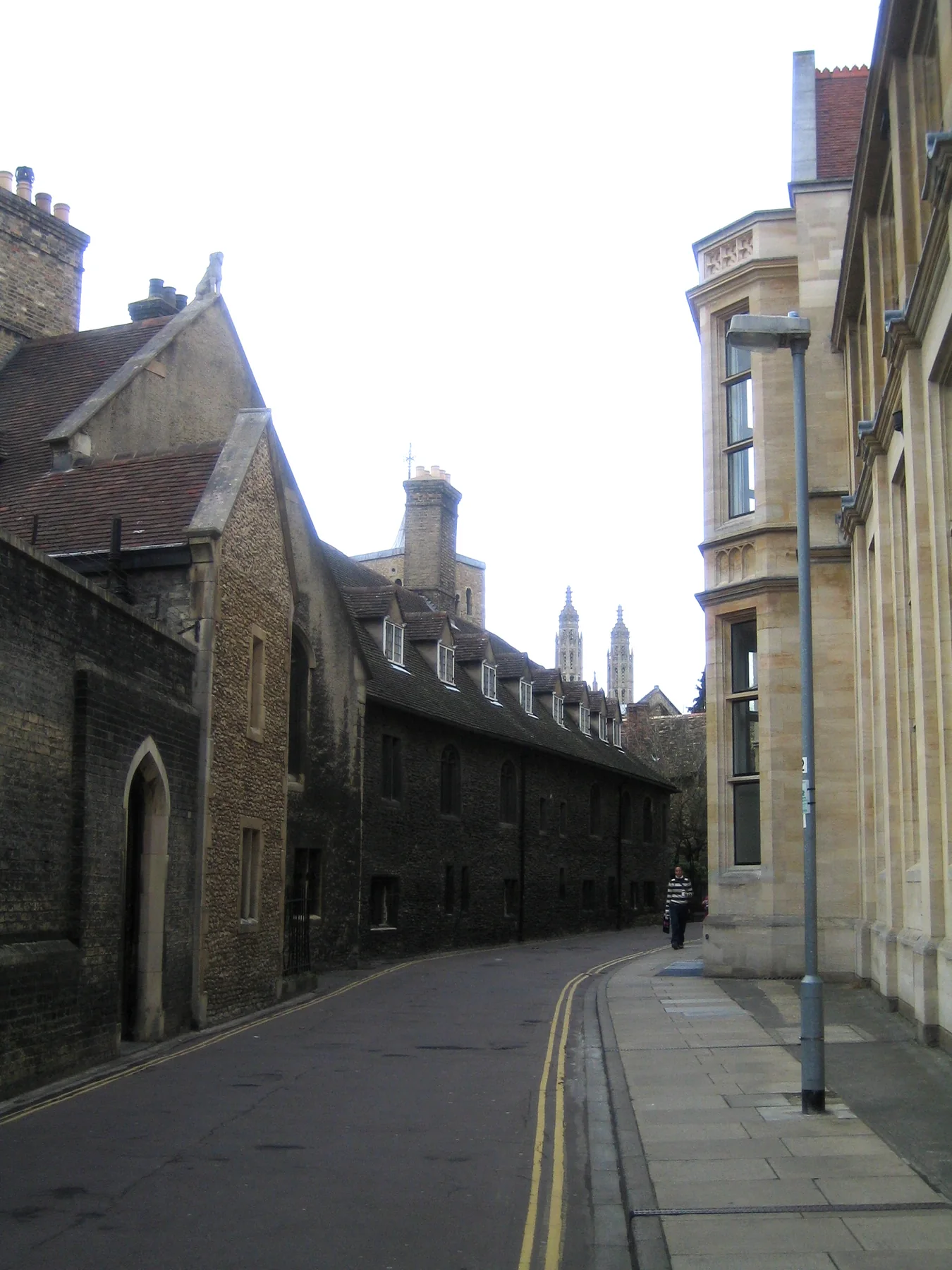
Artificial acceleration offered a laboratory source whose particle type and energy could be controlled. It connected electrical engineering with nuclear investigation. The apparatus was developed at the Cavendish Laboratory under Rutherford’s leadership, but the jointly named investigators were Cockcroft and Walton. Walton’s Irish biography should not relocate the experiment to Dublin.
From looking for radiation to identifying a reaction
Cockcroft’s Nobel lecture describes unsuccessful searches for the expected gamma radiation before the investigators turned to detecting alpha particles. Walton saw scintillations: small flashes on a zinc-sulphide screen. Such flashes were observations requiring interpretation, rather than a direct view of an individual nucleus breaking apart.
The investigators examined the particles’ range and absorption. Cockcroft also describes testing the interpretation of emission in pairs with two screens and observers. The significance lay in connecting a controlled incoming beam with a measured outgoing product. The later lecture is a participant’s technical recollection; the original Nature letter supplies the contemporary published claim.
Keep observation, publication and recollection separate
Nature dates Disintegration of Lithium by Swift Protons to 30 April 1932. A February 2014 Cavendish magazine reproduces Alan Walton’s account of a letter his father wrote on 17 April 1932, referring to the previous Thursday. That supplies the 14 April observation date through a later published quotation. We have not inspected the original letter itself.
These records answer different questions. Publication metadata dates public communication; a dated letter can help locate an experiment; a Nobel lecture explains development from a later perspective. Agreement between them strengthens a chronology without making them interchangeable records.
Read the reaction without turning it into a different discovery
A simplified reaction is ⁷Li + ¹H → ⁴He + ⁴He. Here ¹H denotes the incoming proton and each helium nucleus is an alpha particle. Nucleon count and electric charge balance on the two sides. The table checks that bookkeeping explicitly.
Mass number counts nucleons; it is not a precise rest mass. Consequently, adding the integers in this equation cannot calculate the released energy or verify a numerical mass–energy relation. Nor is this uranium fission, a self-sustaining chain reaction or a complete account of all possible lithium reactions. The historical advance concerned nuclear transformation with artificially accelerated particles.
Try a short evidence exercise
Explain why three statements are different: the reaction balances; the experiment occurred on 14 April; and the joint paper appeared on 30 April. What evidence supports each, and what additional information would be needed to calculate an energy release?
Suggested answer: balancing uses the stated nucleon and charge values; the observation date follows the published letter quotation; publication follows the Nature record. Precise nuclear masses and a properly specified initial and final state would be needed for an energy calculation. A balanced equation alone cannot establish that an experiment happened.
Continue the chronology
Related history guides
Connected biographies
The experimentalist and the laboratory leader
1903–1995
Ernest Walton
Experimental physicist and university teacherErnest Walton was an experimental physicist who shared the 1951 Nobel Prize in Physics with John Cockcroft. Their Cambridge experiments used artificially accelerated protons to transform lithium nuclei; Walton later spent decades teaching and building physics at Trinity College Dublin.Read biography1871–1937
Ernest Rutherford
Experimental physicist, university professor and laboratory directorErnest Rutherford was a New Zealand-born experimental physicist whose work on radioactivity helped establish that atoms could change into other elements. He proposed the nuclear atom and led influential research groups in Montreal, Manchester and Cambridge.Read biographyQuick answers
Common questions
- Was this the first nuclear transmutation?
- No. Walton’s lecture discusses Rutherford’s earlier work. The distinguishing achievement was transformation using artificially accelerated particles.
- Did Cockcroft and Walton perform this experiment in Ireland?
- No. They worked at the Cavendish Laboratory in Cambridge. Walton later returned to Trinity College Dublin.
- Was the Nobel Prize awarded in 1932?
- No. Cockcroft and Walton shared the 1951 Nobel Prize in Physics for their pioneering research using artificially accelerated particles.
Primary and institutional sources
How this history was checked
Read the Nature bibliographic record and abstract, the opening of Walton’s lecture and Cockcroft’s experimental discussion. The Cavendish magazine gives a later reproduction of a letter quotation; the original manuscript was not inspected. The simple balance table is an original calculation. The modern exterior photograph has a separate reuse record. This article was reviewed on 27 October 2026.
- J. D. Cockcroft and E. T. S. Walton / NatureDisintegration of Lithium by Swift Protons, 30 April 1932
- John Cockcroft / Nobel FoundationExperiments on the Interaction of High-Speed Nucleons with Atomic Nuclei: 1951 lecture
- Ernest Walton / Nobel FoundationThe Artificial Production of Fast Particles: 1951 lecture
- Cavendish Laboratory, University of CambridgeCavMag 11, February 2014, printed page 5: Alan Walton’s address and the 1932 letter quotation
- Nobel educational archiveAccelerators and Nobel Laureates: the 1932 reaction
- Mincebert / Wikimedia CommonsFree School Lane: photograph and creator’s public-domain dedication