
The short answer
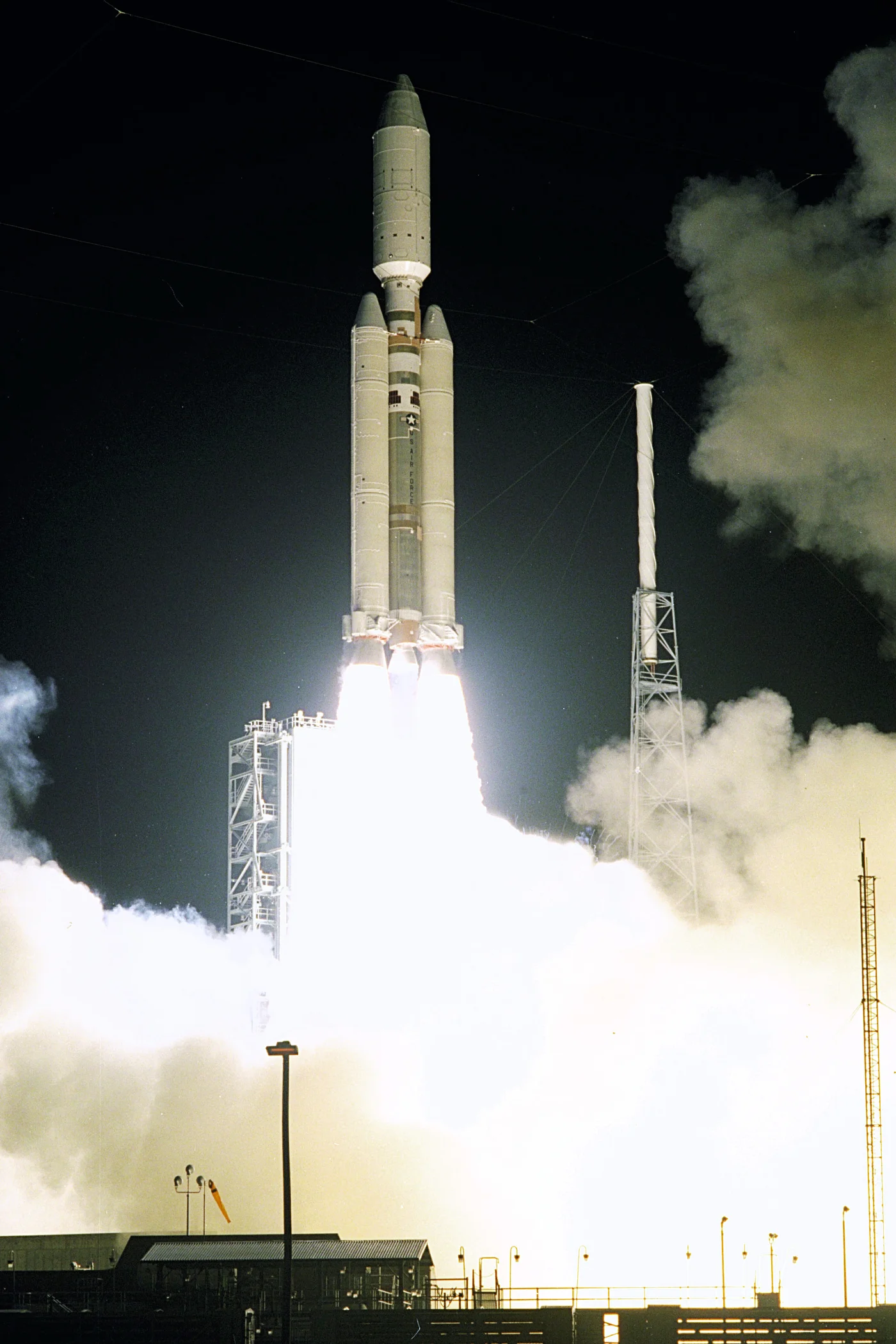
On 14 January 2005, the European Space Agency’s Huygens probe descended through Titan’s atmosphere and landed. Cassini carried the probe to Saturn and received its descent transmissions. When one receiver failed to lock, radio telescopes on Earth measured changes in the probe’s signal. Those observations recovered much of the wind experiment while some telemetry was lost.
The relay
Which part of the mission did what
Separate the origin of a measurement from the route its signal took to Earth.
| Element | Role | Result |
|---|---|---|
| Huygens | Descending instrument platform and transmitter | Made measurements of the atmosphere, descent and surface. |
| Cassini and the Deep Space Network | Nearby receiver and subsequent relay to Earth | Delivered the data received on Channel B through NASA’s ground network. |
| Ground radio telescopes | Direct tracking of the Channel A carrier from Earth | Recovered information for the winds experiment from shifts in frequency. |
Chronology
A timeline of the turning points
Cassini and Huygens launch together
The mission brings together NASA, ESA and the Italian Space Agency.
Huygens separates
The separated probe follows a course toward Titan while Cassini prepares for the relay.
Huygens enters and lands
The probe records atmospheric profiles and returns data from the surface.
Teams track the carrier from Earth
Radio telescopes make measurements that can be analysed independently of the Cassini receiver.
A probe and an orbiter had different jobs
Huygens carried instruments that had to pass through the atmosphere to take measurements along the way. Cassini stayed in space and acted as the nearby receiving platform. NASA’s Deep Space Network received the forwarded data, with the ESA operations centre in Darmstadt coordinating the probe’s scientific and engineering analysis.
The parachute descent gave sensors time to record how conditions varied with height. The mission team could compare data from the atmosphere with observations from the end of the descent and the surface.
Why one Cassini channel returned no data
The mission team reported that a command to power the reference oscillator on the Cassini side had been omitted. Without that reference, Cassini’s Channel A receiver could not lock on to the probe. The lost data included the planned Cassini Doppler measurements and information sent only on Channel A. The other channel carried much of the scientific record.
The probe’s transmitter on Channel A was nevertheless operating. That matters because a transmitter failure would also have deprived Earth-based receivers of its carrier. Here the independent route was available.
Sources for this section: [3]
How Earth-based observers recovered wind measurements
Several observatories tracked the changing frequency of the carrier. Motion along the line of sight changes that frequency. Comparing the observations with the changes expected from the geometry of the descent lets researchers infer aspects of the motion caused by winds.
The signal analysis recovered much of the aim of the Doppler experiment. The missing telemetry remained a separate loss. A telescope that measures a signal’s frequency is making a different observation from a receiver that decodes images or other measurements embedded in the transmission.
Continue the chronology
Related history guides
Connected biographies
People connected to this history
Quick answers
Common questions
- When did Huygens land on Titan?
- Huygens reached the surface on 14 January 2005 after a parachute descent of about two and a half hours.
- How were the Titan wind measurements recovered?
- Radio telescopes measured changes in the frequency of the probe’s signal, recovering much of the Doppler experiment after Cassini’s Channel A receiver failed to lock.
Primary and institutional sources
How this history was checked
Dates, legal milestones and historical claims are checked against the official and institutional records below. This article was reviewed on 19 November 2026.
- European Space AgencyEurope reaches new frontier as Huygens lands on Titan
- European Space AgencyHighlights of ESA’s Huygens mission
- Jean-Pierre Lebreton and the Huygens mission teamAn overview of the descent and landing of the Huygens probe on Titan
- European Space AgencyFirst measurement of Titan’s winds from Huygens