
The short answer
Peter Grimes makes a community audible as well as visible. Its drama depends on the tension between a troubled individual, the people judging him and the vulnerable people in his care.
Chronology
A timeline of the turning points
Crabbe’s The Borough
Letter XXII supplied the Peter Grimes story later transformed for opera.
Return to Britain
Britten and Pears returned after their North American years.
Sadler’s Wells premiere
Pears created the title role, with Joan Cross as Ellen and Reginald Goodall conducting.
Music beyond the stage
Four Sea Interludes became a separate orchestral suite drawn from the opera.
Crabbe supplies a source, not a ready-made opera
George Crabbe’s The Borough was published in 1810. Its twenty-four letters portray a community, and Letter XXII concerns Peter Grimes. Britten’s opera draws on that source but belongs to a different medium. Montagu Slater’s libretto gives the composer words, roles and dramatic situations through which a stage community can be heard. Adaptation is a process of selection and transformation rather than an obligation to preserve every feature of the poem.
Keep three identities distinct when approaching the work: Crabbe’s literary figure, the operatic role and the interpretation offered by a particular singer or director. A later production may move the setting or emphasise a different relationship. Those choices can be illuminating, but they should be identified as production decisions. A synopsis alone cannot tell you how a particular performance makes them persuasive.
The 1945 breakthrough was collaborative
The world premiere took place at Sadler’s Wells in London on 7 June 1945. Peter Pears sang Grimes, Joan Cross sang Ellen Orford and Reginald Goodall conducted; Eric Crozier directed. Britten wrote the music and Slater the libretto. Retaining these credits helps explain an opera’s creation as the work of writers, singers, musicians and theatre practitioners rather than the achievement of a composer acting alone.
The piece established Britten internationally and strengthened the place of new English-language opera. His subsequent move towards some smaller-scale works also reminds us that a successful premiere does not remove the practical costs of opera. People, rehearsal time, an orchestra and a venue are conditions of the work’s existence. Britten’s later involvement in the English Opera Group addressed those conditions as well as the need for new repertoire.
Listen for judgement moving through the community
The prologue begins with an inquest into the death of Grimes’s apprentice. An accidental-death verdict fails to silence suspicion. Ellen and Balstrode occupy positions different from those of the hostile crowd, while Grimes himself cannot be reduced to an uncomplicated innocent. The danger to apprentices and the community’s appetite for condemnation must both remain visible. Sympathy for an outsider does not settle responsibility towards a child.
Britten’s 1945 introduction stresses how the performers helped shape the work. In performance, listen for the difference between a single voice addressing another person and a chorus acting collectively. The chorus is not merely background scenery: it can make a social pressure audible. Ask who is speaking, who is being spoken about and who has little opportunity to answer. That last question is particularly important for the silent apprentice role.
The interludes belong to a larger structure
Peter Grimes is an opera in a prologue and three acts, with orchestral interludes between scenes. ENO distinguishes six interludes in the opera from the four Britten selected for the concert suite Four Sea Interludes. Hearing that suite can introduce an orchestral dimension of the work, but it does not provide the sung drama, the complete sequence or the relationships among its characters.
A useful preparation is to read a concise synopsis, check the principal roles and then follow how a transition changes the atmosphere before the next scene begins. The orchestra can establish expectations that words later confirm or unsettle. Leave room for a performance to surprise you. This is a structural orientation based on publisher and opera-company accounts, rather than a claimed review of a complete recording, score or production.
Continue the chronology
Related history guides
Biography context
Explore United Kingdom through connected lives
Connected biographies
Artists concerned with individuals and communities
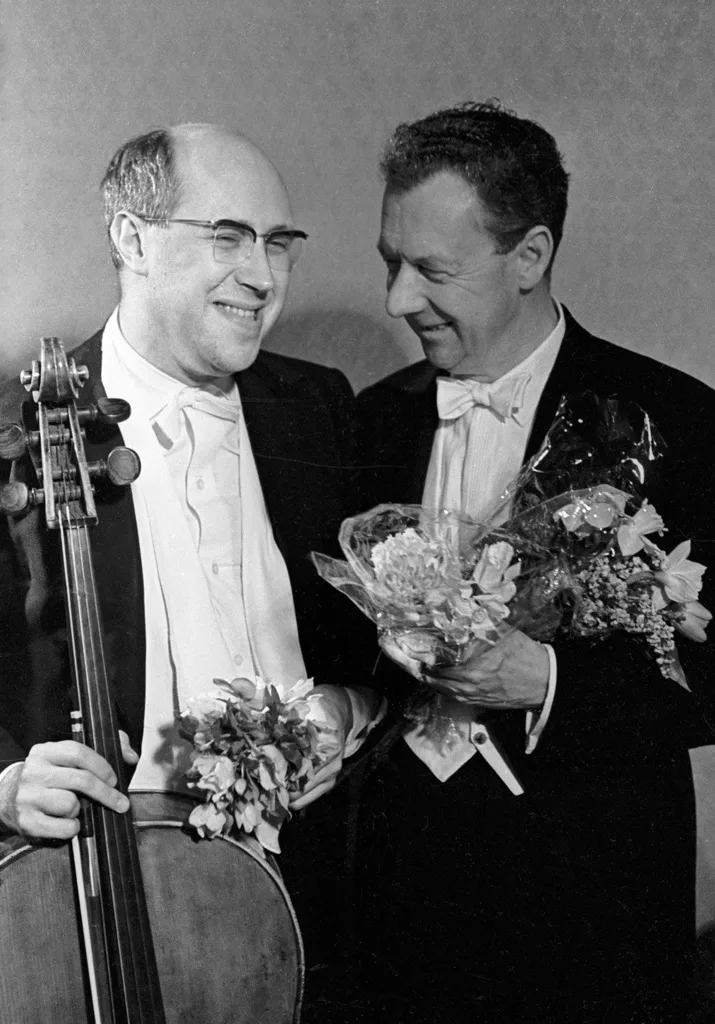
1913–1976
Benjamin Britten
Composer, pianist, conductor and festival founderBenjamin Britten was an English composer, pianist and conductor whose operas, vocal music and musical institutions linked international ambition to Suffolk.Read biography
1882–1941
Virginia Woolf
Novelist, essayist, critic and publisherVirginia Woolf was an English novelist, critic and publisher whose experiments with consciousness and time changed modern fiction and feminist literary argument.Read biographyQuick answers
Common questions
- Who wrote the words of Peter Grimes?
- Montagu Slater wrote the libretto, drawing on George Crabbe’s The Borough. Benjamin Britten composed the music.
- Who first sang Peter Grimes?
- Peter Pears created the title role at Sadler’s Wells on 7 June 1945, with Reginald Goodall conducting.
- Is Four Sea Interludes the whole opera?
- No. It is a separate orchestral suite drawn from four of the opera’s six interludes. It omits the sung dramatic action.
- Is the opera simply a story about an innocent outsider?
- That would flatten its tensions. The community’s prejudice matters alongside Grimes’s conduct and his responsibility for vulnerable apprentices.
Primary and institutional sources
How this history was checked
Read limits: the publisher’s premiere, role, orchestral and synopsis information, ENO’s introduction and selected words from Britten’s republished 1945 introduction were read. No full score, libretto, recording or production was reviewed. Musical prompts are suggestions for a future listening experience, not claims based on a complete listening session; no libretto text is reproduced. This article was reviewed on 23 October 2026.
- Britten Pears ArtsBenjamin Britten: Lowestoft, Bridge, Pears, opera, Aldeburgh and death
- Boosey & HawkesBenjamin Britten: In Focus, education, film work, conscientious objection and musical institutions
- Boosey & HawkesBenjamin Britten: biography and later works
- Britten Pears ArtsWar Requiem dedicatee David Gill: Coventry commission and the Latin/Owen texts
- Britten Pears ArtsWork of the Week: War Requiem and its 30 May 1962 premiere
- Britten Pears ArtsArchive Treasures: Young Person’s Guide, 1945 film commission and differing script credits
- SRF KulturBenjamin Britten: Ein Komponist mit Abgründen, 2013, discussion of Bridcut’s interviews and safeguarding concerns
- Boosey & HawkesPeter Grimes: premiere, librettist, roles, orchestral forces and synopsis
- English National OperaAn Introduction to Peter Grimes: Crabbe, the community and six interludes
- Benjamin Britten / The GuardianBritten’s 1945 introduction to Peter Grimes, republished 2013: selected passage
- RIA Novosti / Mikhail Ozerskiy / Wikimedia CommonsExact photograph #25562 and partnership-supplied CC BY-SA 3.0 licence
- Wikimedia CommonsComplete 1964 Britten and Rostropovich JPEG