
The short answer
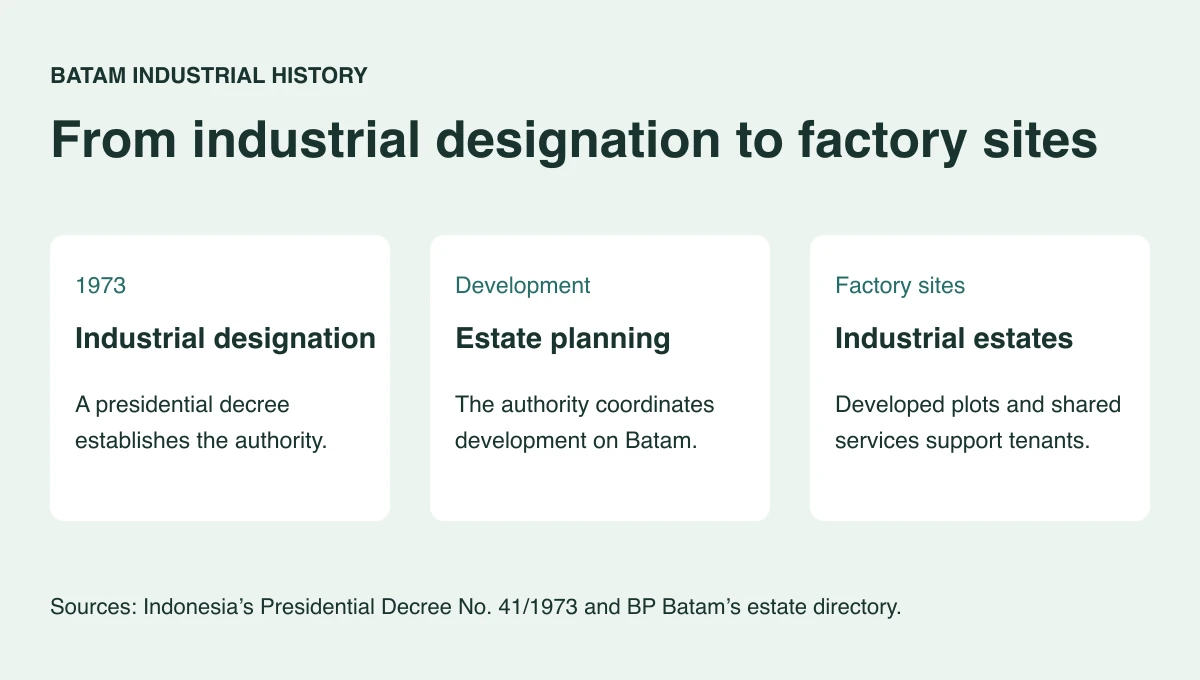
Indonesia’s 1973 presidential decree put a dedicated authority in charge of developing Batam as an industrial area. Later estates such as Batamindo show how that mandate turned into factory sites: an estate supplied industrial plots and common facilities that individual manufacturers could use.
Comparing records
From decree to factory site
The decree sets responsibility. The estate directory describes what tenants could use on the ground.
| Record | What it establishes | What a reader would need next |
|---|---|---|
| 1973 presidential decree | Who was authorized to develop the industrial area | Dated project records for individual facilities |
| BP Batam history | Pertamina’s early role and the later formation of industrial estates | Investment or estate records to date individual projects |
| Estate directory | Available premises and shared infrastructure at named estates | Earlier editions or tenant records to identify when a particular facility opened |
Chronology
A timeline of the turning points
Pertamina develops a logistics base
BP Batam identifies oil and gas support as an early use of the island’s port and operational facilities.
An industrial authority receives a mandate
Presidential Decree No. 41 places industrial-area development under a government authority.
BP Batam dates Batamindo’s start to 1990
The estate organizes access to factory space, common facilities and transport links.
From oil logistics to a wider mandate
Pertamina’s early work used Batam to support oil and gas operations. A base designed around supply and transport gave the island an industrial role before a dedicated development authority was put in charge.
Indonesia’s 1973 decree defined an industrial area and its administration. Putting responsibility in one institution gave the government a way to coordinate island-wide development across individual projects that would otherwise be planned independently.
What the estate supplied
BP Batam’s estate directory dates Batamindo’s start of operation to 1990 and describes facilities provided at estate level. A manufacturer choosing an estate could evaluate its premises and common services alongside the requirements of its own production line.
The estate is an intermediate scale in this story. National rules explained why Batam could be developed. Individual firms still made their own investment decisions. The estate translated the authority’s broader coordination into a place where those decisions could be put into practice.
Which date answers which question
The decree is strong evidence for the authority’s mandate in 1973. To date a worker’s first shift or a tenant’s first shipment, a reader would need factory-level records. The directory gives evidence that an estate offered shared services in the era it describes.
BP Batam also records later trade-zone legislation. Keeping that later legal history separate prevents the original decree, the estates and the subsequent free-trade framework from being treated as one founding event.
Continue the chronology
Related history guides
Connected biographies
People connected to this history
Quick answers
Common questions
- What did Indonesia establish in Batam in 1973?
- Presidential Decree No. 41 set out an industrial development framework and established a dedicated authority for the area.
- What does Batamindo show about Batam’s development?
- It illustrates how a named estate gave manufacturers access to industrial premises and services within the wider development area.
Primary and institutional sources
How this history was checked
Dates, legal milestones and historical claims are checked against the official and institutional records below. This article was reviewed on 19 November 2026.