
The short answer
The Hawke government announced the float of the Australian dollar on Friday 9 December 1983. Trading under the new arrangements began on Monday 12 December. The decision changed who determined the exchange rate and removed most exchange controls. It also changed the Reserve Bank’s operating problem: defending an official currency price would no longer dictate the flow of cash into the domestic financial system.
Chronology
A timeline of the turning points
Officially managed exchange rates
Australia moves through several pegs and managed arrangements before the float.
Partial operating changes
Banks gain more flexibility in dealing, while the official spot-rate framework remains.
Inflows and revaluation expectations
Funds enter as market participants anticipate an increase in the official rate.
Market closure and announcement
After consultation, the foreign exchange market closes while the government decides; Treasurer Keating announces the float that evening.
The new system opens
Banks transact at negotiated rates and the RBA stops publishing a rate at which it will deal.
A developing market
The RBA observes volatility and retains discretion to intervene while further exchange-control changes follow.
A managed rate required the authorities to trade at their price
Before the float, Australia had used successive currency pegs and a managed rate against a basket of currencies. The precise arrangements changed over time; the pre-1983 system was not one unaltered link to sterling or gold.
When authorities maintained an official exchange rate, they had to accommodate pressure in the foreign exchange market. Buying foreign currency could add Australian-dollar liquidity to the domestic system. The RBA’s later account explains why setting the currency price and controlling domestic monetary conditions could pull in different directions as capital moved across borders.
The immediate pressure was an inflow, not a flight from the dollar
The December decision followed growing expectations that the Australian dollar would be revalued upwards. Investors and other market participants positioned themselves for that possibility. The RBA’s contemporary report records heavy purchases of foreign exchange and falling short-term money-market yields.
This was an exit from a managed regime under appreciation pressure. The IMF’s historical study contrasts that setting with the more familiar image of a currency being forced to float during a collapse. The earlier October changes had given banks greater flexibility, but had not removed the underlying pressure on the official spot-rate system.
9 December was the decision; 12 December was implementation
On Friday 9 December the RBA closed the foreign exchange market following consultation with the government. That evening Treasurer Paul Keating announced that both spot and forward exchange rates would float from Monday 12 December.
Bob Hawke was prime minister, Keating was treasurer and Bob Johnston was RBA governor. The Bank had prepared operating instructions, later known as its “War Book”, with an updated version delivered to the treasurer on 8 December. The two December dates describe different stages of one change, rather than competing dates for the same event.
Floating changed the price-setting rule and most controls
From 12 December banks could deal with customers at mutually negotiated rates, and the RBA ceased publishing an Australian-dollar/US-dollar price at which it was prepared to deal. Market supply and demand now determined the exchange rate.
The package also removed most exchange controls, with specified exceptions. The 1984 annual report identifies continuing rules concerning foreign-government and foreign-bank investment, authorised dealers and certain transactions connected with tax and foreign-investment policy. Calling the change the abolition of every financial restriction would therefore overstate what the announcement did. Further adjustments followed in 1984.
The Reserve Bank kept an operating role
The float did not abolish monetary policy or prevent all foreign exchange intervention. The RBA retained discretion to enter the market and continued transactions for clients, particularly the Commonwealth. Its 1984 report describes testing market conditions and smoothing some large transactions without defending a particular exchange rate.
In his 2013 retrospective, Governor Glenn Stevens explained the additional scope this gave monetary policy to respond to domestic conditions. A market exchange rate could also help the economy adjust to external shocks. These are changes in the policy framework, not guarantees that currency values or interest rates would become stable.
A more flexible system still carried economic risks
The early floating market experienced within-day volatility and occasional unsettled trading. The currency subsequently moved in both directions. A floating rate is a method of determining a price, not a pledge that the dollar will rise, fall or remain at a preferred level.
The reform also belonged to a longer financial liberalisation programme. Later bank competition, lending changes and macroeconomic outcomes require their own evidence. The IMF study and the RBA retrospectives explain important advantages of flexibility, but the float alone cannot be credited with every later expansion or blamed for every later recession.
Continue the chronology
Related history guides
Biography context
Explore Australia through connected lives
Connected biographies
The treasurer and prime minister in December 1983

1944–
Paul Keating
Former Australian treasurer and Australia’s 24th prime ministerA Labor MP from Bankstown who served as treasurer under Bob Hawke, became prime minister in 1991 and pursued economic reform and a new national outlook.Read biography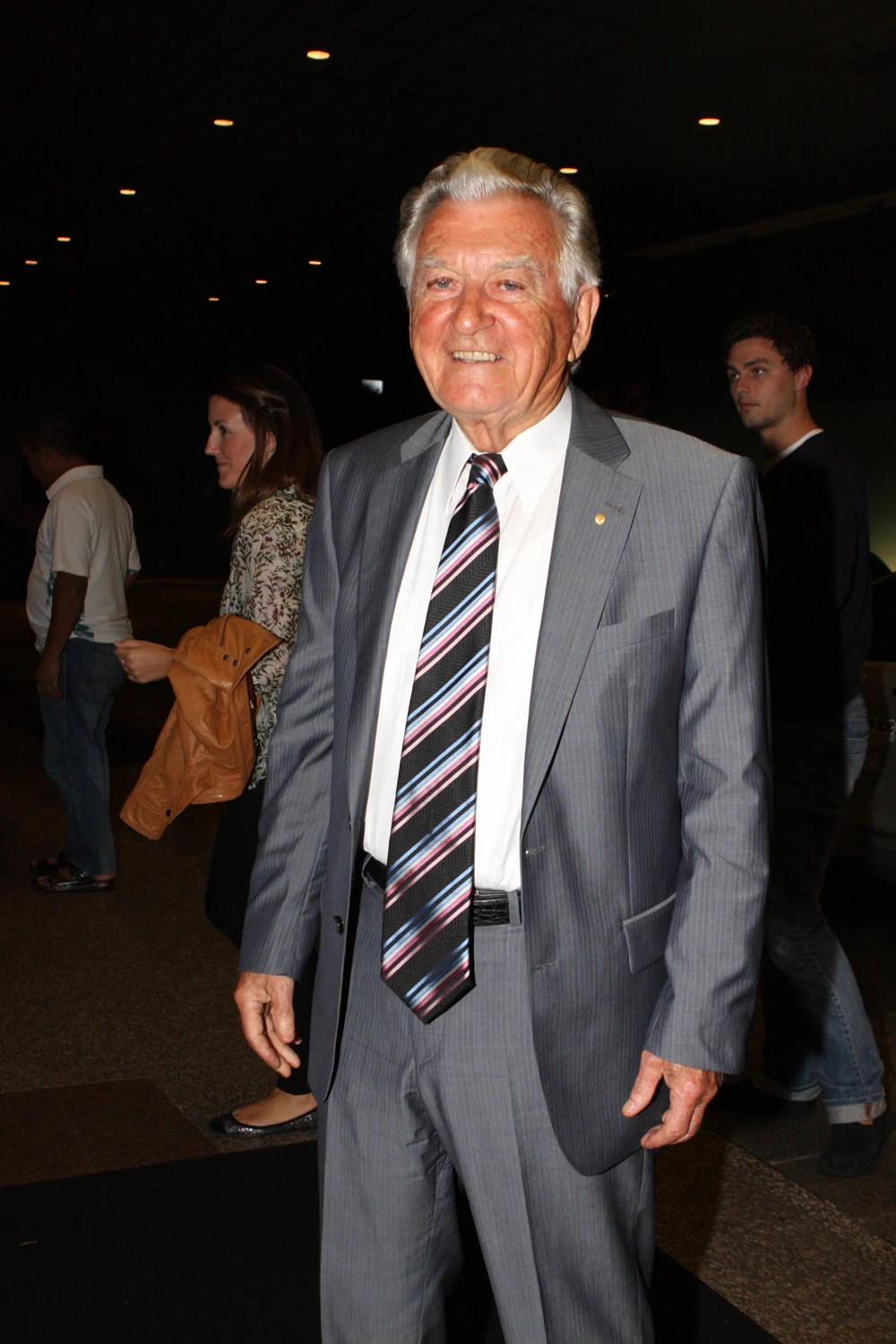
1929–2019
Bob Hawke
Trade union leader and Australia’s 23rd prime ministerAn arbitration advocate and ACTU president who entered parliament in 1980, led Labor to office in 1983 and governed through economic and social reform.Read biographyQuick answers
Common questions
- Did the Australian dollar float on 9 or 12 December 1983?
- The government announced the decision on Friday 9 December. Trading under the floating arrangements began on Monday 12 December.
- Was Paul Keating prime minister at the time?
- No. Bob Hawke was prime minister and Keating was treasurer. Bob Johnston was the Reserve Bank governor.
- Did the float end all exchange controls?
- No. Most controls were removed, but the announcement retained specified exceptions and further changes followed in 1984.
- Could the RBA still intervene?
- Yes. It retained discretion to intervene and continued client transactions, while no longer routinely defending an announced exchange rate.
- Did floating guarantee a stronger dollar?
- No. A floating rate can rise or fall with market conditions. Flexibility changed the adjustment mechanism, not the direction of every later movement.
Primary and institutional sources
How this history was checked
The RBA’s 1984 annual report controls announcement dates and the actual operating rules. Its later histories explain preparation and monetary-policy implications; the IMF study corroborates the unusual exit under appreciation pressure. The Museum supplies earlier-regime context. The photograph shows Keating in 2007, not at the 1983 announcement. This article was reviewed on 23 October 2026.
- Reserve Bank of AustraliaAnnual Report 1984: The Bank’s Market Operations, December decision and operating arrangements
- Reserve Bank of AustraliaGlenn Stevens: The Australian Dollar — Thirty Years of Floating, 21 November 2013
- Reserve Bank of AustraliaThe Bank’s Story in Ten Objects, May 2026: the float and the operational War Book
- International Monetary FundConquering Fear of Floating, 2007: Australia’s upward exit from the peg
- National Museum of AustraliaAustralian dollar floated: earlier regimes, the policy debate and December 1983
- Wikimedia Commons / ldpercyPaul Keating 2007.jpg: original file, Flickr licence review and history