
The short answer
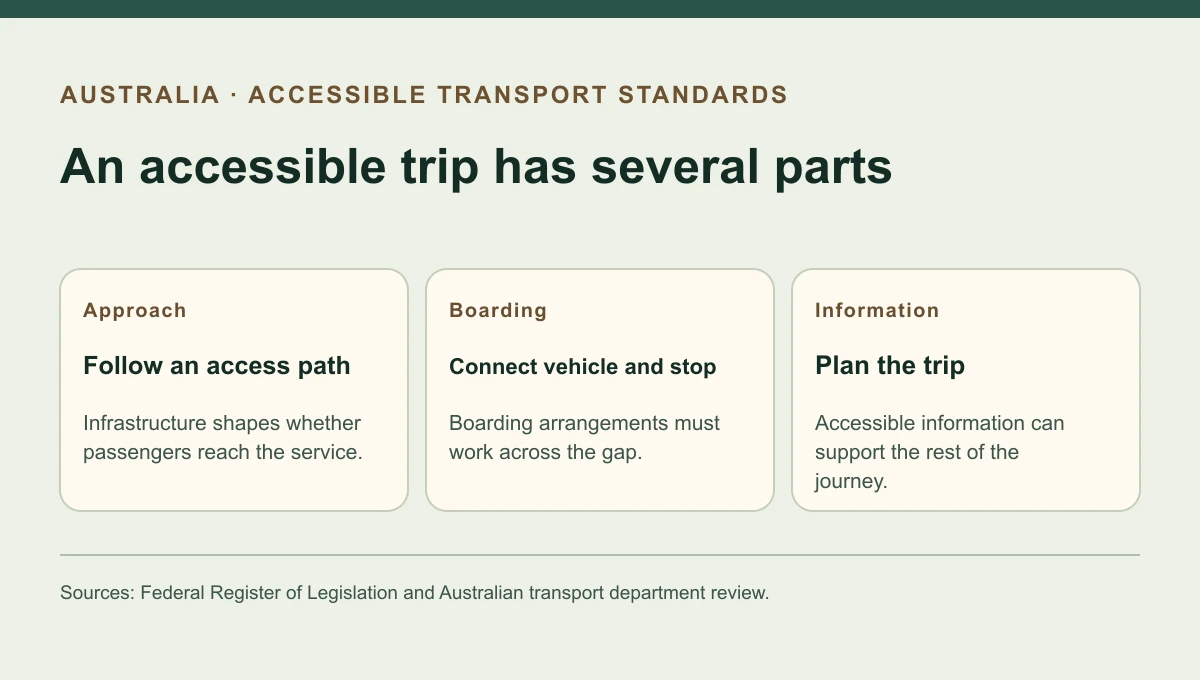
Australia released the Disability Standards for Accessible Public Transport in October 2002 under the Disability Discrimination Act 1992. The standards described parts of a trip that could present barriers, from an access path to a boarding point or the information needed to travel. Their original timetable set different deadlines for parts of the existing system.
How the 2002 framework divided a trip
What access can depend on at different points
Each feature concerns a different part of using public transport.
| Part of the journey | Covered subject | Why it matters |
|---|---|---|
| Arrive | Access paths and circulation space. | A passenger can reach the point where the service is used. |
| Board | Boarding provisions and equipment. | The vehicle and stop have to work together for boarding to be possible. |
| Obtain information | Passenger information and communication. | A rider can plan and navigate a trip as well as enter the vehicle. |
Chronology
A timeline of the turning points
Australia adopts the Disability Discrimination Act
The framework provides the basis for later sector-specific standards.
The accessible transport standards are made and released
They specify subjects for operators and providers across different kinds of transport.
The government examines progress and continuing barriers
Review reports distinguish the original timeline from the work still needed in practice.
What the standards covered
The original instrument divided access into practical subjects. It covered paths, circulation space and boarding as distinct matters. It also addressed information that a person may need before or during travel. The scope recognised that a usable vehicle alone will do little for someone who cannot reach or identify its boarding point.
Why there was a timetable
Many buses, trains, trams and stations were already in service. The standards used staged targets for changes to existing systems. The departmental review explains that vehicle replacement cycles and infrastructure upgrades influenced the period allowed. The historic timetable used several target dates, with another date in 2032 for elements of rail and tram compliance.
That distinction makes the 2002 release date more intelligible. A published obligation can shape future purchases and work while changes to existing rolling stock occur over time.
Why the reviews matter to the historical record
Later reviews assessed both implementation and the barriers passengers still experienced. They are a separate kind of evidence from the original standards. The instrument says which aspects of access the scheme addressed. A review can ask whether a timetable has delivered usability and whether requirements need to change in light of later experience.
Continue the chronology
Related history guides
How Japan Broadened Its Barrier-Free Transport Law
Compare Japan’s combination of transport facilities, local routes and building access.
Read the timeline2005How London Ended Regular Routemaster Service in 2005
Read how London’s shift from stepped buses proceeded through fleet replacement.
Read the timeline2002–2006What Boston’s Daniels-Finegold Transit Settlement Changed
Compare an American settlement that addressed everyday operations and monitoring.
Read the timelineConnected biographies
People connected to this history
Quick answers
Common questions
- When were Australia’s transport standards first released?
- The department’s historical review gives 23 October 2002.
- Why did the standards use several target dates?
- The stages accounted for changes to existing transport assets and infrastructure over time.
Primary and institutional sources
How this history was checked
Dates, legal milestones and historical claims are checked against the official and institutional records below. This article was reviewed on 19 November 2026.
- Australian Federal Register of LegislationDisability Standards for Accessible Public Transport 2002, as made
- Australian Department of InfrastructureFinal report of the 2022 review of the Transport Standards
- Australian Department of InfrastructureReview of the 2002 Transport Standards: original scheme and compliance timetable