
The short answer
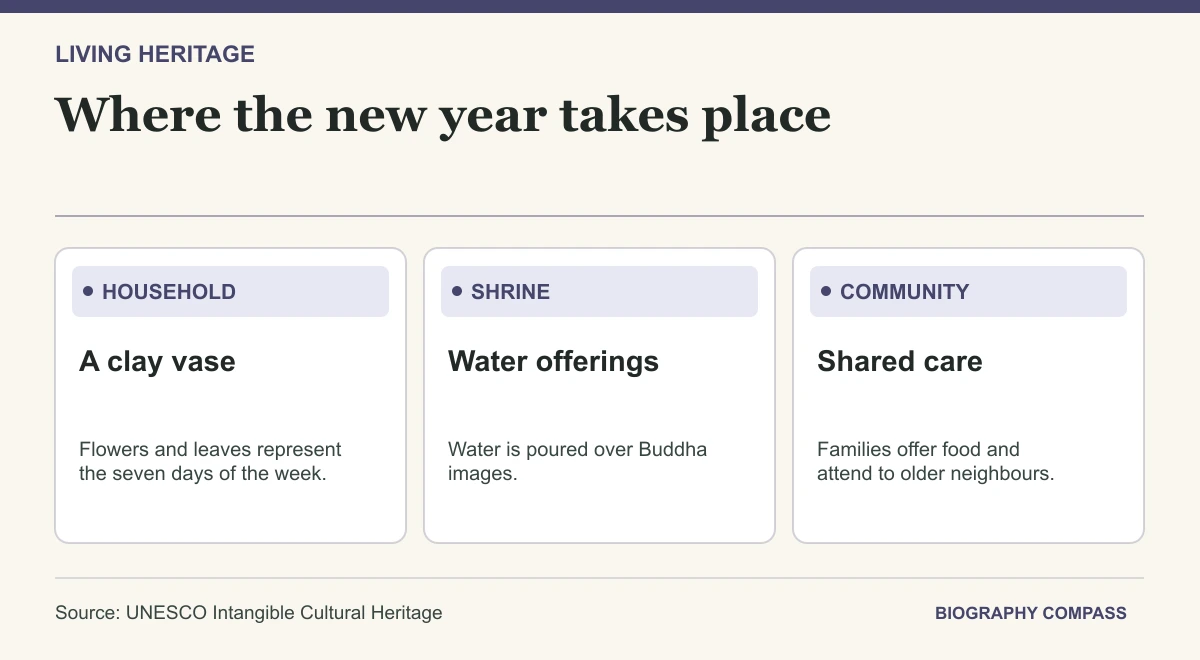
A vase beside a front door tells as much about Myanmar’s New Year as a street full of people splashing water. In the nomination for Atā Thingyan, flowers and leaves stand for the days of the week. Families prepare them as part of a five-day festival with room for both quiet observance and public celebration.
Compare the records
One festival in three settings
UNESCO records common practices and leaves room for differences among communities.
| Setting | What people do | What it expresses |
|---|---|---|
| Home | Arrange leaves and flowers in a clay vase. | Seven days of the week are brought into the welcome for a new year. |
| Shrine | Pour water over Buddha images. | Water has a devotional use as well as a public one. |
| Community | Offer food or help elders with personal care. | People give time and attention as well as material gifts. |
Chronology
A timeline of the turning points
The calendar is calculated
The Myanmar Calendar Advisory Board determines the dates each year.
Households and communities observe the new year
Practices include offerings, shared meals and water ceremonies.
International recognition
The Committee inscribed the festival on its Representative List.
Who sets the dates?
The Myanmar Calendar Advisory Board calculates when Thingyan falls. Mid-April is a useful indication for a reader comparing festivals, while a particular year’s dates come from its calendar. The flowers and foliage representing seven days can cause confusion here. Seven describes the symbolism of the arrangement at the house entrance. The national nomination describes the actual observance as lasting five days.
Water changes meaning with the setting
Pouring water over a Buddha image is a devotional act. Splashing a friend in public can express a wish for good fortune through cleansing. Sharing a meal, attending a meditation retreat or helping an elderly neighbour with personal care needs no splash of water at all. These examples explain how a person who takes little part in the street festivities can still observe the same new year.
What entered the Representative List
In December 2024 the international committee recognized a living practice maintained in different ways across Myanmar. A photograph of one procession can show its setting, costumes or participants. The written record adds what a street photograph often misses, including household preparations and people returning to their places of origin to celebrate. Together these details explain what families can pass on even when the public programme changes.
Continue the chronology
Related history guides
Connected biographies
People connected to this history
Quick answers
Common questions
- Is Thingyan held on the same Gregorian dates every year?
- The dates are calculated each year. The festival typically falls in mid-April.
- When was Thingyan inscribed by UNESCO?
- The committee approved the inscription in December 2024.
Primary and institutional sources
How this history was checked
Dates, legal milestones and historical claims are checked against the official and institutional records below. This article was reviewed on 19 November 2026.