
The short answer
The release of Kathrada and seven other political prisoners made a visible break in long histories of confinement. It did not free every political prisoner or legalise every banned movement. Following the announcement, the actual release and the remaining political demands makes the event’s significance more precise.
Chronology
A timeline of the turning points
Negotiation conditions articulated
The Harare Declaration calls for prisoner releases, lifted bans and a freer political climate.
Eight names announced
De Klerk announces unconditional releases after administrative formalities.
Homecomings
Kathrada and the other named prisoners leave custody.
Public political presence
Kathrada addresses the welcome gathering at Soccer City.
Organisations unbanned
The ANC and other prohibited organisations regain legal political space.
Mandela leaves prison
His release is a separate event from the October homecomings.
The announcement promised release but did not supply the final day
On 10 October, de Klerk’s statement named eight prisoners for unconditional release once the necessary formalities had been completed. The government presented the decision as contributing to reconciliation and peaceful solutions. Those were its stated reasons, not a neutral account of every pressure behind the change.
The distinction between announcement and implementation mattered to the prisoners themselves. Kathrada’s later recollection describes looking for his name in the televised announcement and still not knowing when he would leave. A promise of freedom and the end of custody were not yet the same moment.
The eight were not simply the eight Rivonia defendants
Contemporary reporting names Kathrada, Walter Sisulu, Andrew Mlangeni, Elias Motsoaledi and Raymond Mhlaba alongside Wilton Mkwayi, Oscar Mpetha and Jafta Masemola. The last was associated with the PAC, rather than the ANC. Different prosecutions and political affiliations lay behind the shared release event.
This is why shorthand about the Rivonia prisoners can mislead. Mandela remained imprisoned, while Denis Goldberg and Govan Mbeki had already been released in different years. The release list and the membership of a famous trial’s accused group overlap, but neither can be substituted for the other without losing people and chronology.
Homecoming restored relationships as well as physical movement
Kathrada’s first-person account describes transfer to Johannesburg before being driven to his brother’s Lenasia home early on 15 October. The Foundation’s memorial publication recalls the arrival of relatives and well-wishers. These accounts make a personal transition visible within the larger political event.
They are also retrospective memories, to be read as such rather than as a transcript of every hour. Release brought contact with family members and a public that had known the prisoners largely through stories and campaigns. The change involved rebuilding relationships and routines, not merely replacing one address with another.
Returning leaders entered a political argument that remained unfinished
The memorial account records Kathrada addressing the Soccer City welcome gathering on 29 October. His renewed public voice was one consequence of release. It did not mean that the larger political conflict had already been resolved or that released leaders represented every organisation opposing apartheid.
The earlier Harare Declaration helps identify the outstanding issues. Its conditions for negotiations included releasing all political prisoners, lifting organisational bans and restrictions, and ending emergency measures. The October releases could be assessed against that wider programme without either dismissing the importance of individual freedom or declaring the programme completed.
Unbanning and Mandela’s release were later, separate changes
SAnews dates the unbanning of the ANC and other organisations to de Klerk’s 2 February 1990 announcement. The Mandela Foundation’s chronology places Mandela’s departure from Victor Verster Prison on 11 February. Those dates establish a boundary around what had, and had not, happened the previous October.
Prison release, legal political organisation and a negotiated constitutional order were different developments. The October event helped return experienced leaders to public life, but did not itself create universal voting rights or settle the terms of a democratic state. Its significance is clearer when retained as a consequential step rather than made to stand for the entire transition.
Continue the chronology
Related history guides
Biography context
Explore South Africa through connected lives
Ahmed Kathrada
Continue from campaigning and confinement into parliamentary and memory work.
Explore the biographiesStill imprisoned in OctoberNelson Mandela
Follow a distinct release date and later negotiating responsibilities.
Explore the biographiesThe announcing presidentF. W. de Klerk
Place the decision within his political record without treating reform as a complete settlement.
Explore the biographiesConnected biographies
Different positions within a changing political landscape
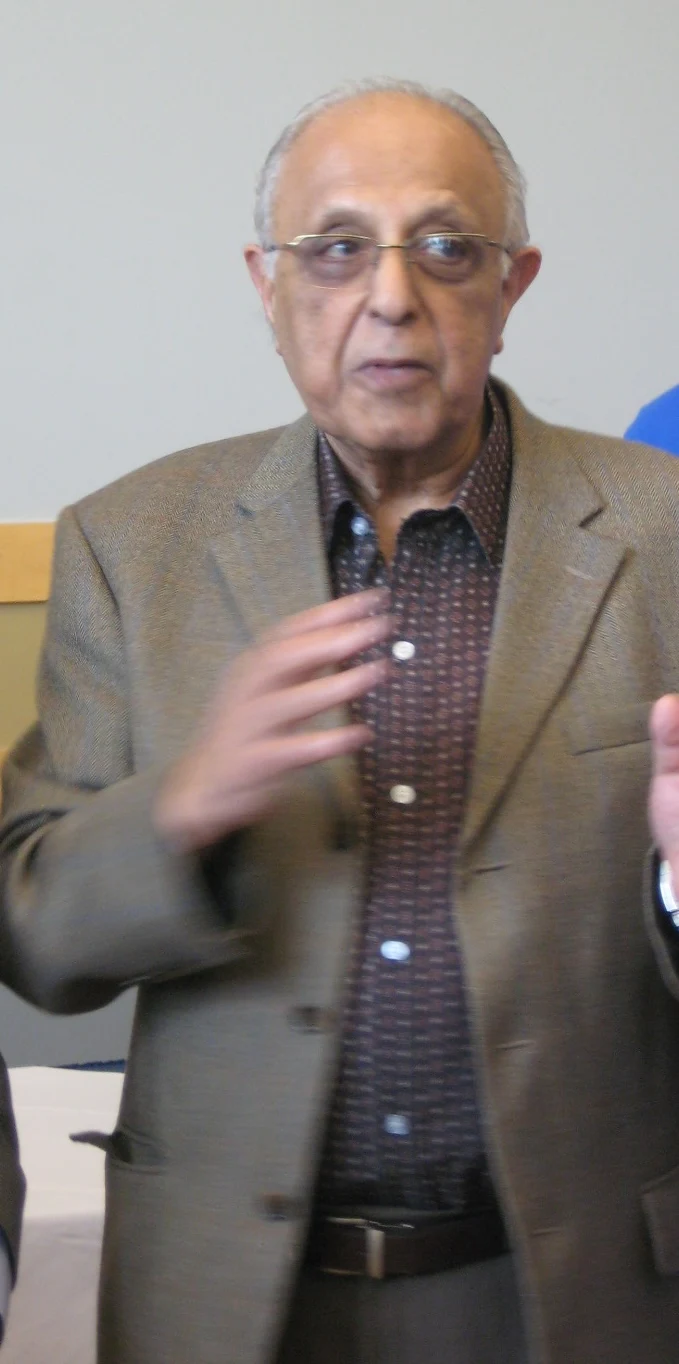
1929–2017
Ahmed Kathrada
Anti-apartheid organiser, political prisoner and parliamentary counsellorAhmed Kathrada’s political life began in youth and Indian Congress organisation, long before his imprisonment with Mandela. After release he entered Parliament, advised the president and helped preserve the history of incarceration. His later criticism of Jacob Zuma showed that movement loyalty could coexist with public dissent.Read biography
1918–2013
Nelson Mandela
Anti-apartheid leader and President of South Africa, 1994–1999Nelson Mandela was a lawyer, ANC organiser, co-founder of Umkhonto we Sizwe and political prisoner who became South Africa’s first Black president after an election open to all races. His public life joined resistance and negotiation, followed by the difficult work of governing a deeply unequal country.Read biography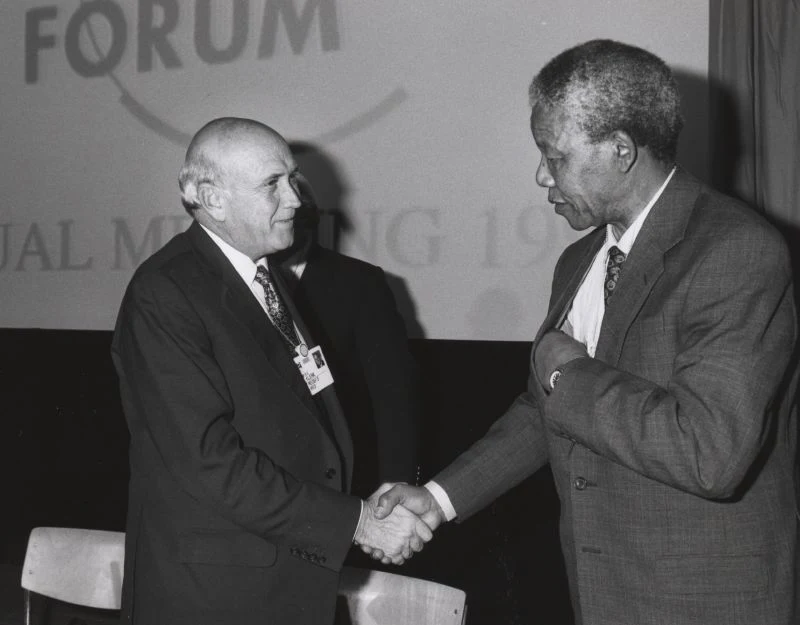
1936–2021
F. W. de Klerk
Last apartheid state president and later Executive Deputy PresidentF. W. de Klerk rose through the National Party and apartheid Cabinet before using the presidency to open negotiations and release political prisoners. He later served under Nelson Mandela, but his role in ending minority rule did not settle questions about his earlier power, responsibility or account of state violence.Read biographyQuick answers
Common questions
- Were the releases announced and implemented on the same day?
- No. The announcement was on 10 October; the prisoners were released on 15 October 1989.
- Were all eight men ANC members or Rivonia co-accused?
- No. The group included people from different prosecutions and a PAC figure, Jafta Masemola.
- Was Mandela released in October 1989?
- No. He remained imprisoned until 11 February 1990.
- Did these releases themselves unban the ANC?
- No. Organisational unbanning followed in February 1990.
Primary and institutional sources
How this history was checked
The original announcement, contemporary reporting, selected first-person recollections and dated institutional chronologies were compared. Memoir excerpts are not claimed as a complete book reading. The topic is the 1989 release, not a replacement for the Rivonia trial account. The photograph shows Kathrada in 2008. This article was reviewed on Reviewed 24 October 2026.
- Office of the State President / CCTSA archive10 October 1989: announcement of eight prisoners’ unconditional release
- Deseret News, contemporary wire report15 October 1989: eight political prisoners freed; Mandela remains imprisoned
- Ahmed Kathrada / Pretoria News, IOL3 February 2015: recollection of the release announcement and journey home
- Ahmed Kathrada FoundationA Life of Activism: selected release, public work and final-year passages
- OAU Ad-hoc Committee on Southern Africa / ANC archive21 August 1989 Harare Declaration: selected climate-for-negotiations clauses
- Nelson Mandela FoundationPrison chronology: selected 1982–1990 transfers and releases
- SAnews11 February 2014: retrospective dates of unbanning and Mandela’s release
- Letherian3 / Wikimedia CommonsAhmed Kathrada at the UConn leadership forum, 2008