
The short answer
The ANC’s December 2017 conference elected party leaders and adopted political positions. Its effect on government was substantial, but a conference decision, a promise of renewal and an action by the state are different parts of the historical sequence.
Chronology
A timeline of the turning points
Conference opens
Delegates meet at Nasrec in Johannesburg.
Leadership result
Ramaphosa defeats Nkosazana Dlamini-Zuma for the ANC presidency.
Declaration and closing address
The conference sets policy direction and the new leader calls for renewal.
Government changes later
Zuma’s departure creates a separate parliamentary succession.
Election and first presidential commitments
Parliament elects Ramaphosa, who addresses the Assembly and promises accountability.
Delegates met within a divided governing party
Mantashe’s organisational report was delivered at Nasrec on 16 December 2017; the closing address followed on 20 December. Ramaphosa acknowledged internal divisions and the need to regain public trust. Those admissions explain why the gathering carried expectations beyond the routine replacement of office-bearers.
Delegates represented party structures, rather than the entire national electorate. The closing address described their branch mandates and the leadership they had selected. A reader therefore needs to distinguish what members authorised inside their organisation from what South African voters or public institutions would subsequently decide.
A narrow result changed leadership without removing internal differences
Ramaphosa defeated Nkosazana Dlamini-Zuma on 18 December. Mail & Guardian reported 2,440 votes against 2,261; contemporary Reuters reporting described a close contest and a senior leadership divided between the competing camps. Winning the presidency did not give one grouping every leadership post.
The result created an opportunity to pursue Ramaphosa’s promises of economic revival and opposition to corruption. It did not establish that these objectives had been delivered. Expectations attached to a candidate, the balance among elected officials and the organisation’s actual decisions are separate evidence when judging the conference’s consequences.
The closing address made renewal a test of subsequent conduct
In his closing address Ramaphosa presented the outcome as a rejection of rigid factional slates and urged leaders to represent the whole membership. This was the new president’s interpretation and appeal, not an independent finding that divisions had disappeared.
He connected the organisation’s standing to accountability, responsiveness and what happened after delegates went home. This provides a useful contemporary standard against which to assess the conference: whether leadership and branches changed their behaviour. A celebratory closing speech is evidence of declared priorities, while implementation requires a different record.
Sources for this section: [3]
Policy resolutions expressed direction with conditions
The declaration supported pursuing land expropriation without compensation while protecting agricultural activity, food security and economic growth. It also called for a social pact involving government, labour, business and communities. These commitments show that the conference concerned policy as well as personalities.
They were positions adopted by a political party. The declaration did not itself transfer a farm, write every implementing rule or demonstrate agreement among all the groups it hoped to bring together. Its conditions and institutional ambitions should be retained when explaining what delegates endorsed, rather than reducing the outcome to a campaign slogan.
Sources for this section: [2]
State succession followed through a different institution
Zuma remained head of state after the conference. Ramaphosa’s election as President of the Republic came through the National Assembly on 15 February 2018. Parliament’s account of his arrival records promises to engage opposition leaders and return to the Assembly to answer questions.
That subsequent event explains why Nasrec was consequential without treating it as the legal act installing a president. Party authority influenced the political transition; Parliament performed the state election. Whether government then met the promised standards of cooperation and accountability requires evaluation of later decisions, rather than being settled by the December delegate count.
Sources for this section: [6]
Continue the chronology
Related history guides
Biography context
Explore Johannesburg, South Africa through connected lives
Connected biographies
Union backgrounds and different ANC leadership contests
1952–
Cyril Ramaphosa
Trade union organiser, constitutional negotiator and President of South AfricaCyril Ramaphosa’s career runs through student resistance, mineworker organisation, constitutional negotiations, business and the presidency. His ability to broker agreements helped shape democratic institutions, while Marikana and later accountability disputes complicate assessments of his public leadership.Read biography
1949–
Kgalema Motlanthe
Union educator, ANC organiser and former President of South AfricaKgalema Motlanthe moved from underground activism and Robben Island imprisonment into worker education, union leadership and ANC administration. A short presidency was one stage in a longer career shaped by organisation, executive service and later scrutiny of democratic institutions.Read biographyQuick answers
Common questions
- Did all South African voters participate in the Nasrec ballot?
- No. It was an ANC conference election conducted by party delegates.
- Did Ramaphosa’s victory sweep away every competing faction?
- No. The close result and mixed senior leadership make that an inadequate account.
- Did the conference immediately make him President of South Africa?
- No. Parliament elected him to state office in February 2018.
- Did the land resolution itself transfer ownership?
- No. It expressed a party policy direction with conditions; state implementation required further processes.
Primary and institutional sources
How this history was checked
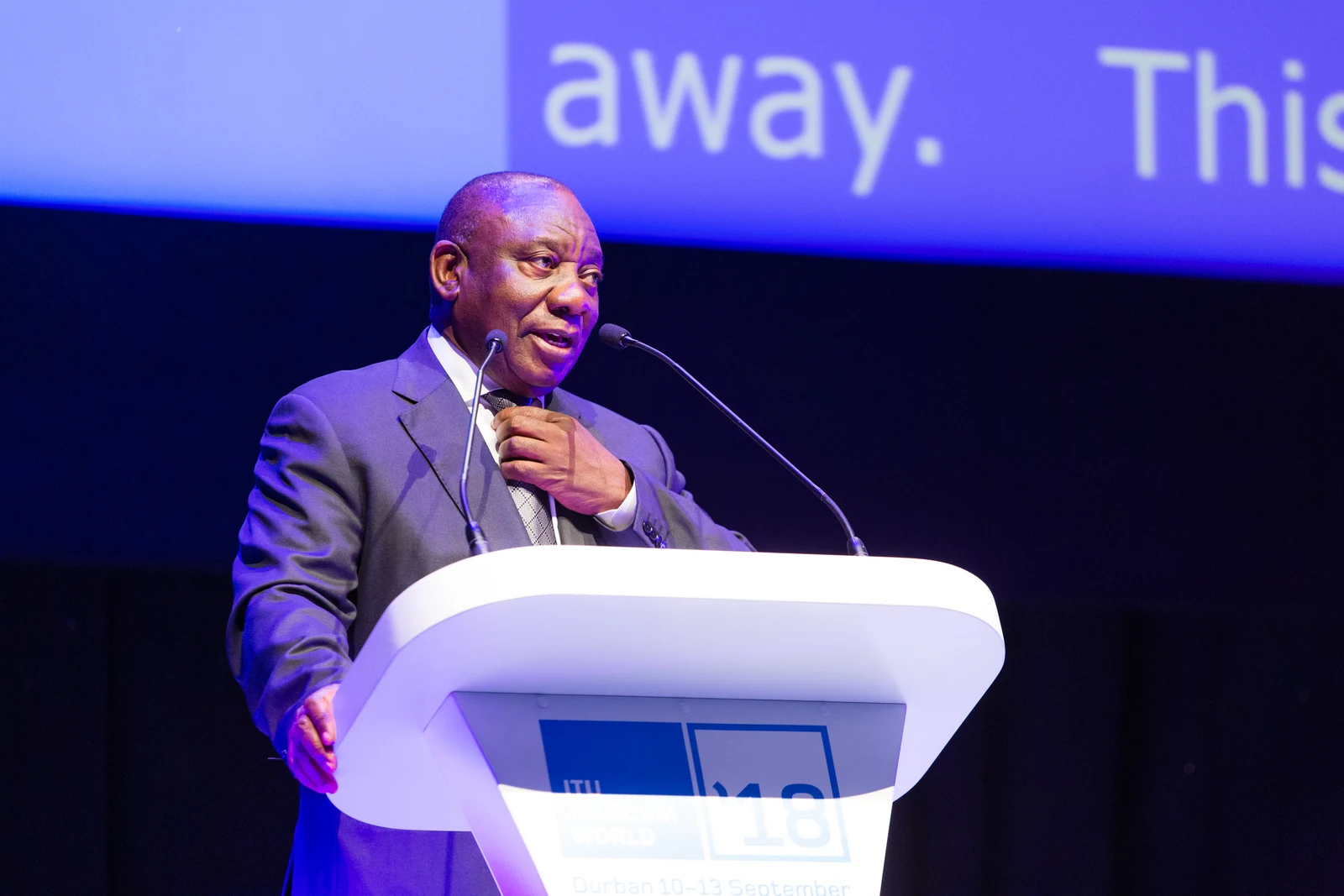
The declaration and selected closing-address passages are primary accounts of commitments, not proof of their fulfilment. Contemporary result passages and Parliament’s later election account supply separate checks. Yahoo returned 429 on direct opening; the indexed Reuters text was used without retry or bypass. The photograph shows Durban in 2018, not the Nasrec conference. This article was reviewed on 24 October 2026.
- Gwede Mantashe / African National Congress16 December 2017 organisational report: introduction and conference setting
- African National Congress54th National Conference declaration, 20 December 2017
- Cyril Ramaphosa / African National CongressNasrec closing address: selected leadership and accountability passages
- Reuters / Yahoo Finance18 December 2017: Ramaphosa elected ANC president
- Mail & Guardian18 December 2017: election result and initial market response
- Parliament of South AfricaFebruary 2018: Ramaphosa elected President of the Republic
- ITU Pictures / Wikimedia CommonsRamaphosa at ITU Telecom World, 10 September 2018