
The short answer
Agnes Macphail used Parliament to expose prison conditions and argue that incarceration should prepare people for life after release. Her campaign contributed to pressure for the Archambault inquiry. Its recommendations became an important reference point, but inquiry, legislation and implementation unfolded over different years.
Chronology
A timeline of the turning points
From election to Commons work
Macphail wins her seat in 1921 and begins parliamentary work in 1922.
Prison labour resolution
She calls for a meaningful programme of work in prisons.
Riots and scrutiny
Prison unrest intensifies pressure; Macphail visits Kingston Penitentiary in 1935.
The Archambault inquiry
A royal commission investigates the system and reports in 1938.
Legislation is delayed
War interrupts implementation of changes legislated in 1939; post-war reorganization follows.
A later parole institution
The National Parole Board begins under later legislation, five years after Macphail’s death.
A Commons seat became a channel for prison grievances
Macphail’s election in December 1921 preceded the start of her Commons work in 1922. Prisoners, former prisoners and reformers brought complaints to her office. She turned those accounts into proposals and questions that challenged the administration’s control over information about institutions largely hidden from public view.
In 1925 she introduced a resolution supporting meaningful prison labour. She also argued for an independent parole board with judicial standing and for release decisions tied to rehabilitation. These were policy proposals about how punishment should operate and end, rather than a claim that offences should have no consequences.
Conditions made rehabilitation difficult to achieve
The official parole history describes rigid rules, enforced silence, long hours in cells and severe corporal punishments. A prison system organized around submission offered few opportunities to develop the skills or relationships that would make release sustainable. Discretionary decisions about remission could also become a source of resentment.
Macphail’s interest drew ridicule from opponents who presented prisoners as unworthy of sympathy. Her argument challenged that political assumption: people who would eventually return to the community could not be treated as permanently outside it. Work, education, humane conditions and fair consideration for parole formed connected parts of the reform question.
Unrest and political pressure led to an inquiry
The Depression increased pressure on institutions already short of resources. Kingston’s six-day riot in 1932 and further disturbances brought prison conditions into wider public debate. Macphail’s unannounced visit to Kingston in 1935 strengthened her demand for an investigation, while other reformers and journalists also pressed the case.
After the change of government in 1935, the Liberals established a royal commission in 1936 under Justice Joseph Archambault. Macphail helped sustain the pressure that made an inquiry possible. She did not chair the commission or write its findings, and describing the report as her personal law would confuse advocacy with the government’s investigative process.
The 1938 report supported a different penal philosophy
The Archambault Report examined administration, prison conditions and the treatment of people serving sentences. It emphasized rehabilitation and crime prevention, and criticized a system that repeatedly returned people to custody. Its findings confirmed important elements of Macphail’s earlier criticism.
Among its proposals was a prison commission with broad authority that could also function as an independent federal parole board. That would move decisions away from a narrow clemency model and toward a more systematic assessment of prisoners. The report was influential, but a recommendation on paper did not itself appoint a board, change every prison routine or guarantee resources for the work.
War separated legislative action from implementation
Changes to penitentiary legislation followed in 1939, but the comprehensive restructuring and independent parole body envisioned by reformers did not immediately materialize. The Second World War displaced penal reform as a government priority. Macphail and her allies continued to press for implementation despite that setback.
Post-war administrators returned to the report’s ideas, and the legislation was activated in 1946. A national parole board followed in 1959 under later legislation, after Macphail’s death in 1954. Her achievement was a sustained challenge to punitive administration and an influential contribution to reform. The much longer institutional timeline shows both that influence and the limits of claiming a single, completed victory in 1938.
Continue the chronology
Related history guides
Biography context
Explore Canada through connected lives
Connected biographies
Parliamentary voices for social reform
1890–1954
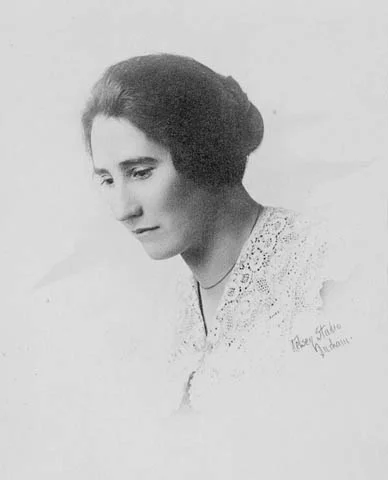
Agnes Macphail
Canada’s first elected woman MP and a prison reform advocateA rural teacher and farm organizer who became Canada’s first elected woman MP and used federal and Ontario office to challenge unequal treatment.Read biography
1904–1986
Tommy Douglas
Baptist minister, Saskatchewan premier and first federal NDP leaderTommy Douglas led Saskatchewan from 1944 to 1961 and the federal New Democratic Party from 1961 to 1971. His government’s hospital insurance and campaign for physician insurance helped establish Canadian medicare. The physician plan was enacted and implemented under his successor, Woodrow Lloyd, while Douglas’s earlier eugenic ideas complicate his social-justice legacy.Read biographyQuick answers
Common questions
- Did Agnes Macphail write the Archambault Report?
- No. A royal commission chaired by Justice Joseph Archambault produced it. Her advocacy helped build pressure for the inquiry and anticipated important recommendations.
- Was the commission appointed in 1938?
- It was appointed in 1936 and its report appeared in 1938. Those dates refer to different stages.
- Did the report immediately create the National Parole Board?
- No. An independent parole institution was a proposal; the National Parole Board began in 1959 after further inquiries and legislation.
- Why did prison reform slow after the report?
- The Second World War interrupted implementation. Reorganization and renewed emphasis on rehabilitation developed after the war.
Primary and institutional sources
How this history was checked
Selected official history passages covering Macphail, Archambault and post-war parole were read, alongside the library biography. The complete 1938 report was not read and is not presented as if it were. The report is dated to 1938 without adopting conflicting month-level accounts. The portrait shows Macphail in 1921, not inside a prison. This article was reviewed on Reviewed 23 October 2026.
- National Library of Canada / Library and Archives CanadaThen and Now: Agnes Campbell Macphail, revised 23 September 1997
- Correctional Service Canada1920 to 1939: Through adversity, updated 9 April 2024
- Parole Board of CanadaHistory of Parole in Canada: Macphail, the Archambault Report and the post-war reforms
- Correctional Service CanadaPenitentiaries in Canada: the Archambault Commission and later reform
- Library and Archives Canada / FlickrKelsey Studio: Agnes Campbell Macphail, 1921, c006908; institutional CC BY 2.0 grant