
The short answer
What made a debut soundtrack feel new? Roja offers a case in how melody, voices, recorded texture and a director’s dramatic needs can change together. Its Tamil origin and later language versions matter as much as the familiar story of a young composer’s breakthrough.
Chronology
A timeline of the turning points
A jingle composer’s studio
Rahman developed recording experience as a session musician and advertising composer.
Roja
Ratnam’s film introduced Rahman’s first feature-film soundtrack.
Language versions and new collaborations
The music reached audiences beyond Tamil through adapted versions and further film work.
Retrospective testimony
Rahman discussed the debut with Berklee; critics revisited its sound and screen setting.
A debut inside an established film culture
Roja was directed by Mani Ratnam for a production associated with K. Balachander. Its release in 1992 placed a new composer inside an industry already rich in musical traditions and established partnerships. Rahman came from keyboard sessions and advertising jingles, rather than arriving without professional experience. The surprise was the scale and identity of the debut’s reception.
In his Berklee interview he recalled feeling underqualified for a major film and credited Ratnam with helping him understand a director’s needs. That relationship is more illuminating than a solitary-genius story: music had to establish character, support drama and function as recordings that listeners would replay outside the cinema.
Which Roja soundtrack are we discussing?
The original film was Tamil. Apple Music’s Lahari catalogue identifies a six-track Tamil release under Rahman and Vairamuthu, with a 1992 phonographic copyright. Streaming services can attach different dates and track divisions to reissues, so a platform’s exact day should not automatically be treated as the historical first release date.
The distinction becomes more important across languages. Hindi listeners may recognise Chhoti Si Asha or Roja Janeman, while the Tamil titles and some performance credits differ. Translation and rerecording create related versions, not a single language-neutral recording. Identifying language, label and performers is the first useful step before comparing an album or assessing a claim about a particular singer.
A heroine introduced through a small wish
Chinna Chinna Aasai introduces Roja through Minmini’s voice and Vairamuthu’s words. Shaikh Ayaz’s Indian Express discussion emphasises the song’s lightness and its function in presenting the heroine’s modest desires before the film’s kidnapping plot takes over. It is therefore doing narrative work: the audience first encounters a recognisable individual and her world.
Ayaz also attends to the visual setting of hills, fields and water. The useful formal relationship is between the scale of the landscape and the personal scale of the wishes. The song can circulate independently as a memorable melody, yet its first cinematic role is to make the later disruption of Roja’s life emotionally intelligible.
Sources for this section: [3]
An album needs more than one kind of song
Roja moves among the village introduction, romance, separation and public feeling. The familiar Tamil titles include Pudhu Vellai Mazhai, Kadhal Rojave, Rukkumani Rukkumani and Thamizha Thamizha. The soundtrack’s reputation depends on this variety rather than on one breakthrough single. Established and newly prominent singers contribute different vocal textures and dramatic associations.
The Indian Express’s thirtieth-anniversary review contrasts the exuberance of Chinna Chinna Aasai, the longing associated with Kadhal Rojave and the consoling public register of Thamizha Thamizha. Its account also connects the songs to Santhosh Sivan’s cinematography. This is a film soundtrack in which the scene’s movement and setting help determine how a recording is remembered.
Why the recorded sound mattered
The News Minute’s retrospective recalls the surprise of hearing unfamiliar voices and a different sound in 1992. It describes Rahman’s ability to move among Carnatic, Hindustani, Western and Sufi influences within a song. The point is not that Indian film music had previously lacked mixture; it is that listeners heard a distinctive new organisation of those resources.
AllMusic characterises the debut through a combination of popular styles and Indian musical material. Production, melodic design and performance belong together in that assessment. Describing the change solely as computerisation would neglect the expressive work of singers and instrumentalists. Describing it solely as melody would overlook why recording texture became so prominent in accounts of Rahman’s arrival.
A powerful score and a debatable national story
The film moves from Tamil domestic life into a Kashmir kidnapping story, with Roja trying to secure her husband’s freedom across a language barrier. Its songs connect private attachment with the larger national frame. Manoj Kumar R’s anniversary review reads that movement through compassion and the heroine’s determination, illustrating one influential response to the film.
That response need not make the film a complete account of Kashmir’s politics. A soundtrack can be formally inventive while participating in a selective national narrative. Keeping those questions together produces a more useful encounter with Roja: compare versions and song functions, credit the collaborators, and consider what the music invites listeners to feel about a story whose political frame also deserves scrutiny.
Biography context
Explore Madras (now Chennai), Tamil Nadu, India through connected lives
Connected biographies
The composer’s wider career
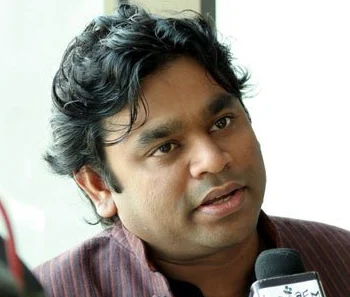
1967–
A. R. Rahman
Composer, producer, singer and music educatorA. R. Rahman developed a studio-centred approach to film music across Tamil, Hindi and international cinema, alongside albums, theatre and music education.Read biographyQuick answers
Common questions
- Was Roja originally a Hindi film soundtrack?
- No. The original film and soundtrack were Tamil. The music later reached Hindi and other language audiences through adapted versions.
- Who sang Chinna Chinna Aasai?
- Minmini sang the best-known Tamil recording. Rahman composed the music and Vairamuthu wrote its words.
- Is Roja only a collection of romantic songs?
- No. The songs have several dramatic functions, from introducing the heroine to romance, separation and expressions of collective or national feeling.
- Did Rahman win his Oscars for Roja?
- No. Roja launched his film career in 1992. His two 2009 Oscars were for the score and Jai Ho from Slumdog Millionaire.
Primary and institutional sources
How this history was checked
The guide uses authorised catalogue metadata, Rahman’s published interview and named critical accounts. It does not claim a complete audition of every language version; lyrics and copyrighted film stills are not reproduced. This article was reviewed on 23 October 2026.
- Lahari Music / Apple MusicRoja: Tamil soundtrack catalogue, track count and copyright
- Berklee / Mark SmallRahman’s account of Ratnam and his first film
- Shaikh Ayaz / The Indian ExpressChinna Chinna Aasai: voice, character, image and music
- Manoj Kumar R / The Indian ExpressRoja at thirty: songs, imagery and national narrative
- The News MinuteRoja at thirty: reception, new voices and musical forms
- AllMusicA. R. Rahman: recording career and musical combinations
- AllMusicRoja soundtrack: catalogue and performer listings
- Wikimedia Commons / Bollywood HungamaLater studio-opening photograph: exact rights record
- Bollywood HungamaWhistling Woods opening photograph: original source