In this biography
Quick facts
- Born
- 1928
- Died
- 2018
- Birthplace
- Not independently established
- Country
- Japan
- Nationality
- Not independently established
- Known for
- Long-term changes of inclined asteroid orbits
Why this life matters
His calculations showed why a long-term asteroid model cannot always assume a nearly circular, nearly coplanar orbit.
Timeline
Key moments
Tokyo Astronomical Observatory
Begins his observatory career and undertakes visiting research.
Asteroid perturbation paper
Publishes a treatment of highly inclined and eccentric orbits.
National Astronomical Observatory of Japan
Becomes the new observatory’s first Director General.
A calculation for an orbit that is not nearly flat
Kozai worked at the Tokyo Astronomical Observatory and spent time as a visiting researcher at the Smithsonian Astrophysical Observatory and Harvard College Observatory. His work addressed how gravitational influences change orbits over long intervals. An asteroid can travel repeatedly around the Sun while the shape and orientation of its path change more slowly.
Methods that work well for nearly circular paths close to a common plane need not be adequate for a highly inclined, elongated orbit. Kozai’s 1962 paper makes that limitation explicit. It develops an averaged treatment suited to a wider range of asteroid orbits under stated approximations.
Understanding the coupled variables
The calculation relates eccentricity, a measure of the orbit’s departure from a circle, to inclination, the tilt relative to a reference plane. Kozai examined the conditions under which the argument of perihelion can remain around a preferred value instead of passing through every angle. This is a statement about the long-term behaviour in a model. It is distinct from predicting where an asteroid will be on a particular night.
The paper’s assumptions are part of the result. Averaging reduces some fast changes so the slow interaction can be studied, and the result should be applied within the range in which that reduction is appropriate.
Sources for this section: [2]
Building institutions for astronomy
Kozai served as the last Director General of the Tokyo Astronomical Observatory and the first Director General of the National Astronomical Observatory of Japan. NAOJ’s account describes work in building a national inter-university research institution and developing international observing projects. These organisational roles complemented a scientific career that used mathematical models to ask more precise questions about celestial motion.
Sources for this section: [1]
Quick answers
Frequently asked questions about Yoshihide Kozai
- What do inclination and eccentricity describe?
- Inclination describes orbital tilt relative to a plane. Eccentricity describes how far an elliptical orbit departs from a circle.
Keep exploring
Lives connected to this story
- Kiyotsugu Hirayama
Compare an earlier Japanese study that used slowly changing orbital quantities to identify asteroid groups.
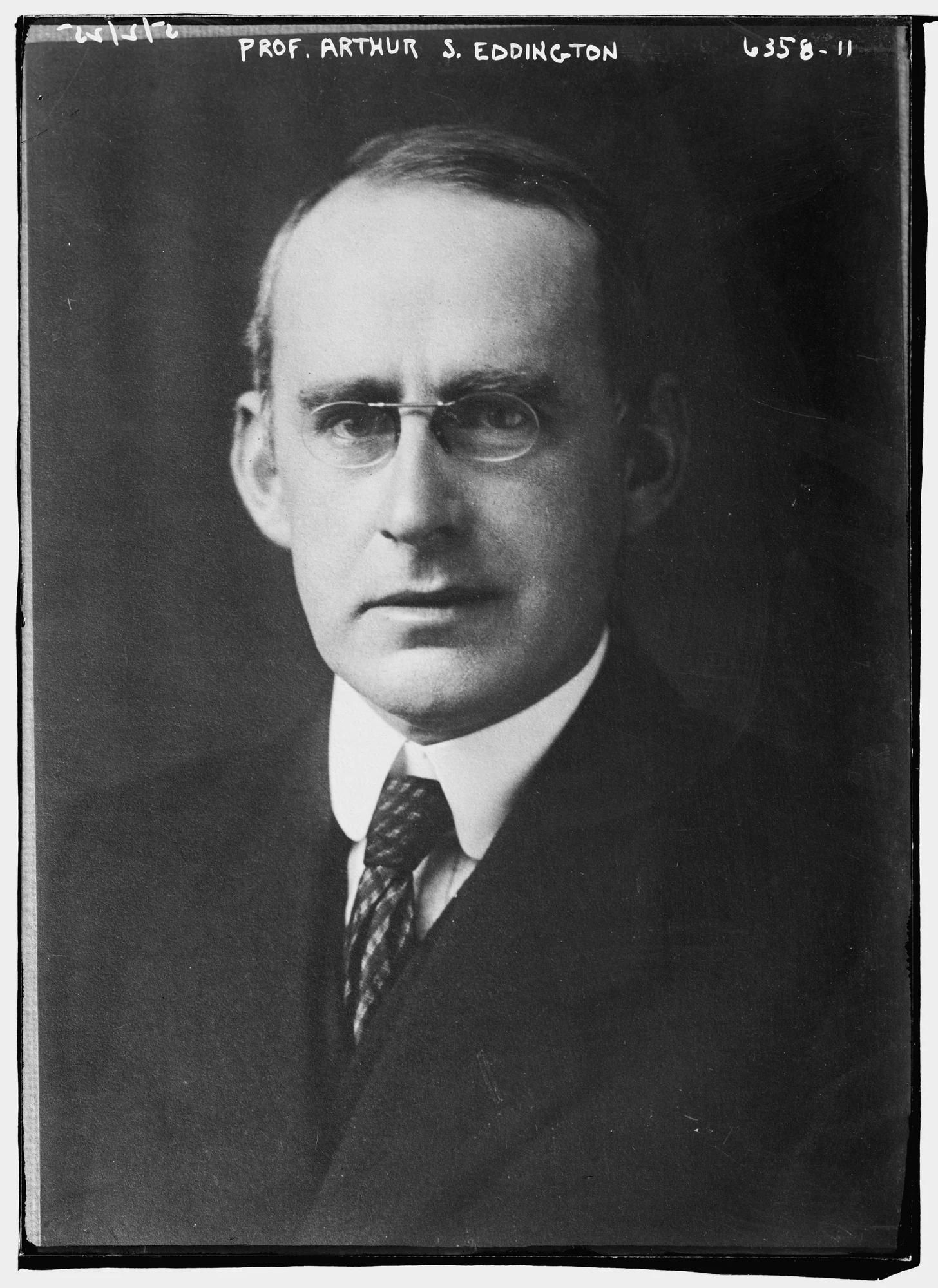
- Arthur Eddington
Read a different case of using physical assumptions to connect a mathematical result with observations.
Sources and further reading
Explore the evidence
These references support the biography and offer further reading. Official records, first-person accounts and independent reporting provide different perspectives; image records document attribution and licensing.
- 1. National Astronomical Observatory of JapanDr. Yoshihide Kozai, former Director General of NAOJ
- 2. Yoshihide Kozai, The Astronomical Journal 1962Secular Perturbations of Asteroids with High Inclination and Eccentricity
Read the introduction and averaged equations. The invariant example isolates a constraint and does not reproduce a complete solution.