In this biography
Quick facts
- Born
- 14 July 1885
- Died
- 29 October 1959
- Birthplace
- Royal Palace, Luang Prabang, Laos
- Country
- Laos
- Nationality
- Lao
- Known for
- Reigning through French rule, the 1945 independence crisis and the creation of the Kingdom of Laos
- Reign in Luang Prabang
- 1904–1946
- King of Laos
- 1946–1959
- Constitution
- Promulgated in 1947
- Successor
- Sisavang Vatthana
Why this life matters
Sisavang Vong provides the institutional counterpoint to the Lao Issara revolutionaries: he backed renewed French protection in 1945, then became the monarch of a unified and eventually independent Laos.
Timeline
Key moments
Born in the royal palace
Born in Luang Prabang to King Sakkarin and Queen Thongsi.
Succeeded to the throne
Became king of Luang Prabang within the French protectorate.
Clashed with Lao Issara
Accepted an independence declaration under Japanese pressure, then favoured restored French protection after Japan surrendered.
Restored as king
Returned to the throne after the French reoccupation and became monarch of a unified Kingdom of Laos.
Associated-state settlement
The Franco-Lao convention established Laos as an associated state within the French Union.
Full independence recognised
The Franco-Lao treaty transferred the remaining powers of government to Laos.
Died in Luang Prabang
Died on 29 October and was succeeded by Crown Prince Savang Vatthana.
A royal reign inside the French protectorate
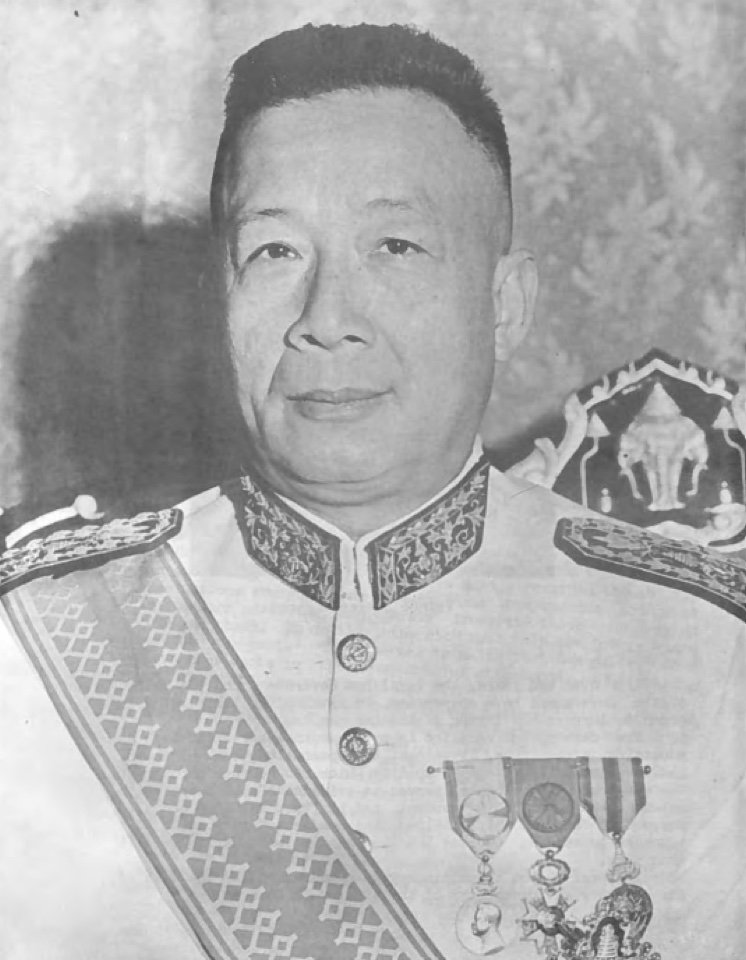
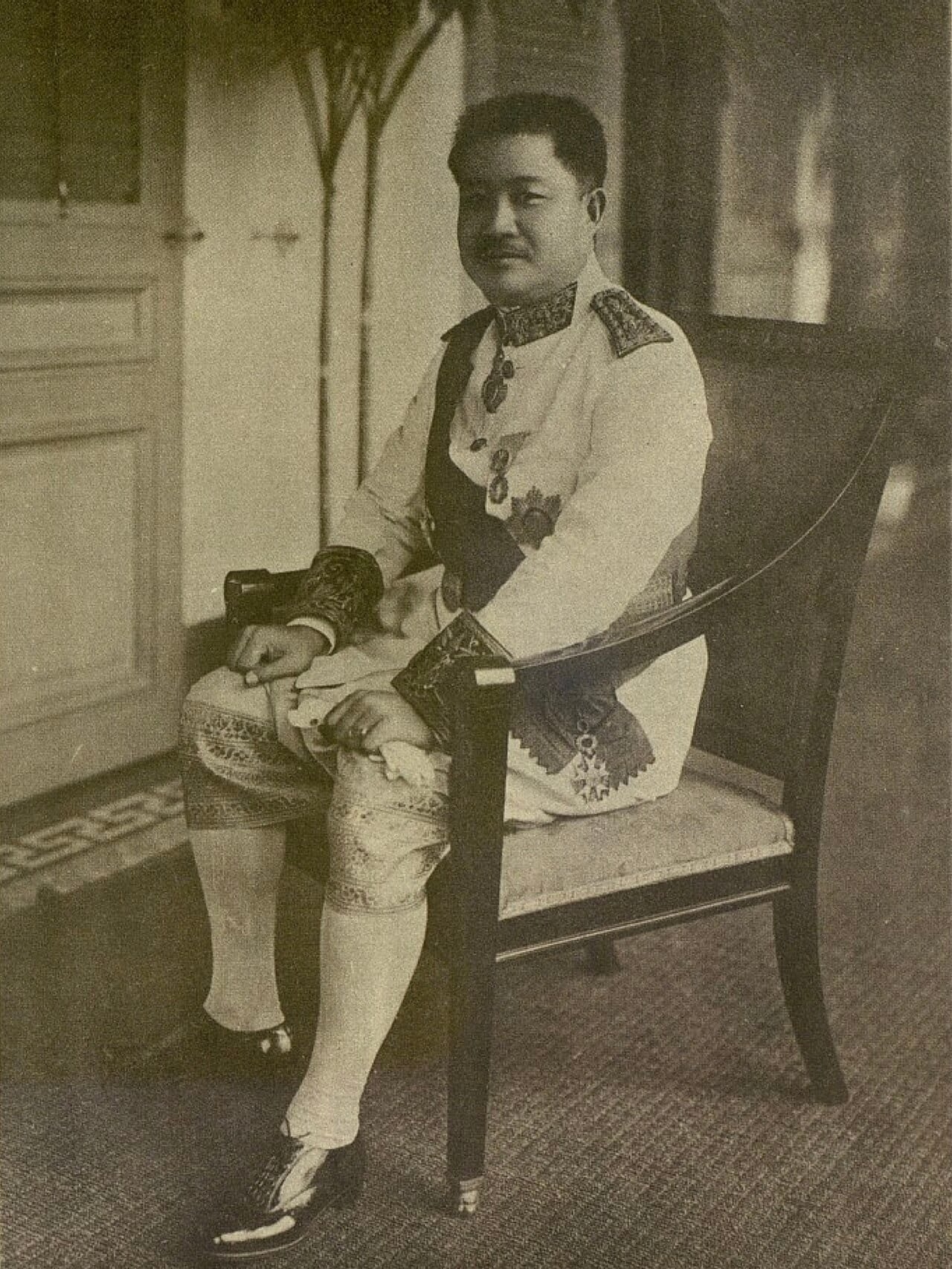
Sisavang Vong was born in the Royal Palace at Luang Prabang in 1885, the son of King Sakkarin and Queen Thongsi. He succeeded his father in 1904, when the old Lao world had been divided by colonial boundaries and Luang Prabang survived as a protected royal court within French Indochina. His early reign therefore combined inherited ritual authority with the practical limits imposed by a French resident-superior and colonial administration.
The arrangement made him a consistent ally of France, a position that protected the dynasty but later put him at odds with nationalists who demanded immediate independence. Over four decades he became a visible symbol of continuity while roads, schools and administrative structures connected previously separated Lao territories. That continuity was not the same as sovereign power: decisive military, diplomatic and fiscal authority remained in French hands until the upheavals of the Second World War broke the protectorate apart.
Japan, Lao Issara and a disputed independence
Japan displaced French authority in March 1945 and pressed the court to declare Laos independent. Sisavang Vong accepted the proclamation, but Japan’s August surrender transformed its meaning. He then announced that the French protectorate would continue, while Prince Phetsarath and other nationalists tried to preserve independence through the Lao Issara movement. The disagreement was constitutional as well as personal: who had authority to decide the future of a unified Lao state?
The Lao Issara government deposed him in late 1945 as it organised resistance to a French return. French troops retook the principal towns in 1946, the nationalist leadership withdrew to Thailand and Sisavang Vong was restored. A Franco-Lao modus vivendi brought the Lao territories together under a single kingdom. The restoration thus returned a pro-French monarch to power, but it also attached his dynasty to a larger territorial state than the old court at Luang Prabang had governed directly.
From restored monarchy to sovereign kingdom
A constitution promulgated in 1947 defined a hereditary constitutional monarchy and an elected assembly, though French influence remained substantial. The 1949 convention made Laos an associated state within the French Union and persuaded many Lao Issara figures to accept an amnesty. Step by step, institutions built under limited autonomy became the framework through which Lao governments sought full sovereignty rather than an immediate revolutionary break.
France recognised the remaining transfer of powers in 1953, and the 1954 Geneva settlement confirmed Laos’s international status while leaving an unresolved contest with the Pathet Lao. Age and ill health increasingly shifted royal duties to Crown Prince Savang Vatthana. When Sisavang Vong died on 29 October 1959, his reign had lasted fifty-five years. His legacy remains double-sided: collaboration with colonial rule on one side, and on the other the monarchy that gave institutional form to a unified independent Laos.
Quick answers
Frequently asked questions about Sisavang Vong
- Who was Sisavang Vong?
- Sisavang Vong was a king of Luang Prabang and first king of the unified Kingdom of Laos. Sisavang Vong provides the institutional counterpoint to the Lao Issara revolutionaries: he backed renewed French protection in 1945, then became the monarch of a unified and eventually independent Laos.
- What is Sisavang Vong best known for?
- Sisavang Vong is best known for reigning through French rule, the 1945 independence crisis and the creation of the Kingdom of Laos.
- When and where was Sisavang Vong born?
- Sisavang Vong was born on 14 July 1885 in Royal Palace, Luang Prabang, Laos.
- When did Sisavang Vong die?
- Sisavang Vong died on 29 October 1959.
Sources and further reading
Explore the evidence
These references support the biography and offer further reading. Official records, first-person accounts and independent reporting provide different perspectives; image records document attribution and licensing.
- 1. British LibrarySisavang Vong biographical archive record
- 2. Library of CongressLaos: A Country Study
- 3. U.S. Department of State, Office of the HistorianDeath of King Sisavang Vong
- 4. United Nations Digital LibraryRoyal ordinance under the 1947 constitution
- 5. Wikimedia CommonsPortrait licensing record