
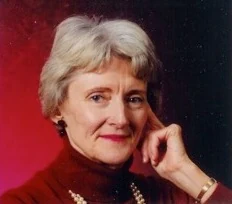
In this biography
Quick facts
- Born
- 1937
- Birthplace
- Chicago, Illinois, United States
- Country
- United States
- Nationality
- Not independently established
- Known for
- The LAP6 operating system for LINC
- Software system
- LAP6
- Later degree
- Harvard Law School, 1975
Why this life matters
She developed a screen editor that let LINC users change text at the machine.
Timeline
Key moments
Wellesley graduate
Wilkes completed her undergraduate studies and entered computing.
LAP6 publication
Her paper described an interactive system for a small computer.
Legal qualification
She graduated from Harvard Law School.
A route into computing
Born in Chicago in 1937, Wilkes graduated from Wellesley in 1959. The Washington University archive records her studies in philosophy and theology. Rather than following a formal computer-science degree, she began work at MIT’s Lincoln Laboratory.
In her oral history, she recalled being discouraged from seeking a legal career because she was a woman. Computing became the field in which she first developed a professional working life, before she eventually returned to law.
Software for an individual user
Wilkes joined the LINC development effort associated with Wesley Clark and Charles Molnar. She wrote software for the machine, including successive LINC Assembly Programs. The project later continued at Washington University in St. Louis.
Her 1970 LAP6 paper describes a 2,048-word computer supporting screen editing, filing and program preparation. Tape-held system layers helped provide functions that could not all remain in core memory together. User interviews influenced the design.
The important distinction is between a person having direct control of a computer and a person merely sending a job to a remote operator. The editor, storage and commands formed a working environment rather than a single calculation.
Engineering a conversation
Wilkes recalled creating an editor that showed changes on the display as the user worked. Her earlier experience had been with large IBM machines; she described the LINC environment as a different kind of computing problem.
Direct interaction changes what counts as a useful design. A correct result delivered after the user has lost the thread of an edit does not provide the same service as an immediately visible change. This helps explain why her paper discusses both algorithms and the experience of operating the machine.
Sources for this section: [2]
A second profession
Wilkes entered Harvard Law School in 1972 and graduated in 1975. Her later work included trial practice, service as an assistant district attorney, arbitration and teaching trial advocacy.
Her biography therefore needs both careers. Calling her only an early home-computer user obscures the operating-system design; ending the account with LAP6 erases a long legal working life. Neither requires turning her into a solitary inventor of the personal computer.
Sources for this section: [1]
Quick answers
Frequently asked questions about Mary Allen Wilkes
- What did Wilkes do after computing?
- She graduated from Harvard Law School in 1975 and worked in trial practice, arbitration and advocacy teaching.
Keep exploring
Lives connected to this story
- Maurice Wilkes
Distinguish the unrelated Cambridge computer pioneer.
- Alan Kay
Compare another vision of direct personal computing.
Sources and further reading
Explore the evidence
These references support the biography and offer further reading. Official records, first-person accounts and independent reporting provide different perspectives; image records document attribution and licensing.
- 1. Washington University, Bernard Becker Medical Library ArchivesWilkes, Mary Allen
- 2. David C. Brock interviewing Mary Allen Wilkes, Computer History Museum, 2021Oral History of Mary Allen Wilkes, part 1 of 2
- 3. Mary Allen Wilkes, Communications of the ACM 13(7), 407–414, 1970Conversational Access to a 2048-Word Machine