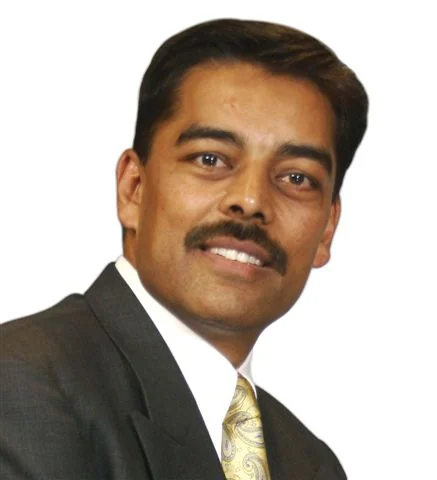
In this biography
Quick facts
- Born
- 1929
- Birthplace
- Nairobi, Kenya
- Country
- Kenya
- Nationality
- Not independently established
- Known for
- Comcraft, business associations and the Chandaria Foundation
- Birth
- Nairobi, 1929
- Engineering degrees
- University of Oklahoma, bachelor’s 1950 and master’s 1951
- Family business
- Returned to Kenya in 1951
- Incubation partnership
- Kenyatta University MoU, 8 July 2011
- Carnegie medal
- 2022
Why this life matters
His career connects manufacturing knowledge, shared family management and support for education, health care and enterprise institutions.
Timeline
Key moments
Born in Nairobi
Grew up in a Kenyan Asian merchant family.
Higher education
The HBS catalogue records science and engineering degrees in India and Oklahoma.
Returned to Kenya
Joined relatives in the family business.
Organised giving
The family developed the foundation during this decade; accounts differ on the exact founding year.
University incubation partnership
The Chandaria Foundation signed an MoU with Kenyatta University on 8 July.
Carnegie recognition
Received the Carnegie Medal of Philanthropy.
An education across three countries
Manu Chandaria was born in Nairobi in 1929 to a family with roots in India. His father’s experience as a merchant made education a central family ambition. Harvard Business School’s interview catalogue records a science degree in India in 1949, followed by an engineering bachelor’s at the University of Oklahoma in 1950 and an engineering master’s in 1951. These are earned qualifications. The honorary doctorates subsequently associated with his name recognise public contributions and should be read separately from this technical education. His return to Kenya brought that training into a business already built by an earlier generation.
Selling required knowledge of customers
Engineering did not remove the need to find buyers. In a 2013 Wharton interview, Chandaria recalled travelling to Uganda to sell goods that the business had struggled to move. He described visiting shops and spending months building relationships. The episode illustrates the commercial work alongside production: a plant’s ability to make a product does not itself create dependable orders. He also argued that outside partners should develop local management rather than substitute imported managers indefinitely. These were his business judgments, rooted in his own experience, rather than universal promises about the returns from entering African markets.
Sources for this section: [3]
Management spread across relatives and professionals
Chandaria’s oral history describes relatives based in several international centres, managing operations for the wider family. Periodic meetings provided a way to consider problems and expansion together. He also recalled obtaining supplier credit for materials and longer payment terms for equipment. Coordination, finance and manufacturing knowledge were therefore intertwined. Public interviews give valuable evidence of how he understood the organisation, but they are not consolidated audited accounts. Their differing group totals do not establish an exact present-day company value, employee count or personal fortune, and none is inferred here.
Sources for this section: [2]
Business associations and organised philanthropy
Chandaria also worked through business associations. Carnegie’s 2022 citation identifies him as founding chairman of the East African Business Council and the Kenya Private Sector Alliance. His charitable work developed through the family foundation. In an interview with Impact Philanthropy Africa, he linked giving to his parents’ example, Jain beliefs and the experience of disability within his family. He described scholarships administered with the Kenya Community Development Foundation. This account places institutional partners and family decisions beside his personal commitment, rather than treating every activity bearing the Chandaria name as an individual donation.
A university partnership combined money and mentoring
Kenyatta University records a KSh25 million foundation contribution toward construction of its incubation centre and an MoU signed on 8 July 2011. It also identifies Chandaria as a distinguished mentor selected through the university’s Senate. The partnership supplied both a physical base and access to experience. The university’s September 2012 magazine describes small, selected intakes of ideas and a separate mentoring role in a business competition. Those records establish activities; they do not measure the later survival of every venture or prove that a donated building by itself created a stated number of jobs.
Recognition reflected a wider institutional career
The 2022 Carnegie Medal of Philanthropy recognised Chandaria’s work in education, health care and other social services. Its citation names university facilities and medical centres supported by the foundation. The award is evidence of recognition by the Carnegie institutions, while the recipient organisations remain important sources for particular projects. Across his career, the recurring activity was bringing resources and people together: relatives in a manufacturing group, firms in associations, and donors with educational or health institutions. That institutional pattern explains his place in Kenyan business history more concretely than an unverified wealth ranking.
Sources for this section: [4]
Quick answers
Frequently asked questions about Manu Chandaria
- Who is Manu Chandaria?
- Manu Chandaria is an industrialist, family-business leader and philanthropist. His career connects manufacturing knowledge, shared family management and support for education, health care and enterprise institutions.
- What is Manu Chandaria best known for?
- Manu Chandaria is best known for comcraft, business associations and the Chandaria Foundation.
- When and where was Manu Chandaria born?
- Manu Chandaria was born in 1929 in Nairobi, Kenya.
Keep exploring
Lives connected to this story
- Vimal Shah
Compare two Kenyan family manufacturing enterprises and their distinct ownership/management records.
- Joe Wanjui
Compare philanthropy and university roles with a former manufacturing executive’s chancellorship.
Sources and further reading
Explore the evidence
These references support the biography and offer further reading. Official records, first-person accounts and independent reporting provide different perspectives; image records document attribution and licensing.
- 1. Baker Library, Harvard Business SchoolDr. Manu Chandaria: interview catalogue and biographical record, 13 June 2014
- 2. Creating Emerging Markets Oral History Collection, Harvard Business SchoolInterview with Manu Chandaria, Henry McGee, 13 June 2014; especially printed pp. 4–14 and 23–26
Read original transcript; no transcript or image reproduced. Retrospective participant account. It recalls foundation agreement in 1956, whereas Carnegie citation says established 1955; use 1950s rather than manufacture a single uncontested date. Corporate totals are omitted.
- 3. Knowledge at Wharton, University of PennsylvaniaHow Manu Chandaria Mastered the African Market: edited interview, 30 January 2013
- 4. Carnegie Medal of PhilanthropyManu Chandaria: 2022 Carnegie Medal of Philanthropy citation
- 5. Impact Philanthropy AfricaMaking an Impact: One on One with Dr. Manu Chandaria, by Patricia Mugambi-Ndegwa, 2022
- 6. Kenyatta UniversityPartnership with Chandaria Foundation; MoU of 8 July 2011
- 7. Office of the Vice-Chancellor, Kenyatta UniversityThe Phoenix, September 2012, Issue 2; printed p. 20, PDF p. 22: Chandaria-BIIC activities