In this biography
Quick facts
- Born
- 4 July 1957
- Birthplace
- Singapore
- Country
- Malaysia
- Nationality
- Malaysian
- Known for
- Kembara, solo recordings and compositions for other Malay-language performers
- Birth
- Singapore, 4 July 1957
- Art education
- Nanyang Academy of Fine Arts; graduated in 1978
- Early solo release
- Untuk Pencinta Seni, 1979
- Group
- Kembara, alongside A. Ali and S. Sahlan
- Creative roles
- Singer, composer and producer; credits differ between songs
Why this life matters
His work connects Singapore and Malaysia’s Malay-language music scenes and the different creative roles behind a recorded song.
Timeline
Key moments
Born in Singapore
Born on July 4.
Art-school graduation
Completed studies at the Nanyang Academy of Fine Arts.
Early solo recording
Released Untuk Pencinta Seni.
Kembara and wider recording work
Developed group, solo, songwriting and production work across the Malay-language music scene.
Return to Lion Studios
Revisited the Singapore studio and discussed earlier recording work with an audience.
Cipta 4
Performed in Kuala Lumpur on July 4, his sixty-ninth birthday.
Singapore beginnings and painting studies
M. Nasir was born in Singapore on 4 July 1957. Before becoming widely associated with Malay-language popular music, he trained in visual art at the Nanyang Academy of Fine Arts, graduating in 1978. A UUM study of his work identifies his diploma background as Western painting.
His early solo release Untuk Pencinta Seni appeared in 1979. The connection between painting and music is useful for understanding the breadth of his creative identity, but it does not mean that every visual image associated with a recording was necessarily his own design. The subsequent career developed through collaboration as well as individual performance.
Kembara and a cross-border music scene
Kembara brought Nasir together with A. Ali and S. Sahlan. His work subsequently connected audiences and recording activity in Singapore and Malaysia. The National Library Board’s music essay places his career within this shared Malay-language musical environment, rather than treating the two countries as completely separate creative worlds.
In a 2023 visit to Singapore’s Lion Studios, he recalled earlier recordings and the people involved in them. Mediacorp’s account connects the studio with Kembara, work involving Search and the duet Dua Insan with Yunizar Hussein. The recollection gives a concrete setting to a career often reduced to a list of famous songs.
Songs, performance and production
His own repertoire includes Tanya Sama Itu Hud Hud, Ghazal Untuk Rabiah and Andalusia. He also wrote for other performers, including Alleycats and Search. A song reaching an audience through another singer is a different kind of contribution from recording it as the featured vocalist.
Composer, lyricist, arranger, producer and performer are separate credits. Nasir’s work spans several of these activities, but the general description should not be used to assign him every credit on every recording. The NLB essay and his studio recollections help readers follow the connections without erasing collaborators.
The later concert career
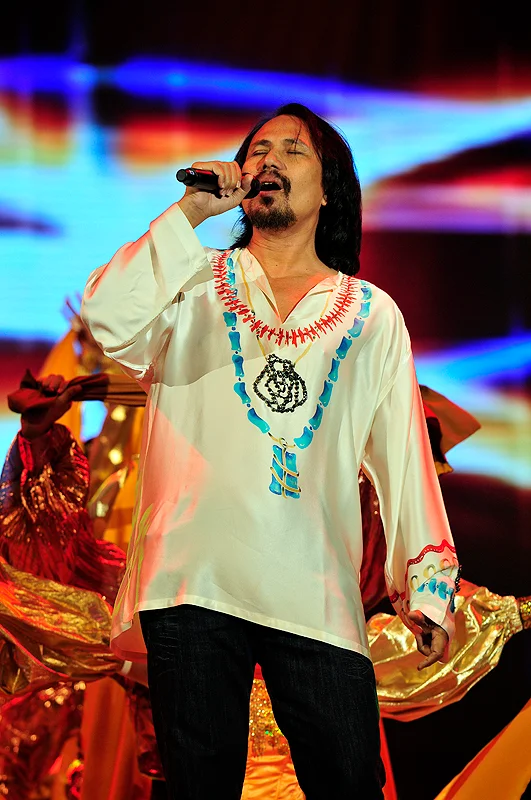
RTM’s July 2026 review describes DATO’ M.N47IR CIPTA 4 at Unifi Arena in Bukit Jalil on July 4, coinciding with his sixty-ninth birthday. Its guest performers included Siti Nurhaliza, Awie, Melly Goeslaw and Ziana Zain. The concert returned established material to a live setting with other voices.
That event provides a dated view of his later performing career rather than a prediction about future concerts. Across the decades, his significance rests on both the songs audiences associate with his voice and the less visible writing and production work behind recordings by others.
Quick answers
Frequently asked questions about M. Nasir
- Who is M. Nasir?
- He is a Singapore-born Malaysian singer, composer, producer and visual artist associated with Kembara, solo recordings and music for other performers.
- Was M. Nasir trained as an artist?
- Yes. He studied at the Nanyang Academy of Fine Arts and graduated in 1978, with a background in painting.
- Which songs is M. Nasir known for?
- His repertoire includes Tanya Sama Itu Hud Hud, Ghazal Untuk Rabiah and Andalusia. His compositions for other artists form a separate part of his recording career.
- When was M. Nasir’s Cipta 4 concert?
- RTM’s review records the Kuala Lumpur concert on 4 July 2026, his sixty-ninth birthday.
Keep exploring
Lives connected to this story
- Sheila Majid
Compare another Malaysian recording artist’s regional career and later concert work.
- Siti Nurhaliza
Read about the vocalist named among the guests in RTM’s Cipta 4 concert review.
- Siti Zainon Ismail
Explore another creative life in which fine-art training connects with a different artistic medium.
Sources and further reading
Explore the evidence
These references support the biography and offer further reading. Official records, first-person accounts and independent reporting provide different perspectives; image records document attribution and licensing.
- 1. National Library Board Singapore · MusicSG essayArt studies, repertoire and songwriting career
Songwriting, production and performance are distinguished. No lyrics are reproduced, and general career descriptions are not used to claim sole authorship of every song.
- 2. Universiti Utara Malaysia · research thesisBirth, painting education, early solo release and Kembara
Biographical accounts differ on exact migration and naturalisation years. The profile retains the supported Singapore-born Malaysian identity without selecting a disputed year. A research thesis is used for bounded biographical details, not as evidence of every contemporary role.
- 3. Mediacorp BERITA · 2023 studio recollectionsLion Studios, collaborators and recording memories
- 4. RTM · 6 July 2026 concert reviewCipta 4 date, venue, birthday and guest performers
The article is a retrospective review dated 6 July 2026, not a future concert listing. The 69th-birthday reference is consistent with the documented 1957 birth year.
- 5. Wikimedia Commons · Irwandy MazwirJanuary 2009 performance photograph and CC BY 2.0
The Flickr photograph, https://www.flickr.com/photos/15468843@N00/3209157361, was transferred with a licence review by Arteyu on 2 June 2009. The Commons record retains CC BY 2.0 and credits Irwandy Mazwir.