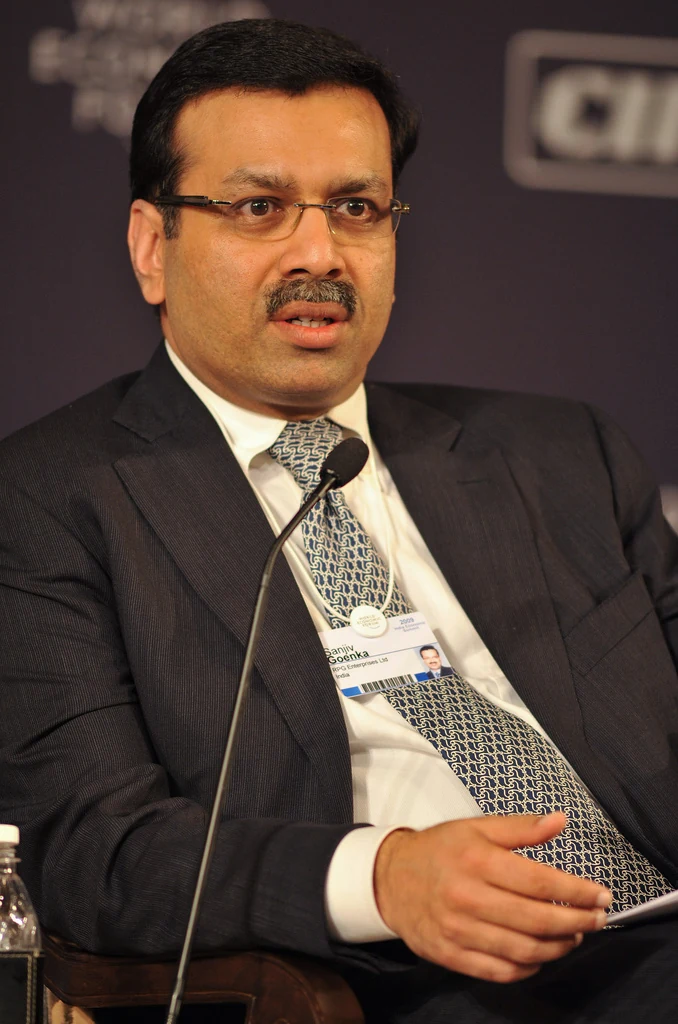
In this biography
Quick facts
- Born
- 19 December 1936
- Died
- 9 December 2019
- Birthplace
- Daegu, Korea
- Country
- South Korea
- Nationality
- Not independently established
- Known for
- Daewoo’s international expansion, its 1999 collapse and later legal accountability
- Born
- 19 December 1936 in Daegu
- Daewoo founded
- March 1967
- Creditor workout
- 12 Daewoo affiliates entered the 1999 workout process
- Pardon dates
- Announced 31 December 2007; effective 1 January 2008
Why this life matters
His career shows both the reach of Korea’s export-led industrialisation and the dangers of expansion unsupported by durable cash flow and transparent accounts.
Timeline
Key moments
Birth
Born in Daegu on 19 December.
Daewoo begins
Establishes Daewoo Industrial in March.
Daewoo Foundation
Foundation records a KRW 5 billion founding contribution.
Control passes to creditors
Workout arrangements replace the earlier expansion strategy; FKI dates his resignation to November.
Criminal sentence
Convicted; his appeal sentence is eight years and six months.
Pardon announced and takes effect
The ministry announcement is dated 31 December 2007 and specifies 1 January 2008 effect.
Death
Dies on 9 December.
Trading experience before Daewoo
Kim Woo-choong was born in Daegu on 19 December 1936. The Federation of Korean Industries museum records his graduation from Yonsei University in 1960 and entry into the trading company Hansung Industrial. Selling textiles overseas became the practical foundation of his later career. In March 1967 he established Daewoo Industrial, beginning with trade rather than a complete automobile or shipbuilding operation. This sequence matters: the multinational group familiar from later headlines developed through expansion and acquisitions. Its founder’s early skill was finding buyers and organising exports in an economy seeking foreign earnings.
Sources for this section: [1]
Expansion connected unlike industries
Daewoo moved into businesses requiring factories, engineering and substantial finance. FKI’s chronology records investment in Saehan Motor in 1978, involvement in the Okpo shipyard that year and the Daewoo Motor name in 1983. In the 1990s, Kim promoted an outward-looking strategy commonly translated as global management. Overseas production and market access became central ambitions. The resulting group connected trading, construction, manufacturing and vehicles across numerous jurisdictions. The institutional museum celebrates this expansion; its account establishes dated milestones more securely than it demonstrates that every acquisition was commercially sustainable or that all employees shared equally in its gains.
Sources for this section: [1]
Philanthropy created institutions beyond the group
The Daewoo Foundation gives a separate account of Kim’s contributions. It dates its establishment to 1978 with KRW 5 billion from him, followed by another contribution in 1980. Its history describes medical services in underserved places and support for scholarship, books and education. These are institutional activities with a different purpose from the trading group’s sales. The foundation’s survival also cautions against treating every organisation using Daewoo’s name as one continuing legal company. Its own description is useful evidence of programme origins, while the social value and reach of particular projects require their own evaluation.
Sources for this section: [2]
The 1999 collapse unfolded through creditor decisions
Daewoo’s financial difficulties became acute after the Asian financial crisis. A December 2000 conference volume published by Korea’s foreign ministry and KIEP dates its entry into workout to 26 August 1999. It describes earlier refinancing and restructuring plans that failed to resolve the short-term liquidity crisis. Twelve Daewoo affiliates were included in the wider corporate workout programme. Creditor control, debt changes and subsequent disposals followed; this was a process involving separate companies, rather than a single sale of every group asset on one day. FKI dates Kim’s resignation as group chairman to November 1999, a month later than some retrospective accounts.
Conviction and pardon are different events
Kim returned to South Korea in 2005 and was arrested. Reuters reports that he was convicted in 2006 for embezzlement and concealing debt, initially receiving ten years in prison. His appeal sentence was eight years and six months; a contemporary Yonhap report records it becoming final in November 2006. The Ministry of Justice announced a special pardon on 31 December 2007, expressly effective from 1 January 2008. Those dates should travel together. A presidential pardon is not a finding that the underlying accounting was accurate, and neither philanthropy nor export success removes the conviction from his biography.
A legacy containing achievement and failure
Kim died on 9 December 2019. His career remains associated with the ambition of taking Korean businesses into difficult international markets, but the collapse and its public costs are essential to any assessment. Later company names and surviving charitable institutions do not restore the old conglomerate as a unified enterprise. Equally, the founder’s conviction should not be assigned to every worker, relative or later purchaser connected with Daewoo. Reading the institutional chronology beside contemporary economic and legal records produces a more useful account than either a heroic expansion story or a biography reduced entirely to its ending.
Quick answers
Frequently asked questions about Kim Woo-choong
- Was every Daewoo company sold on one bankruptcy date?
- No. The contemporary restructuring record describes separate affiliates, creditor workouts and later sales decisions.
- When did Kim Woo-choong’s pardon take effect?
- The Ministry of Justice announced it on 31 December 2007 and specified effect from 1 January 2008.
Keep exploring
Lives connected to this story
- Chung Mong-koo
Compare another Korean industrial leader’s expansion with a separately documented conviction, appeal and pardon.
- Chey Jong-hyun
Compare the development of a different Korean group from textiles into larger industrial sectors.
- Seo Jung-jin
Follow a former Daewoo employee’s later biotechnology venture without transferring legal responsibility.
Sources and further reading
Explore the evidence
These references support the biography and offer further reading. Official records, first-person accounts and independent reporting provide different perspectives; image records document attribution and licensing.
- 1. Federation of Korean Industries, Digital Business MuseumKim Woo-choong: institutional life chronology
Korean institutional commemoration, paraphrased in English. Exact birth/death dates are given, but celebratory claims of national impact are not independently audited. Its November 1999 resignation month is preferred over secondary October shorthand.
- 2. Daewoo FoundationFounder Kim Woo-choong: foundation origins and donations
- 3. Ministry of Foreign Affairs and Trade / Korea Institute for International Economic PolicyKorea in the OECD Perspective: Shaping up for Globalization, December 2000; Table 16, printed p. 98
Acquired original conference PDF; printed p. 98 / PDF p. 99 read and visually checked. The 104-company table covers the wider workout programme, including 12 Daewoo affiliates; it is not a Daewoo-only table.
- 4. Reuters, carried by bdnews24.comSouth Korea pardons Daewoo founder, 31 December 2007
- 5. Yonhap, carried by Jeonbuk IlboKim’s prospective pardon and the existing appeal sentence, 26 December 2007
Contemporary Yonhap report, not the full criminal judgment. Used narrowly for the final appeal sentence and November 2006 finality; prospective guesses about pardon effects are not adopted.
- 6. Ministry of Justice of the Republic of Korea, issuer release via NewswireSpecial pardons, commutations and restoration of rights, 31 December 2007
Issuer is the Ministry of Justice although Newswire hosts the release. Announcement 31 December 2007 and effective date 1 January 2008 are distinguished. The ministry’s current boilerplate is not treated as a historical 2007 cabinet list.