
In this biography
Quick facts
- Born
- 1925
- Died
- 2010
- Birthplace
- Sendagaya, Tokyo
- Country
- Japan
- Nationality
- Not independently established
- Known for
- Kihachirō Kawamoto developed puppet animation shaped by Japanese theatrical traditions and international exchange, while also designing for television and helping other filmmakers complete their work.
- Field
- Puppet designer and animation director
Why this life matters
Kihachirō Kawamoto developed puppet animation shaped by Japanese theatrical traditions and international exchange, while also designing for television and helping other filmmakers complete their work.
Timeline
Key moments
Architecture and studio work lead to puppets
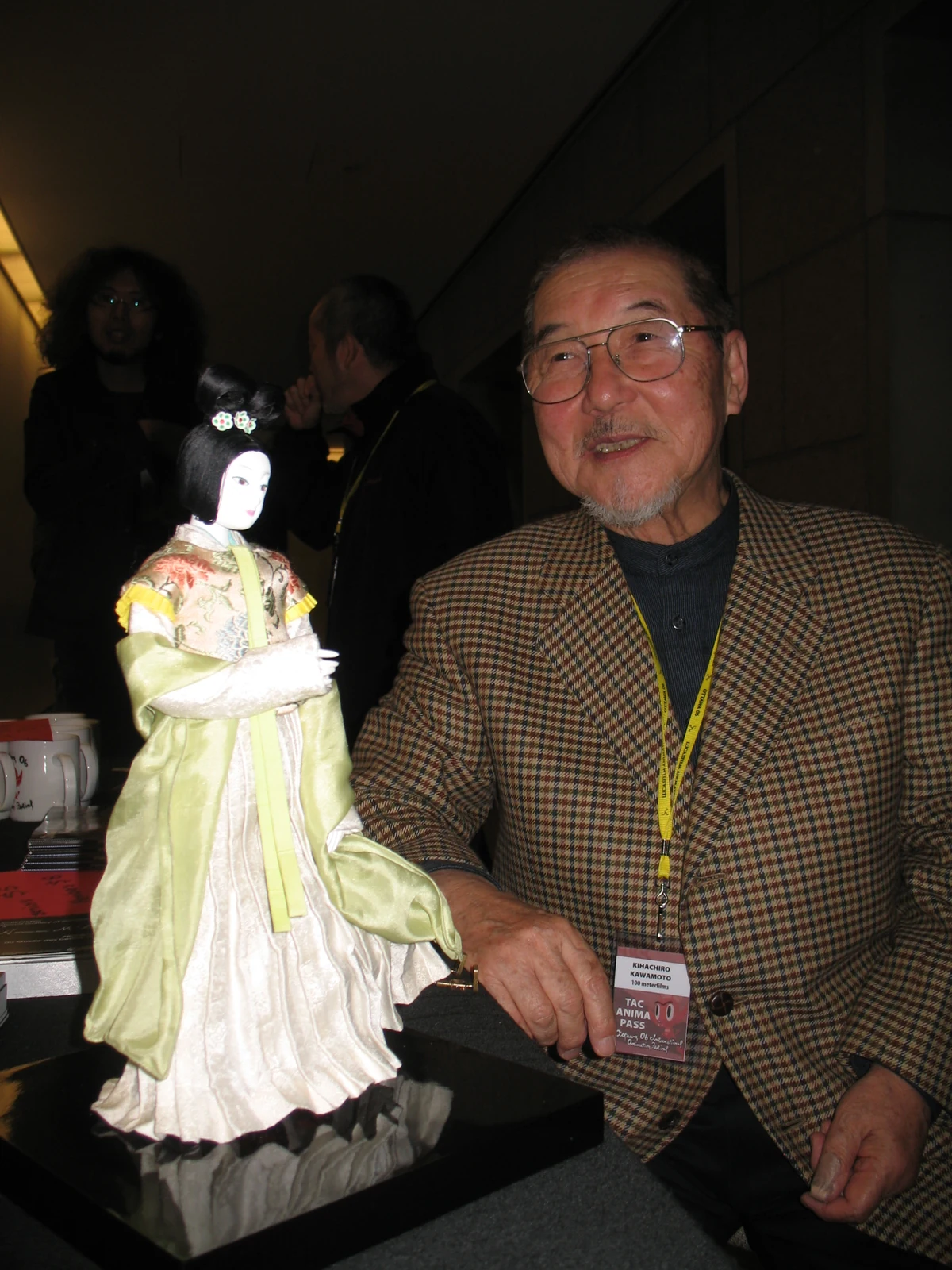
Kihachirō Kawamoto was born in Sendagaya, Tokyo, in 1925. He studied architecture before entering Toho’s art department in 1946. That background involved the design of spaces and objects for the camera, but his subsequent career increasingly centred on the expressive possibilities of puppets. The National Film Archive of Japan records a puppet-production enterprise in the early 1950s and his later participation in the advertising company Shiba Productions. He also learned from Tadahito Mochinaga, an important figure in Japanese stop-motion work. Practical design, commercial production and training therefore preceded the independent shorts for which he became internationally known.
Independent films and international exchange
In 1963 Kawamoto went to Czechoslovakia to study with Jiří Trnka. Returning to independent filmmaking, he completed Hanaori in 1968 and developed works drawing on Japanese theatre, including Noh, Bunraku and Kabuki. Dōjōji, produced in 1976, brings a woman, a monk and a transformation into a white snake into a puppet-film setting. Annecy’s record names Kawamoto as writer and director but also identifies other animators and contributors to sets and puppets. His practice combined a strongly individual artistic direction with collaboration. Later projects took him to Shanghai Animation Studios and back to Prague, extending the international exchange that had shaped his development.
Film, television and support for colleagues
Kawamoto’s puppets also reached audiences through NHK’s television presentation of the Three Kingdoms. Those designed figures belonged to a different production form from his independently animated shorts. With Tadanari Okamoto he organised the Puppet Animashow events, combining film screenings and puppet performance rather than treating the two as interchangeable. After Okamoto died, Kawamoto helped lead the completion of The Restaurant of Many Orders. He died in 2010. His contribution includes finished films, designed objects and practical support for a wider animation community. The surviving institutional accounts reveal an artist working across settings, whose interest in puppets could encompass a camera, a television studio, a theatre and another filmmaker’s unfinished project.
Quick answers
Frequently asked questions about Kihachirō Kawamoto
- What is Kihachirō Kawamoto known for?
- Kihachirō Kawamoto developed puppet animation shaped by Japanese theatrical traditions and international exchange, while also designing for television and helping other filmmakers complete their work.
Keep exploring
Lives connected to this story
- Isao Takahata
Compare another Japanese filmmaker’s direction within a collaborative animation process.
- Caroline Leaf
Compare puppet positions with directly altered painted images as different ways of constructing movement.
Sources and further reading
Explore the evidence
These references support the biography and offer further reading. Official records, first-person accounts and independent reporting provide different perspectives; image records document attribution and licensing.