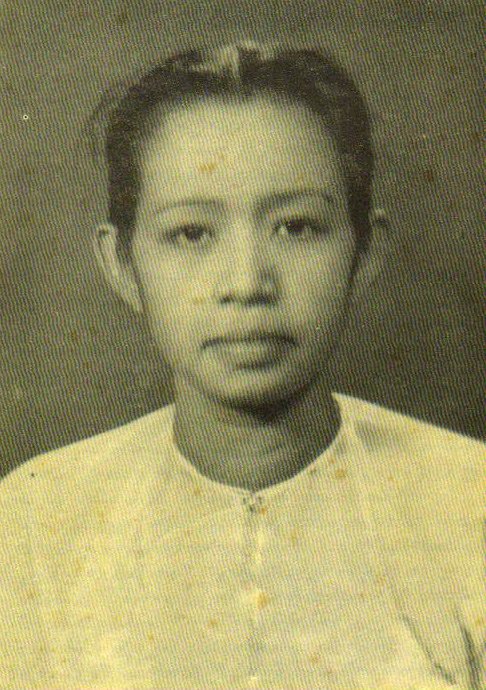
In this biography
Quick facts
- Born
- 13 January 1931
- Died
- 1993
- Birthplace
- Oguta, Nigeria
- Country
- Nigeria
- Nationality
- Not independently established
- Known for
- Efuru, women-centred fiction and Nigerian publishing
- Education
- Ibadan graduate; Edinburgh education diploma
- First novel
- Efuru, 1966
- Public service
- East Central State minister, from 1970
- Publishing
- Tana Press and Flora Nwapa Company
Why this life matters
Her career connects the making of literature with the institutions through which women, children and Nigerian readers could gain education, visibility and practical support.
Timeline
Key moments
Oguta birth
Born on 13 January.
University education
Graduated from Ibadan and completed an education diploma in Edinburgh.
University administration
Worked as assistant registrar at the University of Lagos.
Efuru
Published her first novel through Heinemann.
Reconstruction and literature
Held state ministries and continued writing.
Local publishing
Developed publishing ventures and books for varied readers.
Death
Died after a career connecting writing and public service.
Oguta and a route through education
Flora Nwapa was born on 13 January 1931 in Oguta, in what is now southeastern Nigeria. Her early life placed her within an Igbo community whose relationships, work and spiritual traditions later informed her fiction. She studied at University College Ibadan, graduating in 1957, and completed a diploma in education at the University of Edinburgh in 1958. These were different qualifications from institutions in two countries. The Edinburgh profile records study in English, history and geography. Her preparation connected literary interests with the professional training through which she could enter teaching and educational administration.
Teaching and administration preceded the first novel
After returning to Nigeria, Nwapa worked as a women’s education officer in Calabar and taught at Queen’s School in Enugu. From 1962 to 1967 she served as assistant registrar at the University of Lagos. Those jobs gave her responsibilities beyond the classroom and placed her inside institutions expanding after independence. Writing developed alongside that employment. A later reputation as a novelist should not erase the earlier administrative career, just as a university appointment should not be mistaken for the origin of every story she told. Different forms of work occupied the same period of her life.
Sources for this section: [1]
Efuru made women’s experience the centre
Heinemann published Efuru in 1966 following encouragement from Chinua Achebe. The novel gave sustained attention to a woman’s life within an Igbo community rather than allowing women to appear only at the edges of a male protagonist’s story. Its place in international publishing was a significant breakthrough for a Nigerian woman writer. Broad claims that it was the first novel ever written in English by any African woman require definitions that short promotional biographies do not establish. The more useful starting point is the identifiable book, publisher and year, followed by the question of what its woman-centred perspective brought into view.
War redirected an administrator toward reconstruction
The Nigerian Civil War disrupted her life and employment. After the war she became East Central State’s minister of health and social welfare in January 1970. The Edinburgh account describes work to reunite displaced children with families and bring evacuated children home. She subsequently held the state portfolio covering land, survey, urban development and establishment. These were offices in a particular Nigerian state, not appointment as the federal minister for the whole country. Health, family welfare and rebuilding towns were connected practical concerns in a period when the consequences of conflict extended well beyond the end of fighting.
More books and a local publishing ambition
Her writing expanded beyond Efuru to novels including Idu and Never Again, short fiction and children’s books. Tana Press and the Flora Nwapa Company gave her a role in producing and circulating literature locally. University and publisher accounts agree on that ambition but compress the firms’ formation differently; a single precise founding year is not forced here. Publishing required money, materials, printing and distribution, alongside a belief that Nigerian writers should reach Nigerian readers. The enterprise therefore belongs in her biography as work with practical constraints, rather than as a ceremonial addition to a list of books.
An author’s legacy crosses literary and civic history
Nwapa also took visiting academic roles and continued to address women’s economic and social independence. She died in 1993. Her fiction, educational work and public service supplied different ways of making women’s experience consequential. Each has its own evidence: a novel can organise an imaginative perspective, a ministry record can document an office and publishing records can trace how a book was made available. Treating her only as a symbol of a first would conceal much of that career. Her continuing importance invites readers to examine the work and the institutions around it, while keeping uncertainty about particular dates visible.
Quick answers
Frequently asked questions about Flora Nwapa
- Was she a federal health minister?
- The post discussed here was minister of health and social welfare in East Central State, beginning in 1970.
- Why is the publishing date not the same as a career beginning?
- She worked in education and university administration before Efuru appeared in 1966; publication was one stage in a broader career.
Keep exploring
Lives connected to this story
- Buchi Emecheta
Compare a writer who also combined women-centred fiction with a publishing venture.
- Chinua Achebe
Read the author associated with encouragement for Efuru’s publication, while keeping Nwapa’s authorship distinct.
- Chimamanda Ngozi Adichie
Compare another generation’s account of finding African women in literature.
Sources and further reading
Explore the evidence
These references support the biography and offer further reading. Official records, first-person accounts and independent reporting provide different perspectives; image records document attribution and licensing.
- 1. University of Edinburgh research teamFlorence Nwapa, UncoverED profile, 24 June 2024
The university research profile supports the education, Lagos administration and distinct East Central State ministries. Its broad priority slogans and verdict on the publishing ventures are not adopted as independently established conclusions.
- 2. BloomsburyFlora Nwapa: publisher biography
The publisher biography supports Efuru’s 1966 publication and the publishing firms. Exact formation years and company-name sequences differ across summaries; no unsupported legal incorporation chronology is inferred.
- 3. South African History OnlineBiography of Flora Nwapa by Emily Coolidge
The biographical essay was consulted as supplementary context. Year-only death data is used rather than implying an exact-day check against a primary vital record. No full novel or government appointment instrument was inspected.