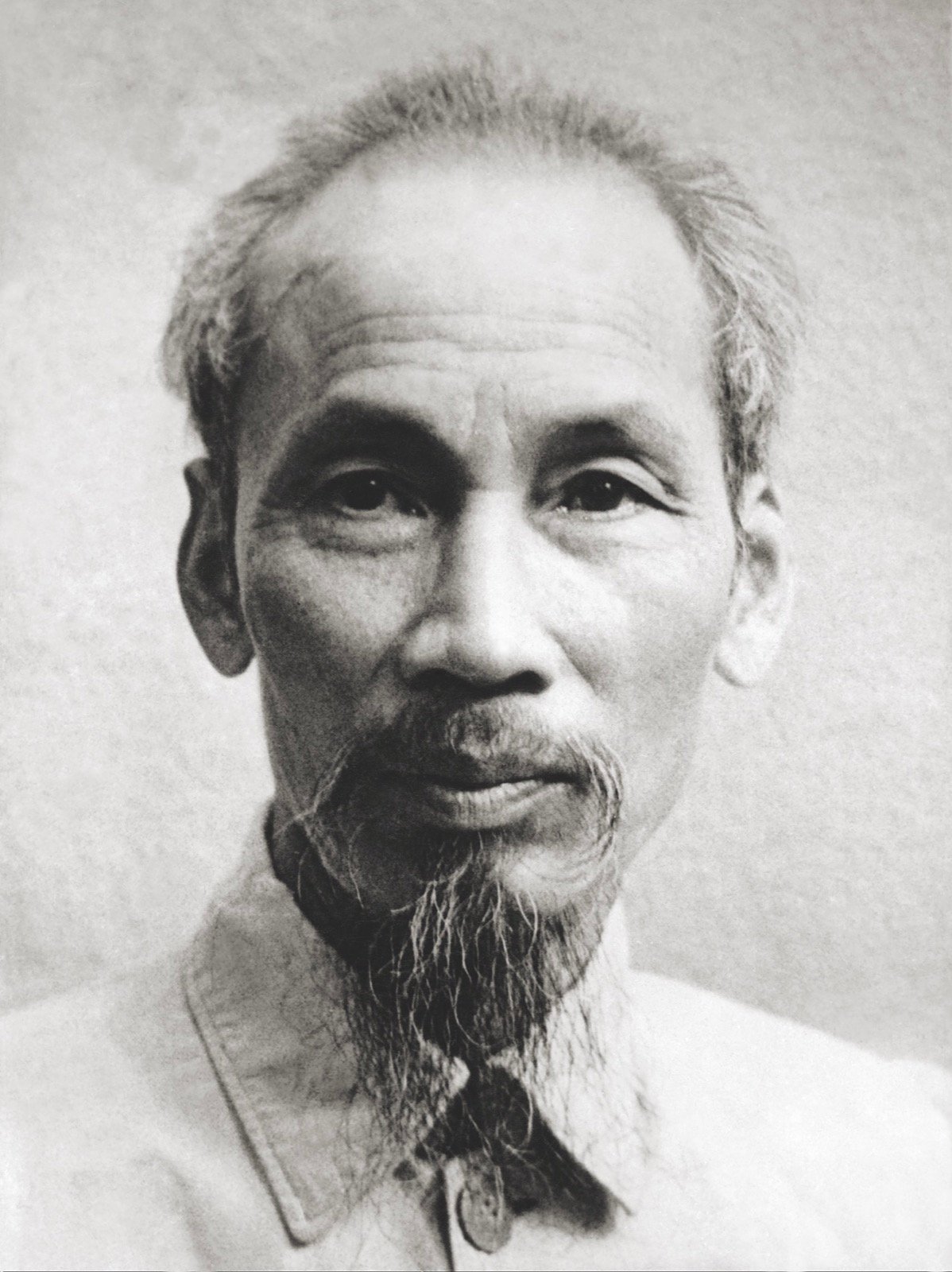
In this biography
Quick facts
- Born
- 25 August 1911
- Died
- 4 October 2013
- Birthplace
- Lộc Thủy, Quảng Bình, Vietnam
- Country
- Vietnam
- Nationality
- Vietnamese
- Known for
- Commanding Vietnamese forces at Điện Biên Phủ and during the Vietnam War
- Rank
- General of the Army
- Major command
- People’s Army of Vietnam
- Government office
- Defence minister and deputy prime minister
- Earlier profession
- Teacher and journalist
Why this life matters
Giáp linked political mobilisation, logistics and protracted warfare in campaigns that defeated French colonial rule and reshaped the later war with the United States.
Timeline
Key moments
Born in Quảng Bình
Born in Lộc Thủy on 25 August.
Organised an armed brigade
Helped establish the Vietnam Propaganda Liberation Army.
Promoted to general
Received Vietnam’s highest general rank and remained commander in chief during the war against France.
Commanded at Điện Biên Phủ
Vietnamese victory ended the decisive phase of the First Indochina War.
Moved from defence to senior government office
His defence portfolio ended in December 1979; he became standing deputy prime minister in January 1980.
Died in Hanoi
Died at age 102 after decades as a national public figure.
Student activist, teacher and revolutionary organiser
Võ Nguyên Giáp was born in Quảng Bình in 1911 and entered anticolonial student politics while studying in Huế. French authorities imprisoned him in 1930. After his release he studied law and political economy, taught history and worked as a journalist, experiences that gave him political and organisational training rather than a conventional military education.
He joined the Indochinese Communist Party, travelled to China in 1940 and worked with Nguyễn Ái Quốc, later known as Hồ Chí Minh. Returning to northern Vietnam in 1941, Giáp helped prepare revolutionary bases. Hồ assigned him to organise the Vietnam Propaganda Liberation Army in December 1944, beginning with a very small armed unit that became part of the future national army.
Sources for this section: [1]
Building an army during the war against France
Giáp became interior minister in the provisional government in 1945, defence minister in 1946 and commander in chief of the People’s Army and militia. In 1948 he received the rank of general. During the First Indochina War, his command had to transform dispersed guerrilla forces into an army capable of larger campaigns while the party built taxation, recruitment and supply systems behind it.
Early conventional attacks did not always succeed. Costly reverses in 1951 demonstrated the danger of assaulting strong French positions before Vietnamese forces had sufficient firepower and logistics. Giáp’s method was therefore not a simple formula of continuous human-wave attacks: it involved retreat, political mobilisation, guerrilla warfare and a gradual shift toward regular operations when conditions appeared favourable.
Why Điện Biên Phủ made Giáp internationally famous
At Điện Biên Phủ in 1954, the French built an air-supplied fortified base in a remote valley. Vietnamese forces moved artillery, ammunition and food through difficult mountain terrain, dug extensive trenches and progressively restricted the garrison’s air supply. Giáp abandoned an early plan for a rapid assault and instead conducted a longer siege from March to May.
The French position fell on 7 May. The victory was achieved by tens of thousands of combat troops and a much larger labour and transport effort, with important Chinese matériel and advice; it should not be reduced to one commander acting alone. Giáp nevertheless carried central command responsibility, and the battle made him the best-known military figure of Vietnam’s independence struggle.
Defence minister during the war with the United States
After Geneva, Giáp served as deputy prime minister and defence minister as North Vietnam supported armed struggle in the south and confronted expanding U.S. intervention. He remained a Politburo member and major military voice, but strategy emerged through party institutions and competing leaders. Lê Duẩn, Nguyễn Chí Thanh, Văn Tiến Dũng and regional commanders also shaped the war.
That collective system complicates claims that Giáp personally designed every major operation. The 1968 Tet Offensive was a battlefield defeat for communist forces but had a profound political effect in the United States. Giáp’s exact influence over its planning remains debated. Văn Tiến Dũng, rather than Giáp, commanded the final 1975 campaign that captured Saigon.
Later office, strategic reputation and the cost of war
Giáp left the defence ministry at the end of 1979 and later served as standing deputy prime minister and deputy chairman of the Council of Ministers. His influence declined, yet he remained a rare surviving public representative of the revolutionary generation. He died in Hanoi on 4 October 2013 at the age of 102 by conventional age counting.
His reputation rests on building armed forces from limited beginnings and connecting military operations to political endurance and logistics. Admirers rank him among the twentieth century’s most consequential commanders; critics emphasise unsuccessful offensives and his acceptance of severe casualties. Both views are necessary to understand a career inseparable from decades of war.
Quick answers
Frequently asked questions about Võ Nguyên Giáp
- Why is Võ Nguyên Giáp famous?
- He helped build Vietnam’s revolutionary army and held central command responsibility at Điện Biên Phủ in 1954. The victory also depended on soldiers, civilian logistics and outside assistance, not one commander acting alone.
- Did Võ Nguyên Giáp have a conventional military education?
- His early professional experience was in teaching and journalism rather than a conventional military academy. He developed military leadership through revolutionary organising and war.
- When did Điện Biên Phủ fall?
- The French fortified position fell on 7 May 1954, after a siege fought from March to May. Giáp had changed from an early rapid-assault plan to a more deliberate approach.
- Did Giáp command the final campaign that captured Saigon in 1975?
- Văn Tiến Dũng held field command of the final campaign. Giáp remained part of senior military and political planning; attributing every operation to him alone obscures the collective command structure.
Keep exploring
Lives connected to this story
- Hồ Chí Minh
Place Giáp’s organising within a separate revolutionary and state-leadership career.
- Lê Duẩn
Distinguish party strategy and wartime leadership from one general’s command.
- Phạm Văn Đồng
Connect the military victory of 1954 with Đồng’s separate Geneva diplomacy.
- Huỳnh Thúc Kháng
Giáp contributed to Tiếng Dân and later recalled Huỳnh’s handling of censorship.
Sources and further reading
Explore the evidence
These references support the biography and offer further reading. Official records, first-person accounts and independent reporting provide different perspectives; image records document attribution and licensing.
- 1. Government NewsBiography of General Vo Nguyen Giap
The government chronology distinguishes the December 1979 end of the defence portfolio from the January 1980 standing deputy-premier appointment. Its age 103 uses a different counting convention; this profile retains the conventional age 102 from the given birth and death dates.
- 2. Government of VietnamVietnamese government members through the periods
- 3. Library of Congress, Federal Research DivisionVietnam: A Country Study
The earlier study remains historical bibliography. Direct access failed in this batch, so its law-study and teaching details are not presented as a new full-text verification.
- 4. Office of the Historian, U.S. Department of StateDien Bien Phu and the Fall of French Indochina, 1954
Used for the 7 May outcome and diplomatic setting, not its oversimplified four-month siege description.
- 5. U.S. National Archives and Records AdministrationRemembering Vietnam: Quick Reference Guide
- 6. U.S. Army Center of Military HistoryReview of Victory at Any Cost: The Genius of Viet Nam’s Gen. Vo Nguyen Giap
- 7. Wikimedia CommonsPortrait and CC BY 3.0 Brazil record
- 8. U.S. Army Center of Military HistoryCounterinsurgency Doctrine, 1942–1976, pp. 68–70: early reverses, assistance and logistics
Relevant indexed pp. 68–70 support early conventional reverses, Chinese assistance and siege logistics. Full PDF retrieval failed; the whole book was not freshly audited.
- 9. People’s Army Newspaper · military historyĐiện Biên Phủ campaign: shift from rapid attack to deliberate advance
- 10. People’s Army NewspaperĐiện Biên Phủ supplies, medicine and transport: participants’ recollections
- 11. Merle L. Pribbenow II / Journal of Vietnamese StudiesGeneral Võ Nguyên Giáp and the Mysterious Evolution of the Plan for the 1968 Tết Offensive
The publisher’s abstract of original research distinguishes Lê Duẩn and Văn Tiến Dũng’s planning from Giáp’s opposition. The complete paywalled paper was not read in this review, and the biography retains the debate rather than a claim of sole authorship.
- 12. U.S. Army Center of Military HistoryVietnam from Cease-Fire to Capitulation: Central Highlands, March 1975
The indexed Central Highlands chapter supports Dũng’s field command and collective planning. Full-book inspection is not claimed.