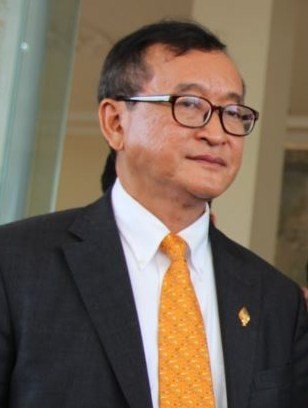
In this biography
Quick facts
- Born
- 5 October 1911
- Died
- 19 December 2000
- Birthplace
- Phnom Penh, Cambodia
- Country
- Cambodia
- Nationality
- Cambodian
- Known for
- Leading the KPNLF and presiding over Cambodia’s 1993 Constituent Assembly
- Prime minister
- 1967–1968
- Banking role
- Governor of the National Bank of Cambodia
- Resistance organisation
- Khmer People’s National Liberation Front
- Later office
- President of the Constituent Assembly, 1993
Why this life matters
Son Sann’s career links Cambodia’s early central bank, a morally fraught anti-Vietnamese coalition and the UN-supervised constitutional transition of 1993.
Timeline
Key moments
Studied economics in France
Trained at HEC Paris before entering public administration.
Led the national bank
Became the first governor of Cambodia’s central bank.
Became prime minister
Headed Sihanouk’s government until 1968.
Founded the KPNLF
Organised a non-communist resistance movement after Vietnam’s intervention.
Signed the Paris settlement
Participated in the accords that authorised a UN transition.
Presided over the Constituent Assembly
Signed the constitution adopted on 21 September as president of the elected constituent chamber.
From civil service to national bank
Son Sann was born in Phnom Penh on 5 October 1911. His parents came from the Khmer communities of what is now southern Vietnam, a distinction sometimes blurred in accounts of his birthplace. He studied commerce in France before joining Cambodia’s civil service in the 1930s. These years preceded independence, when political and administrative careers still moved between French colonial institutions and emerging Cambodian parties. His later public life cannot be understood only through the resistance movement: he had already spent decades in government before war divided the country.
He held finance and other cabinet responsibilities and became associated with the creation of the National Bank of Cambodia in the mid-1950s. Central banking was part of the practical work of statehood after independence, alongside decisions about public finance and trade. In 1967–68 he served as prime minister under Norodom Sihanouk. The 1970 coup against Sihanouk and the conflict that followed ended the political setting in which Son Sann had built his first career. He lived in France while Cambodia passed through civil war and the Khmer Rouge period.
A non-communist front in a compromised coalition
After Vietnamese forces toppled the Khmer Rouge regime in 1979, Son Sann organised the Khmer People’s National Liberation Front (KPNLF) along the Thai border. It opposed the new, Vietnamese-backed government and presented itself as a non-communist alternative. Sihanouk’s royalist movement was another non-communist force; neither should be collapsed into Son Sann’s organisation. The conflict was not a simple two-sided struggle, and the KPNLF’s political purpose differed from that of the Khmer Rouge.
In 1982 the KPNLF, Sihanouk’s movement and the Khmer Rouge entered the Coalition Government of Democratic Kampuchea. Son Sann became its prime minister in exile. Sharing a diplomatic coalition with the perpetrators of Cambodia’s mass killings remains the central moral difficulty of his resistance years. It would be misleading to describe the coalition merely as a campaign for democracy or to imply that its members shared one programme. Son Sann and his supporters argued for an independent, pluralist Cambodia, while critics maintain that the alliance helped rehabilitate the Khmer Rouge internationally. The factions also competed with each other, and the KPNLF faced internal splits.
Paris settlement and the 1993 election
The 1991 Paris Agreements provided a framework for ceasefire, political transition and an election administered by the United Nations. The KPNLF was one of the Cambodian parties to the settlement. The United Nations Transitional Authority in Cambodia (UNTAC) later recorded that three of the four Cambodian signatory parties participated in the 1993 election; the Khmer Rouge faction did not. For Son Sann, the process offered a route from armed opposition back to open party politics, but it did not erase the coalition’s earlier contradictions.
His Buddhist Liberal Democratic Party won ten of the 120 seats in the elected Constituent Assembly. It was a minority position: FUNCINPEC and the Cambodian People’s Party held much larger blocs, and post-election bargaining shaped the new government. The assembly’s task was to write a constitution, not simply to operate as an ordinary legislature from election day. Son Sann’s role in this interim chamber was nonetheless significant because its proceedings determined the institutional form of the restored kingdom.
The constituent presidency and its limits
On 21 September 1993 the Constituent Assembly adopted the new constitution. The official text names Son Sann as the president who signed on the chamber’s behalf. The United Nations account says the constitution was promulgated on 24 September and that the constituent chamber then transformed into a legislative assembly. Distinguishing those stages matters: his best-documented constitutional role was as president of the body that adopted the charter, even though reports also called him an acting assembly president during the subsequent transition.
Contemporary reporting says Chea Sim was elected president of the National Assembly on 25 October 1993, succeeding Son Sann in the assembly leadership. Thus an unqualified claim that Son Sann was the lasting first president of the post-election National Assembly obscures the shorter constituent and transitional offices. His party later fractured, limiting the parliamentary base for the pluralism he advocated. Son Sann died in Paris on 19 December 2000. His legacy combines institution-building before the wars, resistance to foreign-backed rule, participation in a deeply compromised exile coalition and a concrete role in Cambodia’s 1993 constitutional settlement.
Sources for this section: [3] · [1] · [7] · [8] · [6] · [11]
Quick answers
Frequently asked questions about Son Sann
- Who was Son Sann?
- Son Sann was a Cambodian economist and political leader who served as prime minister in 1967–1968, founded the KPNLF and later presided over the 1993 Constituent Assembly.
- What was Son Sann’s KPNLF?
- The Khmer People’s National Liberation Front was a non-communist resistance movement formed in 1979. It was separate from Sihanouk’s royalist movement and from the Khmer Rouge.
- Did Son Sann’s exile coalition include the Khmer Rouge?
- Yes. In 1982 the KPNLF joined Sihanouk’s movement and the Khmer Rouge in the Coalition Government of Democratic Kampuchea. Calling the KPNLF non-communist does not erase that controversial alliance.
- What was Son Sann’s role in the 1993 constitution?
- He presided over the Constituent Assembly that adopted the constitution on 21 September 1993. Promulgation followed on 24 September; this constituent role should not be confused with a lasting National Assembly presidency.
Keep exploring
Lives connected to this story
- Norodom Sihanouk
Explore the royalist leader who headed the exile coalition and returned as king after the 1993 settlement.
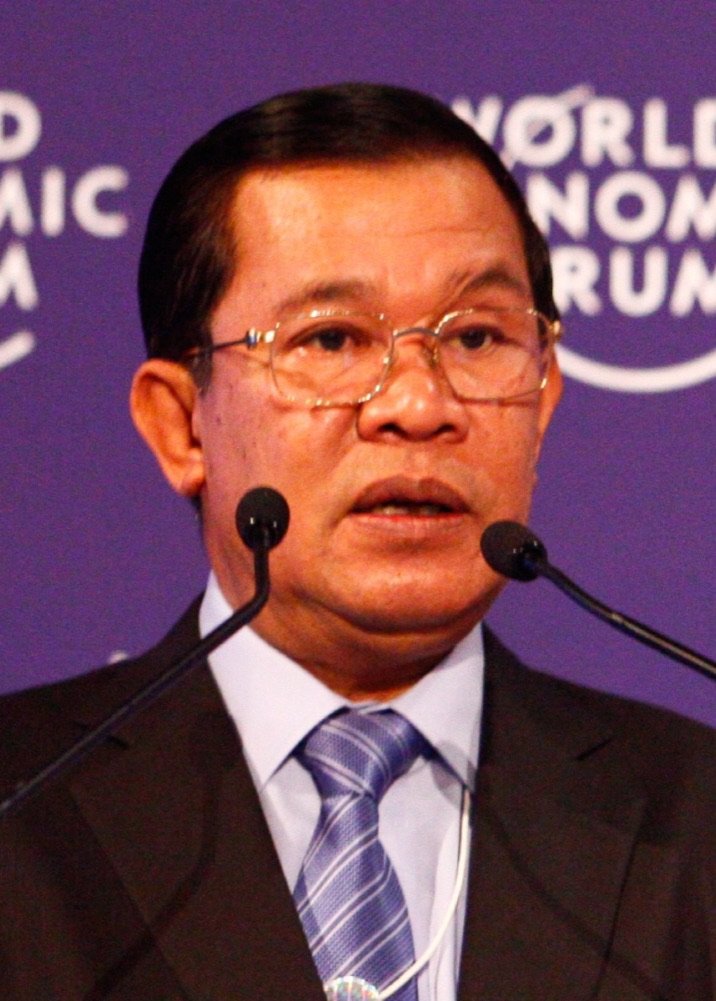
- Hun Sen
Compare the leader of the Cambodian People’s Party in the 1993 power-sharing arrangement.
- Vann Molyvann
Read about another public figure whose prewar work shaped Cambodia’s post-independence institutions.
Sources and further reading
Explore the evidence
These references support the biography and offer further reading. Official records, first-person accounts and independent reporting provide different perspectives; image records document attribution and licensing.
- 1. United Nations PeacekeepingUNTAC background and 1993 constitutional transition
- 2. Inter-Parliamentary UnionCambodia Constituent Assembly election, 1993
- 3. Constitutional Council of CambodiaConstitution of the Kingdom of Cambodia
The official constitution identifies Son Sann as president of the Constituent Assembly at its 21 September 1993 adoption; this is more precise than describing him without qualification as the National Assembly’s first president.
- 4. Northern Illinois University SEAsiteCambodian political biographies
This retrospective is retained for context, not used to override Son Soubert’s testimony about Phnom Penh birth or the original reporting that dates the KPNLF to 1979 rather than 1980.
- 5. The Cambodia DailySon Sann’s body brought back to Cambodia
His son Son Soubert identifies Phnom Penh as Son Sann’s birthplace and distinguishes his parents’ origins in Kampuchea Krom. Some retrospective accounts instead place his birth in southern Vietnam; the family testimony is preferred here.
- 6. The GuardianSon Sann obituary
This critical obituary documents the Khmer Rouge coalition and later party divisions. Its interpretation is attributed as criticism, not treated as a neutral institutional verdict.
- 7. United Press InternationalChea Sim elected assembly president
Contemporary reporting describes his acting assembly presidency after the May election and Chea Sim’s election on 25 October. The report does not establish that Son Sann held a long-term National Assembly presidency.
- 8. The Phnom Penh PostSon Sann dies at 89
- 9. Ronald Reagan Presidential LibraryReagan meeting memorandum, September 1983
- 10. National Bank of CambodiaInstitutional history: founding on 23 December 1954
The bank dates the institution’s establishment to 23 December 1954. That date is not interchangeable with a later governor’s appointment year.
- 11. Ministry of Women’s Affairs of Cambodia · government-hosted text1993 Constitution: Constituent Assembly adoption and signature
This government-hosted text provides a second location for the constitutional adoption/signature wording. Its search index was readable but direct retrieval failed; full PDF inspection is not claimed.