In this biography
Quick facts
- Born
- 15 May 1942
- Birthplace
- Watampone, South Sulawesi
- Country
- Indonesia
- Nationality
- Indonesian
- Known for
- Serving as vice president under two presidents and supporting major peace negotiations
- Office
- Vice president, 2004–2009 and 2014–2019
- Party leadership
- Golkar chairman, 2004–2009
- Business
- Led the Kalla family business group
- Peace work
- Malino, Poso, Maluku and Aceh processes
Why this life matters
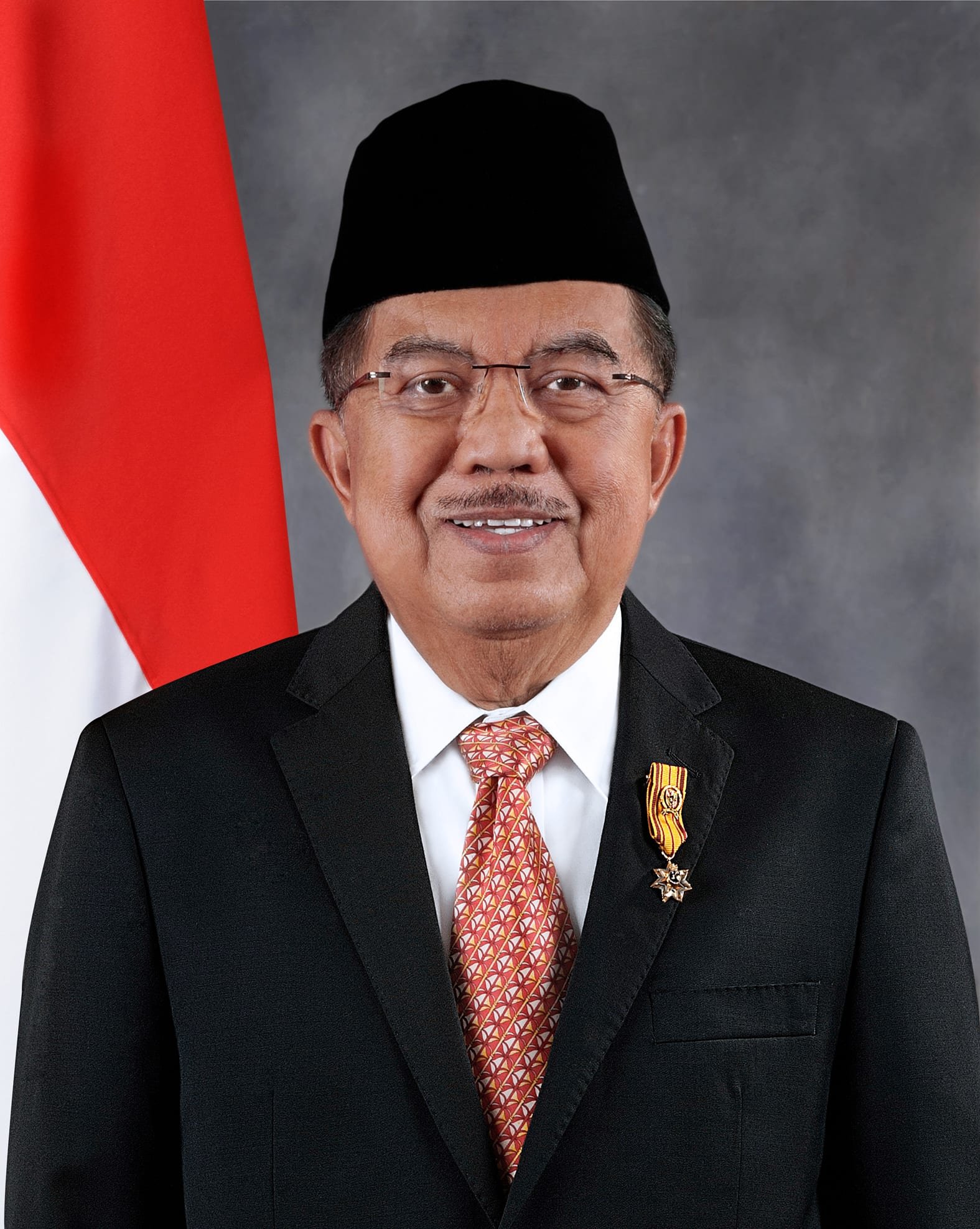
Kalla combined enterprise, party leadership, cabinet government and conflict mediation, becoming the only person to serve as Indonesia’s vice president in two nonconsecutive administrations.
Timeline
Key moments
Graduated and entered the family business
Completed economics at Hasanuddin University and joined the enterprise that became Kalla Group.
Entered cabinet government
Became minister of industry and trade during the early Reformasi transition.
Supported the Malino peace agreements
As coordinating minister, helped facilitate settlements addressing communal conflict in Poso and Maluku.
Won the vice presidency
Partnered Susilo Bambang Yudhoyono in Indonesia’s first direct presidential election.
Ran for president
Led a Golkar ticket with Wiranto and finished third with 12.41 per cent.
Returned as vice president
Won office with Joko Widodo and served a second, nonconsecutive term through 2019.
A South Sulawesi business foundation
Muhammad Jusuf Kalla was born in Watampone in 1942 into a Bugis trading family. After studying economics at Hasanuddin University, he joined the family enterprise and later led its expansion. The Kalla Group developed interests in vehicle distribution, construction, property, energy and other sectors centred especially on eastern Indonesia.
Business associations and regional networks brought Kalla into Golkar during the New Order, but his most important national offices came after Suharto’s fall. His commercial background shaped a political style focused on negotiation, speed and practical settlement, a style admirers praised as decisive and critics sometimes regarded as overly informal.
Cabinet office and conflict mediation
Kalla became minister of industry and trade under President Abdurrahman Wahid, then coordinating minister for people’s welfare under Megawati Sukarnoputri. Indonesia was confronting displacement and communal violence, particularly in Poso and the Maluku islands. Government-backed talks produced the Malino agreements intended to stop fighting and create frameworks for security and reconciliation.
As vice president after 2004, Kalla also supported the negotiations that led to the August 2005 Helsinki memorandum between the Indonesian government and the Free Aceh Movement. He was not the agreement’s sole architect, but his political backing, contact networks and willingness to test negotiation helped create room for the formal process led by the government team and mediator Martti Ahtisaari.
The first directly elected vice president
Kalla left Megawati’s cabinet and joined Susilo Bambang Yudhoyono for the 2004 presidential election. Their ticket led the first round and won the runoff with 69,266,350 votes. Kalla became Indonesia’s first directly elected vice president and soon won the chairmanship of Golkar, giving the new administration stronger links to Parliament.
The partnership combined Yudhoyono’s measured presidential style with Kalla’s faster, deal-oriented approach. It managed tsunami reconstruction, the Aceh settlement, fuel-price reforms and coalition politics, but the two leaders gradually developed separate bases. In 2009 Kalla ran for president with Wiranto and received 15,081,814 votes, finishing behind Yudhoyono and Megawati.
A second vice presidency under Jokowi
Five years later, Joko Widodo chose Kalla as his running mate. The pairing joined Jokowi’s reformist municipal image to a nationally experienced politician with business, Golkar and eastern Indonesian networks. They won the 2014 election with 53.15 per cent, returning Kalla to an office he had previously held under a different president.
From 2014 to 2019, Kalla worked on economic coordination, infrastructure, humanitarian questions and international representation. His two nonconsecutive terms make him unique among Indonesian vice presidents. They also show how the office can operate as more than ceremonial support when its holder brings an independent network, negotiating authority and experience across several administrations.
Quick answers
Frequently asked questions about Jusuf Kalla
- Who is Jusuf Kalla?
- Jusuf Kalla is the 10th and 12th Vice President of Indonesia. Kalla combined enterprise, party leadership, cabinet government and conflict mediation, becoming the only person to serve as Indonesia’s vice president in two nonconsecutive administrations.
- What is Jusuf Kalla best known for?
- Jusuf Kalla is best known for serving as vice president under two presidents and supporting major peace negotiations.
- When and where was Jusuf Kalla born?
- Jusuf Kalla was born on 15 May 1942 in Watampone, South Sulawesi.
Sources and further reading
How this biography was checked
Core dates and offices are checked against the sources below. This profile was last reviewed on 3 October 2026.
- Secretariat of the Vice President of IndonesiaVice presidents of Indonesia from 1945 to the present
- Secretariat of the Vice President of IndonesiaJusuf Kalla biography and peace studies address
- General Elections Commission of IndonesiaHistory and results of Indonesia’s 2004 election
- United Nations PeacemakerMemorandum between Indonesia and the Free Aceh Movement
- Wikimedia CommonsOfficial portrait and public-domain record