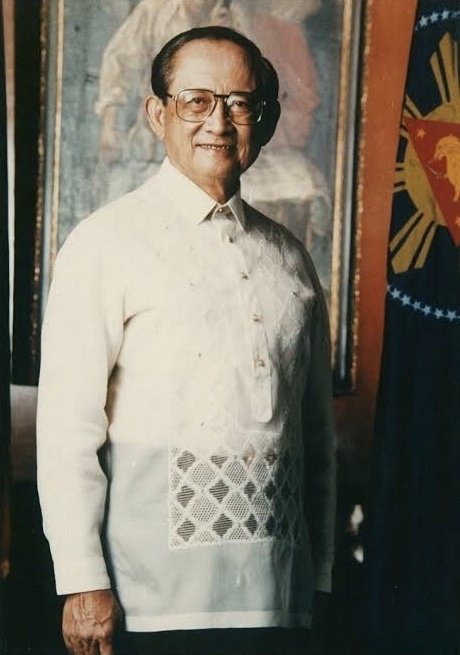
In this biography
Quick facts
- Born
- 23 June 1935
- Died
- 30 October 2014
- Birthplace
- Tondo, Manila, Philippines
- Country
- Philippines
- Nationality
- Filipino
- Known for
- Turning public-health programmes into memorable national campaigns and advancing health, environment and Indigenous-rights laws
- Profession
- Physician and public-health leader
- Health secretary
- 1992–1995
- Senate service
- 1995–2007
- Education
- University of the Philippines MD; Johns Hopkins MPH
Why this life matters
Flavier showed how technical public-health policy could reach a mass audience, then carried that practical approach into legislation on clean air, traditional medicine and Indigenous peoples’ rights.
Timeline
Key moments
Qualified as a physician
Completed his medical degree at the University of the Philippines.
Worked in rural development
Practised community medicine and led programmes with the Philippine Rural Reconstruction Movement and International Institute of Rural Reconstruction.
Became health secretary
President Fidel V. Ramos appointed him to lead the Department of Health.
Won a Senate seat
Moved from executive administration to national legislation with a large electoral mandate.
Indigenous Peoples’ Rights Act enacted
The landmark statute was among the major measures associated with his legislative work.
Clean Air Act enacted
A comprehensive national air-pollution framework became law during his first Senate term.
Medicine rooted in rural communities
Juan Martin Flavier grew up in modest circumstances in Tondo and trained as a physician at the University of the Philippines. A master of public health from Johns Hopkins reinforced an approach that treated health as a problem of communities, education and systems rather than clinical care alone.
He spent decades with the Philippine Rural Reconstruction Movement and the International Institute of Rural Reconstruction. Working with farmers and village health programmes taught him to translate technical knowledge into language that people could use in daily life.
Health communication at national scale
President Fidel V. Ramos appointed Flavier health secretary in 1992. He became known for short, accessible campaigns on vaccination, family planning and preventive care, using humour and direct speech to make the department unusually visible.
The style drew criticism as well as attention, particularly where health policy intersected with religion and reproductive choices. Its larger significance was administrative: public communication became part of programme delivery, not an afterthought to technical policy.
From health campaigns to national law
Flavier entered the Senate in 1995 and won re-election in 2001. His legislative record included work on traditional and alternative medicine, clean air and Indigenous peoples’ rights, widening his agenda beyond the health department he had led.
His career joined local experience to national institutions during the post-EDSA period. It also demonstrated that democratic governance depends not only on constitutional rules, but on whether public programmes are understandable, trusted and capable of reaching communities outside the capital.
Quick answers
Frequently asked questions about Juan Flavier
- Who was Juan Flavier?
- Juan Flavier was a physician, health secretary and senator. Flavier showed how technical public-health policy could reach a mass audience, then carried that practical approach into legislation on clean air, traditional medicine and Indigenous peoples’ rights.
- What is Juan Flavier best known for?
- Juan Flavier is best known for turning public-health programmes into memorable national campaigns and advancing health, environment and Indigenous-rights laws.
- When and where was Juan Flavier born?
- Juan Flavier was born on 23 June 1935 in Tondo, Manila, Philippines.
- When did Juan Flavier die?
- Juan Flavier died on 30 October 2014.
Sources and further reading
How this biography was checked
Core dates and offices are checked against the sources below. This profile was last reviewed on 9 September 2026.